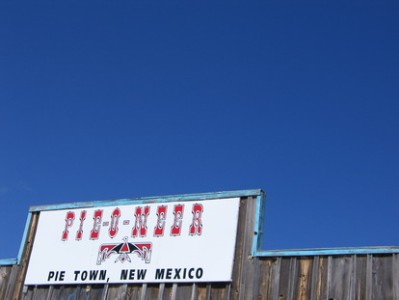
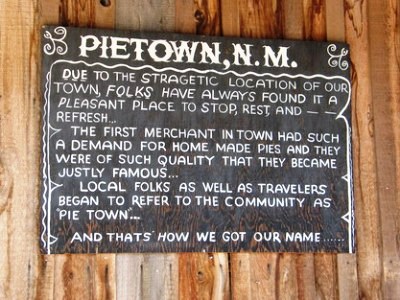
In the pinon-juniper woodland west of Socorro, New Mexico, just east of the Arizona line, is a very small town known for its pie. In fact, it’s been known for its pie ever since a man named Clyde Norman first began baking dried apple pies at a lonely, dusty crossroads atop the Continental Divide back in the 1920’s. Those pies became so famous that, in 1927, the little burg that sprang up around the crossroads became officially known as Pie Town, New Mexico. This despite the wishes of government authorities who thought the name a bit too unconventional.
Initially, US Highway 60, the “Coast-to-Coast Highway,” was poised to become the major east-west route through the southwestern United States. Expectations for the future of Pie Town, which sits at a lofty 7,772’ above sea level, ran high. But Route 66 was put through Albuquerque, about 160 miles to the northeast, marooning Pie Town and leaving the vast region which surrounds it relatively un-traveled. Nevertheless, Pie Town, which remains unincorporated, persisted.
Pie Town really became a town during the Dust Bowl of the 1930’s, when farmers left barren land to the east and attempted to re-start their lives in the rolling hills around Pie Town. At its peak there were perhaps 250 families living in Pie Town and working together, acting as more of a co-operative than a town, everyone banding together to make a living off a land that threatened to be difficult in the best of times. And, as is true in many places and lives, it was often not the best of times. One resident, Faro Caudill, who became sick while living in Pie Town and later decided to add adultery to his list of problems, scrawled a farewell on the gate of his house as he left in 1942: “Farewell, old homestead. I bid you adieu. I may go to hell but I’ll never come back to you.”
But his ex-wife, Doris, whose memories of her time in Pie Town must have been mixed at best, years later recalled the place, and particularly bath time, with some fondness: “We would take a bath on Saturday night. We had a number three bathtub. I’d get the water all hot and then I’d bathe Josie and then I’d take a bath and then Faro would take a bath. . . . You kind of wore the water out.” A rustic lifestyle, to be sure.
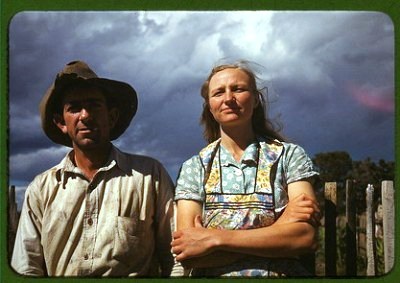
Pie Town, including Faro and Doris Caudill and their daughter, Josie, was well-documented by Russell Lee, who shot 620 photographs in the area for the Farm Security Administration in 1940. These photos, both color and black and white, depict a rural community still reeling from the effects of the Great Depression. Yet there appears to be contentment and community despite the poverty. But things got even tougher in the 1950’s when the climate of the area began to shift, becoming even drier, and the farming went from pretty good, even if sometimes challenging, to impossible. Many of Pie Town’s residents were forced to pack up and head elsewhere. But the pies remained. Below is a photo taken by Russell Lee in October 1940 and entitled "Faro and Doris Caudill, homesteaders, Pie Town, New Mexico."
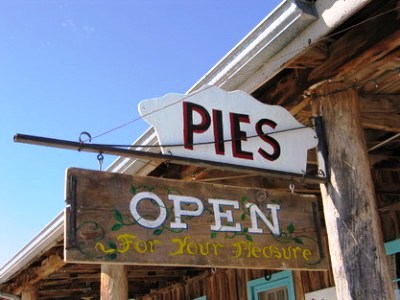
Pie Town as seen from Highway 60 is perhaps a mile or two long. On the northern side of the highway is the Pie-O-Neer. Just slightly to the west, on the southern side of the road, is the Daily Pie Café. On our stop in Pie Town, we went to the place we came to first: the Pie-O-Neer. The blueberry pie was excellent, as one would expect, and, naturally, there was a countless variety of pies to choose from. But they sell out quick and I was a little disappointed the pecan-oat was gone by the time we arrived. What was somewhat unexpected was how good the rest of the food was. The green chile soup was delicious and even a simple sandwich was well above ordinary. Heck, the tea was pretty nice, too. Also unexpected was finding out that the guy at the table next to ours had attended high school in the same building I’d taken swimming lessons at as a kid, just a few minutes from my childhood home back in Minnesota. The owners of the Pie-O-Neer told us these sorts of encounters happened there all the time. A result, they suspected, of getting people off the interstate and moving at a speed more conducive to engaging with your fellow travelers. Such a shift in priorities is one of their stated goals.
So, why would a person stay in Pie Town, choosing to live in what would appear to be relative isolation? In 2005, Mike Rawl, husband of the Daily Pie Café’s pie chef, told Smithsonian Magazine: “I’ve thought about it a lot. I think the very same impulses that brought the homesteaders out here brought us out. My family, they had the Dust Bowl. Here you’ve got to come out and buy a tax license and deal with insurance and government regulations. But it’s the same thing. It’s about freedom, the freedom to leave one place and try to make it in another. For them their farms got buried in sand. They had to leave. Back in Maryland it never really seemed like it was for us. And I don’t mean for us, exactly. You’re helping people out. This place becomes part of the town. I’ve had people running out of gas in the middle of the night. I’ve got a tank out back here. You’re a part of something. That’s what I mean to say. It’s very hard. You have to fight it. But the life here is worth the fight.”
So, that’s it, really. Freedom and community. And pie. Lots of delicious pie. I’ll be going back soon.
Pie Town’s annual Pie Festival occurs the second Saturday of September. Also of interest is the nearby DanCyn' Windmill Museum, the only windmill museum I believe I've ever seen.
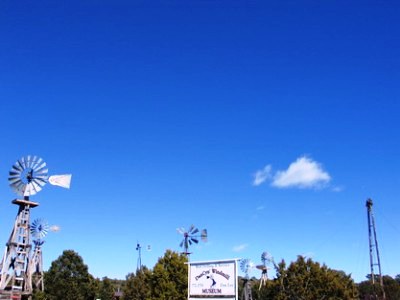
All pictures taken in Pie Town, NM. The most interesting source of information was the article on Pie Town that appeared in Smithsonian Magazine in February 2005. It can be found on-line HERE. Also of interest is a Pie-O-Neer Café page. It's well worth having a look at Russell Lee's photos of Pie Town, which can be found by searching the LIBRARY OF CONGRESS collection. If you do a little searching you might come across the marriage certificate of Faro and Doris Caudill, photographed on the wall of their home prior to Mr. Caudill's indiscretions. Finally, there is an entire book about the Caudills, particularly Doris, titled, "Pie Town Woman," by Joan Myers, a New Mexico author.
(Note to the folks at the Pie-O-Neer: Sorry we forgot the travel info at our table. We really did appreciate it. We just got wrapped up talking to our neighbor from Minnesota and didn’t realize it’d been left behind until Arizona!)


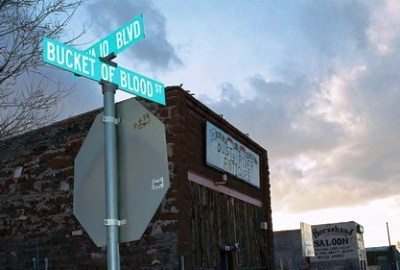
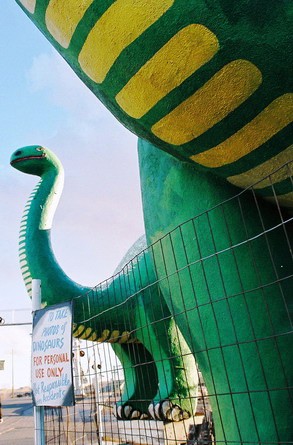 Millions of glass shards, jagged jewels marking decades of speeding drunks tossing liquid dreams out car windows, glittered from the shoulder of the road and twinkled in the dry yellow grass. Just south of a set of railroad tracks the highway became Navajo Blvd. before intersecting Bucket of Blood St. We stopped the car in the shadow of several tall green dinosaurs. Across the street in one direction was an abandoned tack shop built in the 1920’s. In another direction stood a boarded up wreck of a building made entirely of polished petrified wood. Holbrook (or T’iisyaakin in Navajo), Arizona was suddenly looking like a damned interesting place to spend the night.
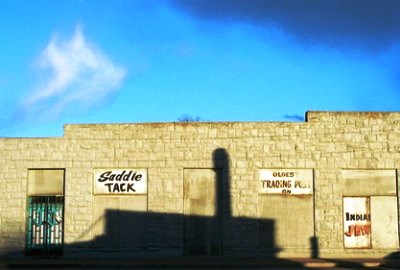
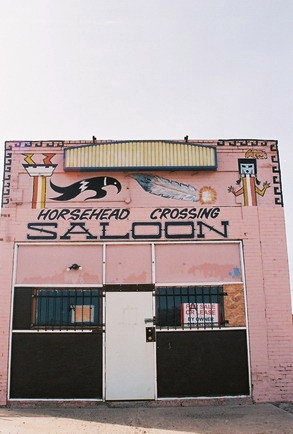 The main saloon in Holbrook was, of course, the site of much violence, and had the bucolic name Perkins' Cottage Saloon. There are two stories as to why the saloon changed its name that year. The first has some of the boys of the Hashknife Outfit accused of stealing cattle while having a drink. A brutal shoot-out is said to have ensued, leaving numerous patrons dead. The second story, told by Albert F. Potter, captain of the Hashknife's round-up, depicts two Mexican cowboys being shot during a card game by a gambler and a Hashknife Outfit cowboy. The gambler and cowboy quickly rode away on "borrowed" horses. Whichever story is true, it was written that after the incident “buckets of blood” covered the floor of the saloon. Thus the owners decided to change the name of their establishment to better match its disposition. This photo is clearly not of the Bucket of Blood, but it is on the same street.
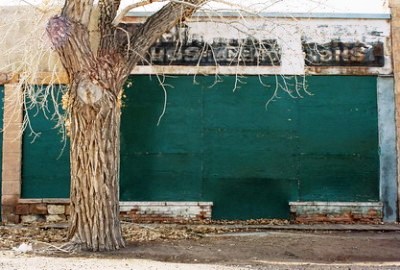
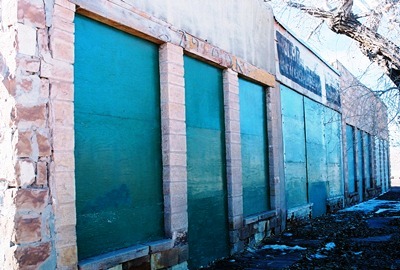
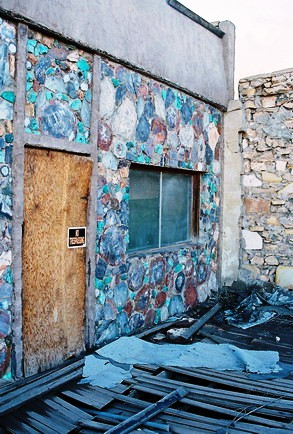 Clearly, it’s got to be somewhere on Bucket of Blood St. Yet some locals directed us to the wrong place, telling us that this building made of petrified wood was once the Bucket of Blood Saloon. While a fascinating building in its own right, and probably also a saloon at one time, this was never the Bucket of Blood. The Bucket of Blood is not far away though and I found it somewhat by accident. Not realizing I’d been standing in front of the place until later, the photo below mostly depicts the Bucket of Blood’s neighbor. The Bucket of Blood itself is just to the left, the far-right bit of its lintel just creeping into the frame. I hope to return soon and explore further, now that I’d know what infamy I was looking at.
 The county courthouse was built in 1898 and used as such for 78 years. There were many trials but only one man, George Smiley, convicted of murder, was ever executed. His hanging became notorious for an unusual reason. In the late 1800’s, Arizona law required that every sheriff in Arizona, as well as certain public officials, received an invitation to each execution scheduled to occur in the state. Commodore Perry Owens' successor, Sheriff Frank Wattron, could find no official format or template for such an invitation so he designed his own, complete with flowery language and a gilt-border. It read:
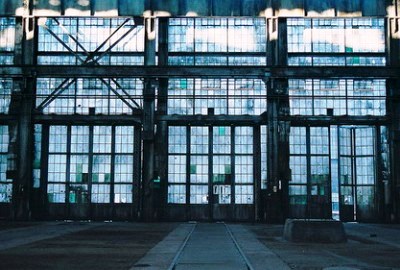
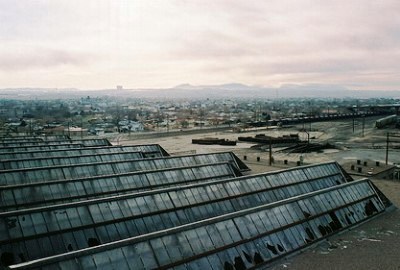
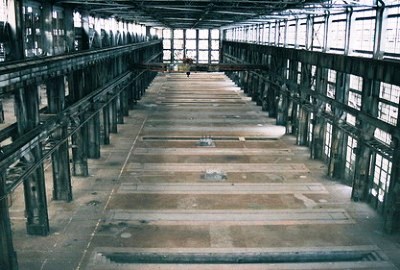
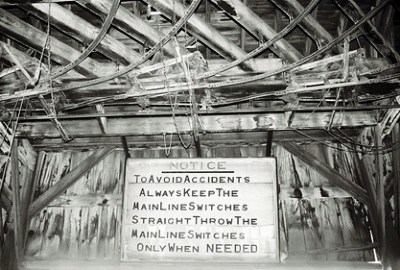
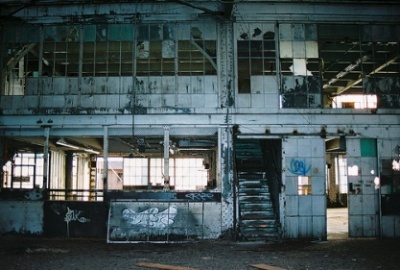
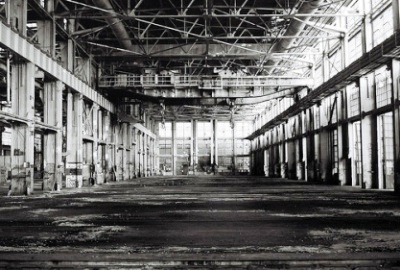
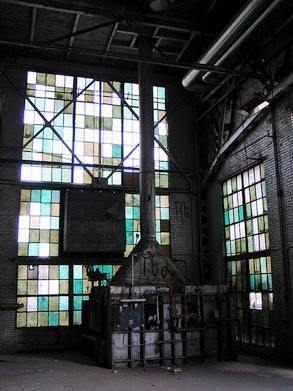 The rail yard’s buildings were at the forefront of industrial technology and the 165,000 sq. ft./3.8 acre machine shop has been considered comparable to the 1922 Ford Motor Company Glass Plant, which scholar Grant Hildebrand said was "the single factory which carried industrial architecture forward more than any other." For example, the machine shop’s two-story traveling cranes, one of which could hoist 250 tons, were incorporated into the structure of the building itself. Further, all rail lines, whether inside or outside buildings, ran north-south while a transfer table (pre-1919) for moving locomotives between buildings ran east-west, as did the overhead cranes. Thus the rail yard was sturdy and highly-efficient, with the massive locomotives moved easily from one area to another.
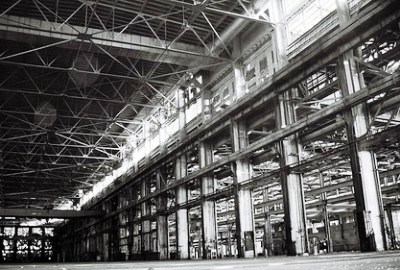
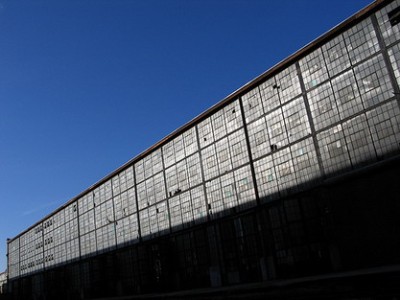
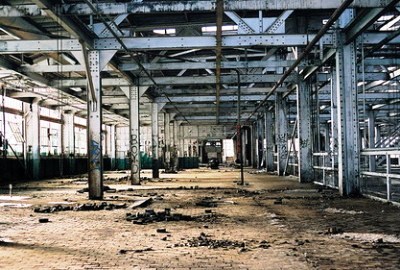
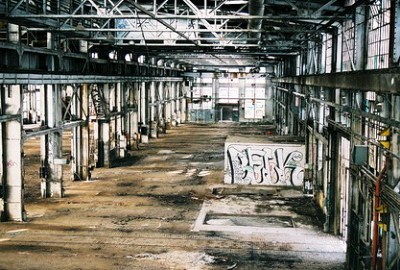
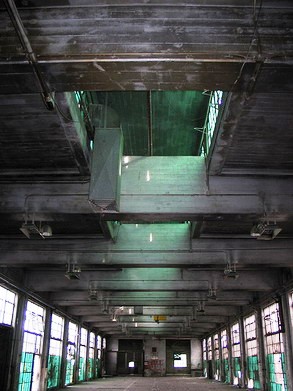 Once construction of diesel engines resumed, the rail yards were still used for repairs but, by the mid-1950’s, the massive complex was mostly utilized for maintaining rail lines. The rail yards were largely a storage facility by the time they were completely shut down in the 1990’s. In November 2007, the City of Albuquerque purchased the site with an aim towards restoration. Since that time some TV shows and movies have been shot in the facility, including Crash and Terminator 4, which I’ve heard is responsible for covering the windows in the fake grime which is still visible.
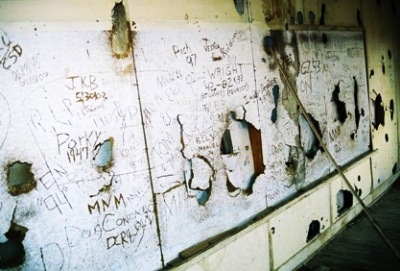
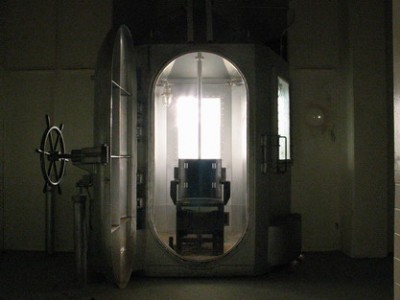
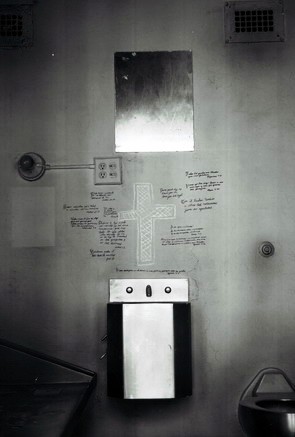 Thus, the selected inmates, in cooperation with their fellow prisoners, made sure that order was maintained and no one jeopardized their good thing. However, by the late 1970’s, the New Mexican correctional system was in disarray. The chain of command among prison officials was weak and confusing and oversight of regulations lax. Around this time prisoner-led programs ended and a new policy was implemented, one whereby prisoners were routinely turned against other prisoners and coercion was used to obtain information and overall compliance. Divide and conquer became the guiding objective. (Accompanying photo shows cell graffiti. Regulations forbidding graffiti were relaxed just before the penitentiary closed.)
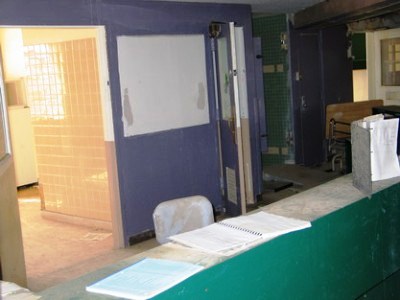
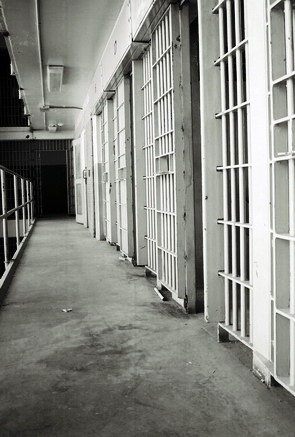
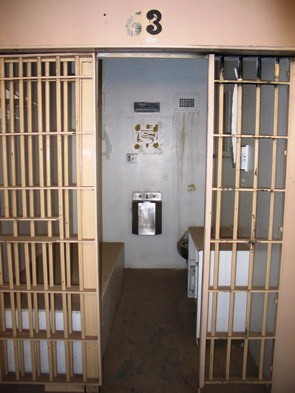 This included prisoners who had given evidence against their fellow inmates. Moreover, when built in 1956, the prison was designed to contain 800 men. By 1980 more than 1100 prisoners lived together in close quarters. A renovation of a cellblock at the time saw some of the most dangerous criminals moved from a high-security area to more dormitory-like arrangements. This overcrowding and mixing of New Mexico’s most violent, notorious, disturbed and vulnerable criminals in one facility was more fuel to be tossed on what was already becoming a dangerous powder keg. (Accompanying photo is of a death row cell. Photo below is of a meeting table beside death row.)
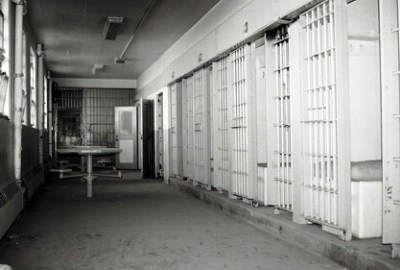
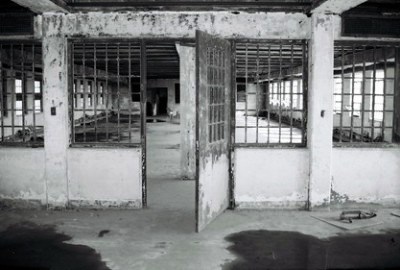
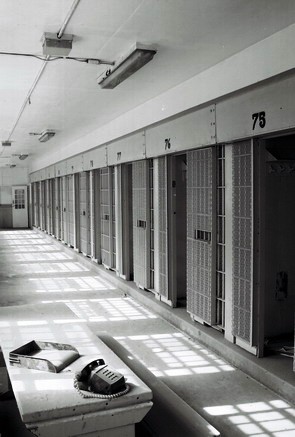 While on their rounds during the early morning of February 2, two guards came upon a couple of prisoners in a dormitory that were drunk on alcohol they’d made with fermented fruit. The intoxicated inmates attacked and overcame the guards and, as the guards had failed to follow procedure, leaving the cell block doors they had just come through open, the prisoners quickly made their way to the prison’s control center, where they flipped switches unlocking most of the penitentiary. Once free, hundreds of inmates fanned throughout the prison, taking fourteen guards and one medical technician hostage. While things were about to get much, much worse, some inmates were already fighting the tide and three guards were given safe hiding places by sympathetic prisoners. Meanwhile, anything that could be used as a weapon was procured and made into one, and the hospital was raided for its drug supply. Even glue was sought out and huffed. (Accompanying photo and photo below are pretty self-explanatory.)
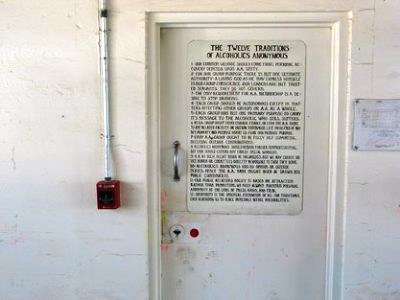
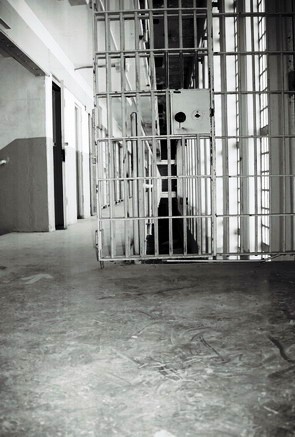 Other prisoners tried to protect certain of their fellow inmates and lost their lives because of it. Still others worked to release the guards. Such was the disarray and lack of leadership that prisoners could release hostages while their fellow inmates made demands intended to be met before these very same hostages would be released. (Accompanying photo is from Cell Block 4, where prisoners in protective custody were housed. The slender white marks on the floor in the foreground were caused by hatchets used to dismember inmates.)
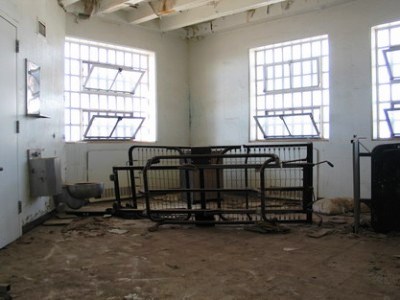
 Those entering the prison found true horror: bodies had been put in ovens in the kitchen, limbs were scattered on the ground, one corpse had no head, another was hanging from the ceiling with the word “RAT” cut into its chest, yet another had a metal bar shoved in one ear and out the other. The bodies of two inmates were never found and were presumed entirely incinerated. All told, the 36-hour nightmare left at least 33 inmates dead and nine seriously injured. One guard was in serious condition--some guards were badly beaten and sodomized--and the New Mexican Corrections Department had been brought to its knees. (Accompanying photo is from Cell Block 4. The dark stain on the floor marks where a body was burned.)
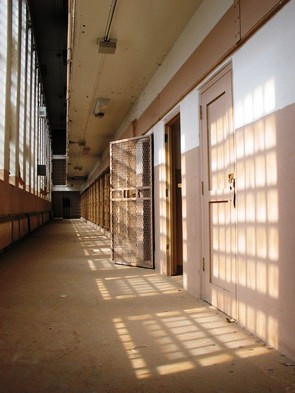 But, beyond that, and in overpowering opposition to those inmates, possibly the vast majority, who did not participate or even risked and lost their lives to reduce the violence, something unspeakably wicked was at work over those 36 hours. James Weston, the Chief Medical Examiner at the time, was quoted as saying, "Virtually every one of the bodies had overkill, which is to say that there was more than mob hysteria. There was rage." That much seems abundantly clear, but the prison psychologist, Dr. Marc Orner, made a much more telling statement when he said, "None of us really understands what happened in there. The depth of the violence is incomprehensible to me as a human being and as a psychologist. It is as if all the aggression a human being can have was savagely unleashed. We just can't understand why they did this to each other." (Accompanying photo shows a few rays of sunlight.)