Saturday, January 25, 2014

Willis Earl Beal - A Place That Doesn’t Exist


I first met Willis Earl Beal at the Wendy’s on Central and University in Albuquerque. He was applying for a job at that esteemed establishment and we talked about Dylan as he filled out his application. He gave me CD-R’s of some of his songs and a packet of stories and drawings. I don’t know quite what I expected, but before I’d even heard all of one song I knew this was music that deserved attention. As for Willis, he got the gig at Wendy’s.

But it wasn’t long into his burger-flipping career that Willis had to leave Wendy’s. He’d eaten one of his own creations, among other infractions. Soon after that, he would have to leave Albuquerque entirely. But none of that matters now.


In 2011, Willis caught the attention of Hot Charity Records, an imprint of the celebrated XL Recordings. His first release, Acousmatic Sorcery, was comprised of songs I’d heard on those CD-R’s. In fact, they were the same recordings that he’d made in his small apartment near downtown Albuquerque. The record attracted a lot of attention. Willis found it all a little embarrassing. Last fall he released a proper studio recording, Nobody Knows. He’s proud of the record and when I told him I could still hear Albuquerque in his songs, he quickly agreed. It turns out that most of those tracks were written while he was still living here.


Now there’s another set of songs, A Place That Doesn’t Exist. This recording was handed out by Willis as he roamed the streets of Park City, Utah last week for the Sundance Film Festival, just like he used to do in Albuquerque, when anyone at a bus stop or laundromat might get a CD-R. He was promoting a film called Memphis and, from what I hear, the role allowed him to…draw pretty strongly on his own recent experiences, shall we say? Only 100 copies were made and, as of this writing, it’s unclear what kind of wider release it might see, if any. So, Willis asked if I’d make this music available right away and, of course, I said I’d be happy to oblige.

In fall 2010, I posted some of Willis’s songs on City of Dust when they weren’t available elsewhere. So, despite all the gigs, road miles, and publicity, maybe not much has really changed. And the songs still sound like Albuquerque to me (and it’s not just because he mentions tumbleweeds). In fact, Bright Copper Noon goes back to the original CD-R’s.


The accompanying photos were all taken along Central Ave. Before Wendy’s, Willis worked security at the La Quinta on San Mateo Blvd. Riding his bike back and forth across town, he would’ve passed these long-gone hotels and sun-blasted parking lots every day. Central through Albuquerque is old Route 66, once the Mother Road that would lead people from their small towns and dreary lives to the golden glow of California. But Route 66 is now chopped-up and cut-off where it’s not totally gone. Like the dream of easy prosperity and happiness that once beckoned in the West, it’s a place that no longer exists.


I’ve yet to see Willis perform on stage. But when we talk he sounds just like the same dude I met in Wendy’s. He’s still working hard on his songs, he still wants people to hear them, and he still wonders if they deserve attention. He’s still got his sense of humor, too. I was only a few seconds into Times of Gold, the first track on this record, when I once again felt that this was music that did indeed deserve attention. So, yeah, not much has changed.


Right-click the link below and "save as" to take a trip to “A Place That Doesn’t Exist.”

A Place That Doesn’t Exist

My understanding is that Willis recorded the basic tracks at home and then sent them off to Matt Dewine for production assistance. Enjoy.


Next post we’ll go to another place that doesn’t exist. I’ve got a piece on the ghost town of Steins, New Mexico, down near the Mexican border, all ready to go.

Sunday, January 12, 2014

Spindrift Visits the Ghost Towns of Eastern NM

In fall 2012, western rock band SPINDRIFT played ghost towns of the Wild West, the best tour idea I'd ever heard. I was honored to have my photo of the First Presbyterian Church of Taiban grace the cover of their subsequent album, Spindrift - Ghost of the West. After their ABQ show last fall, the band felt the call of that little church on the windswept plains. So we headed east on a pilgrimage, visiting other ghostly places on US 60. This is the record. Click photos to enlarge.

Vaughn, NM was a crossroads town, where two major railroads met. There should have been a Spindrift gig at Spurs Saloon that night.


Billy the Kid was killed not far from Yeso, NM. The Hotel Mesa was probably the first stop for folks getting off the train. Not anymore.


In its last days the Hotel Mesa became a musem (sic) that had it all.


The First Presbyterian Church of Taiban was finished in December 1908. It cost $250 to construct and even that needed to be borrowed.


Reportedly the first sermon was poorly attended due to bad weather.

The last sermon was in 1936. Taiban's Pink Pony Saloon lasted a few years longer. The sun sets as we wait for the ghosts of the West.


Spindrift leave their record at the altar. The little church attracts such things. Many pilgrims have written their prayers on the walls.


The documentary of Spindrift's 2012 Ghost Town Tour will be finished in March. This is not to be missed by ghost town aficionados and those that enjoy Hawkwind, Marty Robbins, and all that lies between.

The band screens a short of the film this Friday (1/17/14) at Slamdance Film Fest in Park City, Utah and plays live. Then they're off to explore the ghost towns of northern Nevada. More festival and local screenings will follow later in 2014, so keep your eyes open.

Wanna hear Spindrift? Here's a link to The Matador and the Fuzz.


As a rule, I don't photograph people. So, I thank Spindrift for looking good, being patient, and getting me back out to a part of NM I love.

SPINDRIFT is:
James Acton – Drums, Autoharp
Henry Evans – Bass, Baritone Guitar
Kirpatrick Thomas – Guitar, Vocals
Michelle Vidal – Vocals, Mellosonic, Keys, Percussion

On the fall tour Rob Turner played bass and got his picture taken.

Thursday, January 09, 2014

Let Me Die at Home: Melvin Mills Mansion, Springer, New Mexico


Let’s start 2014 way out on the cold, windswept plains of northeastern New Mexico. There we’ll find Melvin Whitson Mills former home, a three-story adobe territorial mansion with 20 rooms, carved walnut features, and a massive cistern out back.

Melvin Mills (or, “Colonel,” as he was known to friends) was born in 1845 in Ontario, Canada, his Quaker parents moving to Michigan shortly thereafter. He graduated from Ann Arbor Law School in 1869 and then came out to Elizabethtown, NM, where a gold rush was in full swing. But Elizabethtown eventually began to founder and Mills played a key role in getting the Colfax County Seat moved to a new town he was helping establish, this one named after Territorial attorney Frank Springer.


In 1877, Mills, both a District Attorney and New Mexico Territorial Legislator, platted Springer with William Thornton and took up residence, building the magnificent mansion that still stands. It’s considered the most unique architecture on the old Santa Fe Trail; the Cimarron Route could be seen from the south balcony while the Mountain Route was visible from the west. Travelers on the dangerous trek would frequently stop at Mills’ home and try to recover. This photo shows the mansion’s staircase, the tallest in New Mexico, bathed in devilish light from the 100+-year-old “ruby” window set in the transom over the front door, visible in the photo above.

Mills had already been a member of the infamous Santa Fe Ring and thus a major player in the vicious Colfax County War. He made many enemies in northern NM in the 1870’s as he worked to evict settlers, some of whom had lived on “their” land for decades. This was at the behest of the English and later Dutch companies that purchased the 1,714,765-acre (?!) and by then wildly-contested Maxwell Land Grant. Practicing this type of law in the Wild West wasn’t an easy business and the Colonel was occasionally associated with violence. He was implicated in the murder of Methodist preacher and Ring opponent Franklin J. Tolby and, while the charge was quickly retracted, Mills accuser, Manuel Cardenas, was himself shot on his way from court by an unknown assailant. Mills stated that he’d been in Colorado on business when Cardenas was killed and was taken into protective custody with another Ring member. A third Ring affiliate had earlier lit out for Santa Fe with the hot-headed Clay Allison’s posse at his heels. Reportedly in the interest of fairness, Mills trial was moved to Taos where a grand jury dropped all charges.


Dark political intrigue and bloodshed aside, Mills had a way with fruits and nuts and his Orchard Ranch, sprawled within a lush canyon of the Canadian River, became renowned, at one point containing 14,000 trees. In addition, he raised cattle and grew vegetables. A stage line stopped at the front door of his Mills Canyon Hotel. Mills’ beef and produce was shipped all over the U.S. and it’s no coincidence that Springer was already a bustling railroad town on the Santa Fe’s line. Pictured above and below is the shell of the Springer House, once the place where everyone went to raise a glass as soon as they stepped off the train. Now even the tracks themselves are gone.


In 1904, heavy rains came and the swollen Canadian washed away Mills’ agricultural empire entirely, leaving him a ruined man. He abandoned the area, but is supposed to have returned at the end of his life to ask his former Santa Fe Ring partner, Thomas B. Catron, if he might be allowed to die on a cot in the beautiful house that Catron is said to have now owned. However, Catron had died over four year earlier, in the spring of 1921, raising questions as to how Catron gave his consent. In fact, there's no evidence Catron ever actually did own the mansion, although he bought some of the original Maxwell Land Grant from Mills. More likely is that the president of the bank in Springer, who did own the home and was a friend, granted the request. But I wonder if even this is true; the August 21, 1925 edition of the The Springer Times makes no mention of any of it when announcing Mill’s death, only saying he “passed away at his home in Springer.” What is surely true is that Mills died on August 19, 1925, age 79. The next day he’d been scheduled to give a talk at the New Mexico Historical Society. While virtually nothing remains of his once vast-holdings, a small community to the southeast still bears his name.

Might Melvin Whitson Mills still reside in his mansion? There are many sources that say he does. But when I asked the current owner, all I received was a smile and the cryptic reply: “I don’t know what you’re talking about.” The Cactus Café (below) in downtown Springer looked about the same last fall as it did in 2005 when I first encountered it. Some things in the desert don’t change (fast).


Information for this post came from all over the place and the conflicting “facts” of Mills’ involvement in the Colfax County War are voluminous. I tried my best. Mills’ Wikipedia entry is bizarre and disjointed, but does seem to contain a few true facts. The New Mexico Historical Review, Volume 1, contains some of the best background on the man. Frank Springer and New Mexico: From the Colfax County War to the Emergence of Modern Santa Fe and Translating Property: The Maxwell Land Grant and the Conflict Over Land in the American West, 1840-1900 seem to do the most thorough work on the shadowy war, which once saw the town of Cimarron essentially blockaded. Arthur and David Pike's "Detour New Mexico" is one of the only published sources to debunk the myth of Catron allowing Mills to die in the mansion. Did you know you can hike in the beautiful and now even more remote canyon where Mills’ great orchard once stood? You can actually hear the mansion here. Finally, this website, by T.T. Hagaman, provides contact information for the mansion itself. I thank him for allowing me inside and permitting me to photograph the lovely staircase.


Next time we’ll travel almost the entire length of the state to have a look at Steins, out near the Arizona border, where a tragic murder in 2011 has cast a pall over the little ghost town.

Monday, December 30, 2013

When Your Rope's Too Long: Clayton, NM


Clayton, New Mexico is a little bit out of the way. You’re probably not going to just suddenly stumble into it. Unless you’re going to visit the barren place where New Mexico, Oklahoma, and Texas all meet, in which case, sure, maybe you will happen across it.

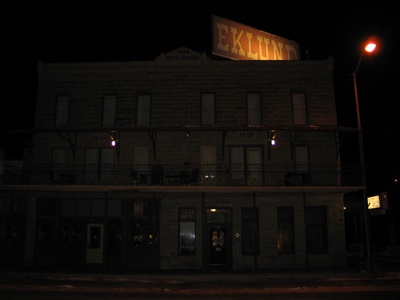
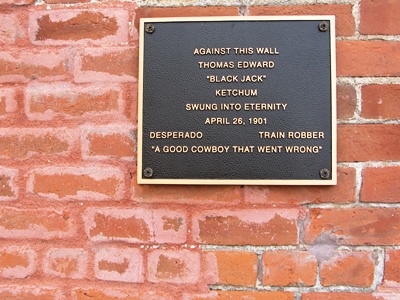
Despite its location, Clayton is famous for several things. There are lots of dinosaur footprints nearby. And a volcano, too. The lovely Eklund Hotel is there, established in 1892 and once the finest railroad hotel between Fort Worth and Denver. There are even two bullet holes still visible in the tin ceiling of the old saloon. That’s maybe not as impressive once you know that the shots were fired by excited supporters of President Warren G. Harding upon his election in 1920. Hey, no injuries were reported. But Clayton was also the site of what is widely agreed upon to be the most botched hanging in the West, that of Thomas Edward “Black Jack” Ketchum. I looked into it all on the frozen, windswept weekend before Thanksgiving while based at the Eklund.


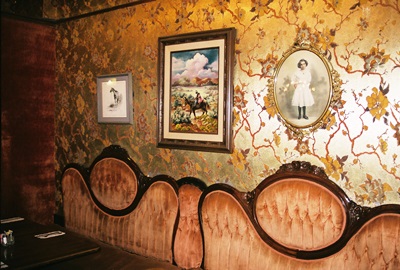
(Above are the old headboards off the beds in the Eklund re-used as seat backs in the dining room.)

Black Jack was born in Texas and began leaving a trail of alleged crime in 1890, at age 27, right around the time he came to New Mexico. Possibly a soured love affair drove him off the rails. If so, crime must have already been in his genes because his older brother, Sam, left his wife and family to become an outlaw, as well. I say Black Jack’s crimes were “alleged,” because, while he was connected to many robberies and dark occurrences over the years, including the famous disappearance of politician Albert Jennings Fountain and his young son, Henry, near Las Cruces, he was never convicted of anything until being sentenced to death for attempting to rob a train. This was also unusual as no one else in American history was ever executed for train robbery alone.
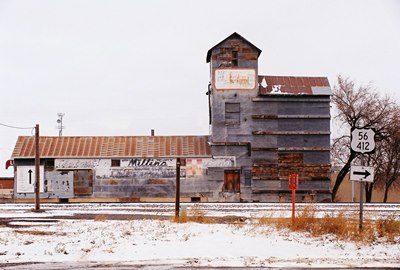
Eventually Black Jack and his brother joined the dapper and charming Hole in the Wall Gang in the north-central part of the state, sometimes making a living ranching and, at other times, jockeying for position with Butch Cassidy’s other crew, the Wild Bunch.

On September 3, 1897, the Hole in the Wall Gang robbed a train between Folsom and Des Moines, NM. They did so again on July 11, 1899, but Black Jack did not participate in the second effort. After the second robbery, a gunfight ensued near Cimarron and Sam was badly wounded. A second shoot out occurred a few days later and a sheriff and deputy were killed. Sam was finally caught but died a short time later of his injuries in the Santa Fe Territorial Prison.


On August 16, 1899, Black Jack attempted to single-handedly rob the same train, unaware that his brother was recently dead from a similar idea. Black Jack boarded the engine, but mistakenly forced it to stop on a sharp turn where the cars with the loot could not be uncoupled. Meanwhile, the conductor, Frank Harrington, was getting sick of being robbed. He crept through the cars and shot at Black Jack, who returned fire. Black Jack missed; Harrington nearly severed Black Jack’s arm at the elbow. Black Jack fell off the train but was unable to get back on his horse.

The train quickly got moving again, leaving Black Jack to lie out all night until “help” arrived in the form of another train. He raised his gun as the conductor and brakeman approached him. They offered to shoot him right then if he wanted a fight, but he replied, "No boys, I am all done. Take me in." His arm was amputated in Trinidad, Colorado and then, restored to relative health, he was sent back to Clayton for trial. Convicted of “felonious assault upon a railway train,” Black Jack became the only person sentenced to death under the law, which was later overturned by the Supreme Court as carrying too severe a sentence.


Now, Clayton had never seen a hanging before and they weren’t quite sure what to do, besides sell tickets and tiny Black Jack dolls hanging from miniature gallows. The execution was delayed several times, but rumors of a plan to break Black Jack out of jail got a date finalized.

On April 26, 1901, after a further delay of several hours for continued fine-tuning of the gallows, Black Jack stood on the scaffold and these words are often said to have been his last: “I'll be in hell before you start breakfast, boys! Let her rip!” However, they’re probably apocryphal; he was executed around 1 p.m., closer to lunchtime anyway. The San Francisco Chronicle reported that Black Jack was somewhat more subdued, his legs trembling, saying only: "Good-by. Please dig my grave very deep. All right; hurry up." Still other accounts have simply, “Hurry up boys, get this over with.”


Whatever he said, Black Jack clearly wanted it all over with fast. The sheriff needed two swings of the hatchet to cut the rope, but the trap finally fell open and Black Jack dropped. However, the rope was too long and, possibly due to over-testing with a 200-pound sandbag, no longer had any elasticity. Thus, Black Jack was instantly decapitated, one of only three such occurrences over a few hundred years of recorded judicial hangings in the U.S. and Europe.

Photos exist of the gruesome aftermath, the separated head still contained in the black hood and lying in front of the one-armed corpse. The Chronicle noted that the heart clearly continued beating for awhile. Then, in another strange twist, Black Jack’s head was sewn back on his body before burial at 2:30 p.m. that day in Clayton’s Boothill. One wonders how much effort they put into the job. No one was ever executed in all of Union County again.
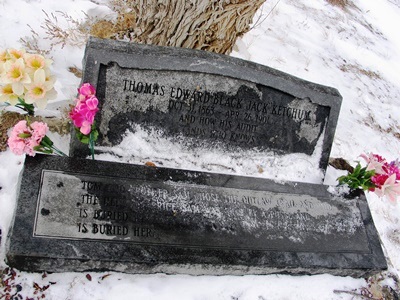
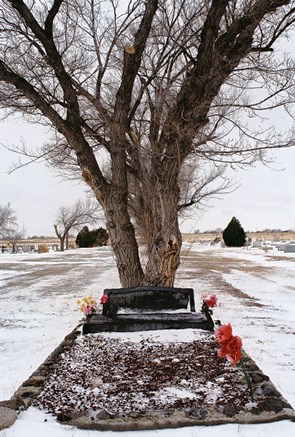
Black Jack's grave was moved from the original Boothill to the current Clayton Cemetery in the 1930's. In the end, he got Shakespeare for an epitaph and still gets flowers over 100 years after his death. We should all be so lucky.

“And How His Audit Stands, Who Knows Save Heaven.”


The story or Thomas "Black Jack" Ketchum is widespread on the internet, although inaccuracies abound. Legends of America does a nice job and Allflictor.com reprints the San Francisco Chronicle article. Wikipedia isn’t bad either. Perhaps the oddest piece is at badhombres.com, where Black Jack’s great, great nephew provides history and insight found nowhere else. Whether it’s all true is anyone’s guess.

FEBRUARY 2014 UPDATE: Here at City of Dust we're always trying to get the story straight. Any research into Black Jack Ketchum's hanging will turn up a variety of quotations from his final moments and I went to some pains trying to sort out what he actually said. I believe his intended last words really were, "Goodbye, please dig my grave very deep. All right, hurry up." However, truth is always stranger than fiction and, in fact, Black Jack Ketchum seems to have said almost everything attributed to him and then some, just not all of it from the gallows.

The most famous and widely-quoted statement is, "I’ll be in hell before you start breakfast, boys! Let her rip!" That's almost correct. But it was not said immediately before he dropped and it was mostly not intended for just any "boys." The first part of the quotation appears in the Santa Fe New Mexican, dated April 26, 1901, the day of the hanging, and it is directed toward Frank Harrington, the conductor who shot Black Jack's arm off. When Ketchum's lawyer was leaving his cell for presumably the last time, Black Jack told him, "Say, tell Harrington I'll meet him in hell for breakfast." This was after he'd requested to "be buried face down so Harrington can kiss my ass." The next morning, according to the New Mexican, he told Sheriff Garcia to "hurry up the hanging so he could get to hell in time for dinner."
The other part of the quotation comes from what truly were Black Jack's last words. Sheriff Garcia, apparently drunk, was having a hard time cutting the rope to open the gallows doors. The New Mexican records that Ketchum, nervous and impatient, said, "Let 'er go, boys. Let 'er go." It is said that Garcia's friend, Dick Franz, finally cut the rope and became a minor celebrity for it afterward.

Apparently Ketchum's headless body landed on its feet and even remained upright for a moment, spurting blood. Sheriff John McCandlass, visiting from Dalhart, Texas, held the corpse to the ground to stop the convulsions that followed. Five minutes is reportedly how long Black Jack's heart continued beating.


You probably didn't need to know all that. But you might be interested to know that Black Jack wrote a letter to President McKinley saying that innocent men were imprisoned for a robbery that Ketchum and his gang had committed at Steins Pass. He wouldn't say a word as to where his compatriots were at that time but maintained that he had never killed anyone and was a victim of mistaken identity, having been confused with another outlaw, Black Jack Christian, killed four years earlier. His last requests were music and female companionship. The former he received via violin and guitar. The latter was denied due to a lack of public funds with which to pay the companion. It was said that he did at least eat a hearty final dinner.

Oh, and his request to be buried face down? When Black Jack was exhumed in 1933 to be moved to the new Clayton cemetery his coffin was opened and it was found that this, too, had been denied. Then, as a final addendum, Teddy Roosevelt was presented with his Winchester 30-30 for some reason that I can't quite figure out.

Where did I find all this information? From what's probably the most complete and accurate description of Black Jack Ketchum's final days, Death on the Gallows: The Story of Legal Hangings in New Mexico, 1847-1923. There is also an informative unofficial brochure on Thomas Edward Ketchum written by Jerry Phillips that you can find around Clayton. I guess some stuff still hasn't quite made it to the internet.

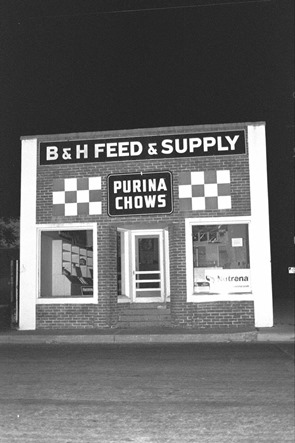
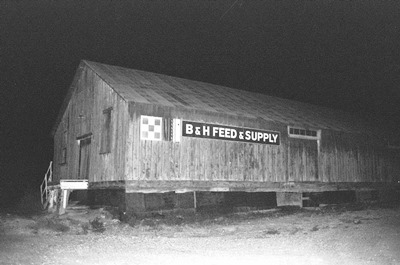
The photos of B H Feed & Supply were taken one night in late 2005. The shop is now the home of Crossroads Coffee Mill, a wonderful place for coffee and whatever else you might need of a morning. Be sure and stop by next time you're in Clayton. Tell them City of Dust sent you.

Friday, December 13, 2013

A Town with Two Names: Riley, New Mexico


While the Man with No Name might feel right at home in the ghost town of Riley, he and the town might not fully understand each other. That’s because, unlike Sergio Leone’s laconic anti-hero, Riley has two names. Even though the isolated enclave along the oft-dry banks of the Rio Salado was already known as Riley when the post office opened in 1890, many old timers still refer to it by its original name of Santa Rita, bestowed in 1880 when it was a small colony of homesteaded farms established by Mexican-Americans. Riley, it turns out, was the name of a local sheep ranch owner. Maybe there was some sort of naming conflict amongst various livestock factions.


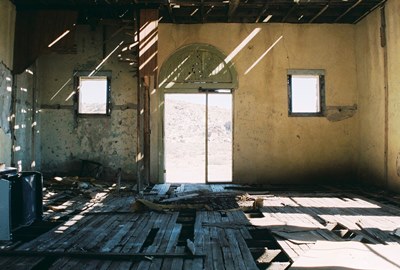
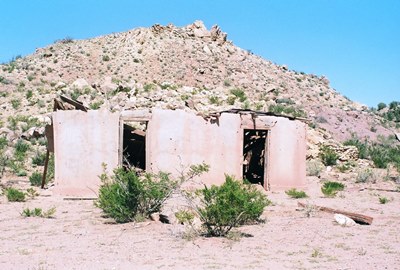
As with any New Mexican ghost town worth its salero, Riley was once a hotbed of mining activity with four active mines pulling coal and manganese out of the dry and dusty earth. By 1897, about 150 people lived in Riley and there were two stores and a stone school (pictured in the two shots above).

While, as has happened to so many ghost towns, the mines eventually did stop paying out, it wasn’t that which ultimately caused Riley’s demise. In fact, the water table dropped due to drought and overgrazing, rendering irrigation tough and farming a losing proposition. Without mining and farming, there wasn’t much else to keep a body busy. In 1931, after 41 years, the post office closed up and that was the end of Riley. Almost.


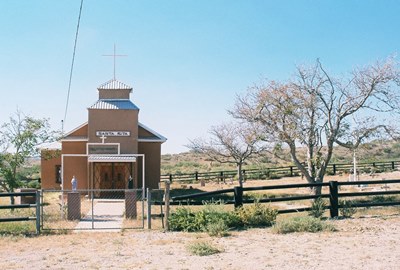
You see, there is one building that is carefully maintained in Riley: the Santa Rita Church (shown above). Each year on May 22, the Feast Day of Santa Rita, those with ties to the old community come back together and a priest says Mass at the little church. There is a picnic afterward. It must really be something to be a part of. Of course, even at its most bustling the priest only stopped in Riley once every four months.

Riley can be accessed by gravel roads from either the north or south. From the north, you can start at the non-existent town of Bernardo and loop way out around Ladron (i.e, “Thief”) Peak. From the south, you have to drive through the Cibola National Forest and cross the Rio Salado. Either route takes you through a vast and spectacular landscape.


However, while it’s often said that this drive is “easy” by New Mexican off-road standards, both times I’ve been through were touch and go. The first time the Rio Salado was almost uncrossable, not because it was running, but because the north bank had collapsed. This last time would’ve actually been impossible, but following a torrential monsoon the Army Corps of Engineers had just been through and re-graded the whole stretch for us. How nice of them!

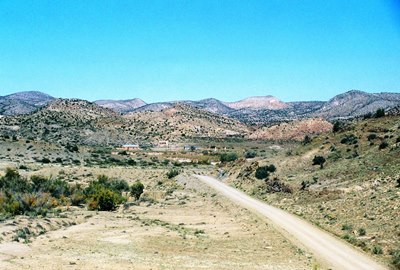
I scavenged both Philip Varney and Linda Harris for this one. Varney mentions “five roofless adobes” in his piece on Riley. You’d be hard-pressed to find that many now, but the shot above does show one of the last hold-outs, still sans roof. Below is the view of Riley from the southern approach.


Happy holidays everyone! Next post will be a surprise…to me as much as anyone.

Saturday, November 30, 2013

Angry Dogs and Well-Kept Graves: San Pedro, New Mexico


There are two ghost towns by the name of San Pedro in New Mexico. One is a former gold mining town to the north, in Santa Fe County, but, since we’re still roaming around U.S. Highway 380 in the central part of the state, we’ll check out the one in Socorro County.

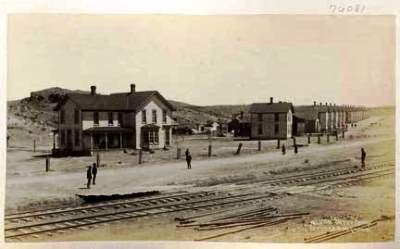
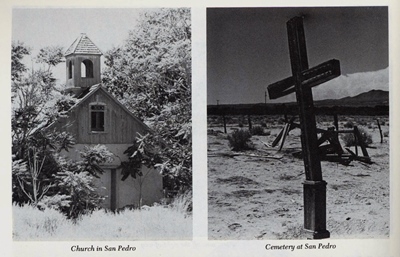
When Philip Varney visited San Pedro in the late-‘70s, he described a ghost town of more than a dozen buildings, including the wood and adobe San Pedro Catholic Church, complete with intact steeple, and another large adobe structure, once the home of a well-known landowner. Things have changed a bit over the last 30+ years and, while not exactly a booming metropolis, San Pedro is a little livelier than when Varney came through. Kinda like Chloride, but without the museum.


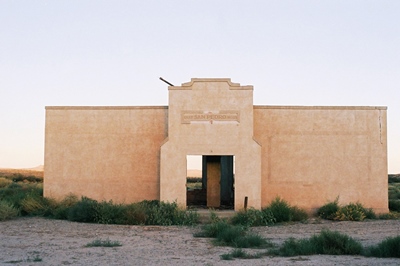
While there might be more actual residents these days (and perhaps meaner dogs, as well), there seems to be fewer buildings. The church is nowhere to be found, nor is the neighboring barbershop. The stately adobe residence has mostly sunk into the earth (and is guarded by one or two of the aforementioned pups). The schoolhouse, pictured at top, still remains though. Built by the W.P.A. in 1936, it closed shortly thereafter and is now owned by the family living next to it. They were kind enough to let me take a photo after finding me basically standing in their driveway when they came home one evening. Thanks, folks!

San Pedro was settled in the mid-1800s by two families, the Montoya’s and the Tefoya’s. By 1860, the town had a population of 223. At that time, the village, located on the east bank of the Rio Grande and close to El Camino Real, was a Spanish agricultural settlement known especially for its grapes. These grapes were crushed into wine reportedly shipped “all the way to Kansas.” The village was also a resting place and trading center for travelers on El Camino Real. Later, some residents became miners and worked in nearby Carthage and Tokay. Apparently, a heated baseball rivalry developed between the San Pedro and Tokay teams with a third forgotten community, Bosquecito, also in the mix.
The Rio Grande, that lifeblood of San Pedro--as it was for so many small towns--was the reason for San Pedro’s location and, finally, a major reason for its decline. All that remains of the section of the river that used to pass beside San Pedro is a dry, sandy bed, the result of canals that have shifted the course of the waterway almost a mile to the west.

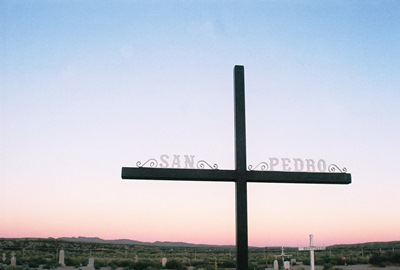
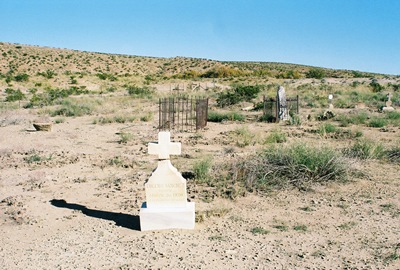
Varney described the San Pedro Cemetery as “windswept and desolate.” I love a nice, desolate, windswept cemetery, but in San Pedro the cemetery, too, has been modernized. A comparison of grave markers shows them to have been upgraded since Varney’s visit. While I have to admit that I prefer desolation, aesthetically-speaking, I’m happy for San Pedro. And I got in some desolate, windswept cemetery viewing in cold, cold Clayton last weekend.


We’ll get to Clayton and its famous decapitated dead man, Black Jack Ketchum, eventually, but we’re going to stay in sprawling Socorro County and head down to the banks of the Rio Salado to visit Riley (aka Santa Rita) next. Until then, be well, as both Garrison Keillor and Walgreens tell me these days.

Information for this post (and the b&w photos above) came from Philip Varney, of course. Additional help was courtesy of ghosttowns.com and, through them, Roadside New Mexico: A Guide to Historic Markers, Revised and Expanded Edition!

Tuesday, November 12, 2013

I Don’t Know Where I Am: Carthage, Tokay, and Frailey, New Mexico


Last post we visited San Antonio, New Mexico, the spiritual home of the Hilton Hotels chain. San Antonio experienced a boom when coal mines ramped up production in Carthage, about 10 miles east. One of those early mines, the “Hilton,” was owned by August H. “Gus” Hilton. But, while San Antonio is still pretty hard to miss, especially if you’re looking for cranes at Bosque del Apache, three towns closely linked to San Antonio—Carthage, Tokay, and Frailey—have sunk deep into oblivion. In fact, even the true spelling of “Frailey” has been lost. You might see it referred to as “Fraley” or “Farlay” and either might be right. One spelling that is probably not correct is the one found on the NM Historic Marker beside nearby Highway 380, which has it as “Farley.” At top is what might have once been part of an auto garage, judging by nearby remains.


Carthage was the site of the first coal mine in New Mexico, the Government mine, which employed U.S. Army soldiers in the early 1860’s and supplied Forts Bayard, Selden, and Stanton. Construction of a railway to ship coal to San Antonio from Carthage began on March 1 of the year that seems to represent the zenith of the Wild West, 1881, when Billy the Kid died and there was a Gunfight at the O.K. Corral. I think the shot above might be the bottom of a tower used for watering locomotives.

The Santa Fe Railroad Co. finished a bridge across the Rio Grande in 1883 and, by 1889, Carthage topped the list of coal camps in the state with a population of about 300. But, by 1893, coal production was lagging, so the Santa Fe Railroad Co. made a deal to move the entire town to Cerrillos, NM. On August 17, 1893, the Old Abe Eagle reported, “…All the dwelling houses, coal chutes and machinery have already been moved. The place has practically been razed to the earth and the depot, adobe hotel and Gross, Blackwell and Co. are about all that remain.” The Santa Fe Railroad then promptly went into receivership on Christmas Eve. Almost two years later it would re-emerge as the famous Atchison, Topeka, and Santa Fe (AT&SF).


From 1894, coal extraction continued while mines changed hands and changed hands again. The abandoned Santa Fe Railroad Co. line finally ceased operating entirely in 1896 and then everyone spent some years trying to figure out how to get the railroad to run those 10 miles to San Antonio again. The difficulties of (re)building the short spur came to a head in 1905 when competing mining and railroad interests sued each other. Mining ceased for two years during the litigating. Finally, the case was settled out of court, 50 new miner’s homes were quickly built by the Carthage Coal Company, and production surged.

Then, on New Year’s Eve 1907, there was a massive explosion in the Bernal mine which killed nine miners, throwing two 300 yards from the site. Two more were seriously injured. It was said that many more would’ve been killed if it weren’t for the fact that the accident occurred during lunch and most men were eating. A somewhat lesser disaster struck Carthage on February 22, 1918, when coal dust ignited in the Government mine, killing one mine inspector who improperly used his safety equipment and a sparrow.


Mining continued for decades, but eventually with diminishing returns. The last train left Carthage on August 28, 1931. After that, things were really on the downswing, although serious mining interests struggled through into the 1940’s. The last mine, Tres Hermanos, was opened in 1980 by Cactus Industries. It was closed by 1981.

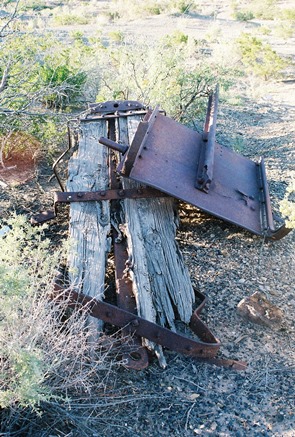
Now, if you look at the entry for Carthage on ghostowns.com, you will see a note dated April 2, 2000 which laments that most of what had remained of Carthage--apparently a fair amount--had recently been hauled off to a nearby dump. The “clean-up” was ostensibly part of a “desert restoration project” and, while I sure love the desert, I find this a little hard to believe. There is so much wide-open space in every direction out here that restoring this small area strikes me as bizarre. Not impossible though. On the other hand, “Ghost Towns and Mining Camps of New Mexico” stated in 1975: “Today what is left of Carthage is fast melting into oblivion.” Other than the impressive adobe ruins of the large home of a mine superintendent, John Hart, who left Carthage in the mid-1940’s, I have no idea what’s really been lost in the interim. At least the corpse of the small mining car above persists.
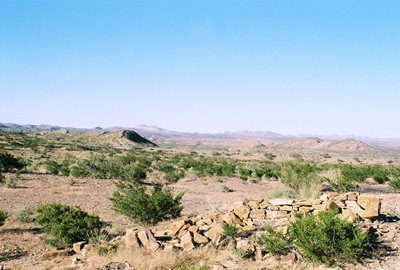
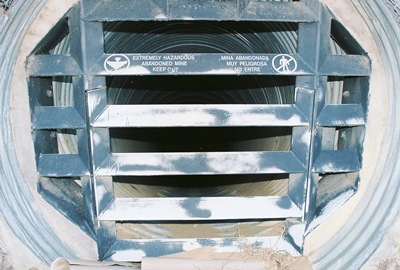
Whether Carthage disappeared recently or long ago, what remains now is hard to identify. Millions of pieces of broken glass glitter in the sun, a surprising percentage of them pink and purple. (So much for a restoration, eh?) A few stone foundations can be seen here and there. Several old mines can be located, all sealed and capped. Walking the raised rail trestle from the relatively intact Carthage Cemetery, it’s unclear where Carthage becomes Frailey, the site of a limestone quarry and kilns owned by Mr. J.B. Frailey, once the trainmaster at San Marcial, now also a ghostly town.


Then there’s Tokay, founded in 1918 by Bartley Hoyt Kinney, Sr., who was involved in the Carthage mines and organized the San Antonio New Mexico Coal Company. He wanted to name the town “Kinney,” but the post office refused. Finally, while talking to the postal inspector at Mr. Kinney’s general store, he saw a box of Tokay grapes and said, “How about Tokay?”

Tokay actually struggled into the late-1940’s, but eventually mining ceased and its structures were moved to Socorro. It would’ve been around here somewhere. But where? Who knows anymore? Just a few miles southeast is the Trinity Test Site, where, on July 16, 1945, the first atomic bomb was detonated. Carthage, Tokay, and Frailey, once sizable and active places, couldn’t be much more obliterated if they’d been at ground zero.


Hey, even Philip Varney didn’t have much to say about these three towns. There’s little to be found on Carthage, but, surprise, surprise, there is one scholarly article, “Mining History of the Carthage Coal Field, Socorro County, New Mexico.” It’s the best source, by far. I also consulted the aforementioned ghostowns.com. Even less can be found on Tokay and Frailey and what I managed to unearth was part of a good history of the railroad in the area formerly posted at New Mexico Wanderings. Old newspaper articles on the mine explosion can be found at gendisasters. And let's not forget Ghost Towns and Mining Camps of New Mexico by James E. and Barbara H. Sherman.

Next time, we’ll make a quick stop at San Pedro, just between Carthage and San Antonio.