skip to main |
skip to sidebar
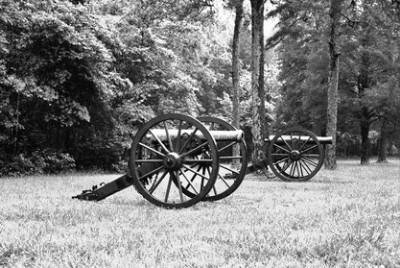
Someone wrote me recently asking if I could do a few posts on some of the mountain towns of the South. Since I’m currently living at the foot of the Great Smoky Mountains and spend most days roaming around the Cumberland Plateau, it shouldn’t be a problem to get to a few of those places soon. I was also asked if I could do a bit more on Civil War sites, and that I can do right away. So, without further ado, we’ll visit the Chickamauga Battlefield, just outside of Chattanooga, across the Georgia line, where one of the bloodiest battles of the Civil War was fought.
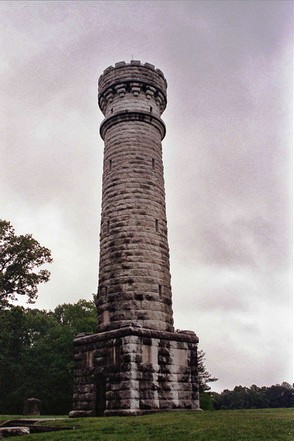 In the summer of 1863, competition between the Union and Confederacy for control of Chattanooga was getting fierce. Union Maj. Gen. William Rosecrans moved his nearly 70,000 men, known as the Army of the Cumberland, from Murfreesboro, TN to square off against Confederate Gen. Braxton Bragg’s Army of Tennessee. Originally positioned to defend the road to Chattanooga, Bragg’s 43,000 men were eventually forced into the city itself by Rosecrans’ forces. In late August, Bragg had to retreat again, this time to LaFayette, GA, 26 miles south of Chattanooga. With the addition of badly-needed reinforcements from Mississippi, East Tennessee, and Virginia, Bragg had 66,000 men when, on September 18, 1863, he tried to get between Union forces and Chattanooga by moving troops along the east bank of West Chickamauga Creek, a gambit which proved unsuccessful. Above is a photo of perhaps the largest of the countless monuments erected on the battlefield, many created by the states from which the soldiers came.
A day later, on September 19, 1863, just after dawn, Union infantry engaged Confederate cavalry at nearby Jay’s Mill. Fighting spread amongst what was now well-over 120,000 troops, and the engagement soon covered four miles, the combat often hand-to-hand. At one point, a group of Confederate soldiers became stranded in a ravine near what is known as Viniard Field, and Union Col. John Wilder later wrote, “It seemed a pity to kill men so. They fell in heaps, and I had it in my heart to order the firing to cease, to end the awful sight.”
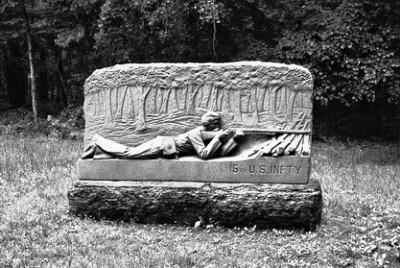
Eventually, Bragg began to drive the Federal army back and, on September 20, Rosecrans received a report that Union Brig. Gen. John Brannan’s division was out of position, putting the Federal line in jeopardy. This information was incorrect, but Union Brig. Gen. Thomas Wood moved his forces to fill the supposed gap in the line, thereby creating a real gap. Coincidentally, Confederate Lt. Gen. James Longstreet’s troops had just started to move toward the area now suddenly left vacant by Wood’s men. Thus, Longstreet’s men broke through the line and began to drive back Federal divisions, including Maj. Gen. Jefferson C. Davis’s.
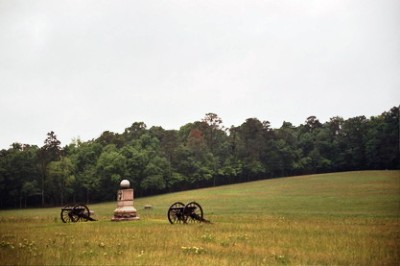
With a hole in their line and Longstreet’s troops moving forward, the Union fell into retreat. Union Gen. George Thomas held the last position at Snodgrass Hill for a time and was thereafter known as the “Rock of Chickamauga.” He also commandeered the Snodgrass family cabin and turned it into a field hospital. But as darkness fell, Thomas and the other Union soldiers withdrew in defeat to Chattanooga. Over the course of two days the Battle of Chickamauga had resulted in 18,000 Confederate soldiers killed, wounded, or missing out of a total of 66,000 troops; Union casualties were 16,000 out of 58,000. The battle would stand as one of the deadliest of the war. Below is a photo of the site on which the Snodgrass cabin stood; the cabin itself is not original.
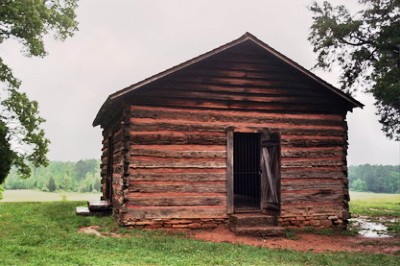
After the battle, Confederates pursued Union forces out of Chickamauga and took Missionary Ridge, Lookout Mountain, and the Chattanooga Valley, effectively barricading Rosecrans’ Army of the Cumberland inside the city. With no way to get supplies in or out, it looked bleak for Federal troops. However, Washington D.C. soon sent 20,000 reinforcements under the command of Maj. Gen. William Sherman and an additional 16,000 men under the command of Maj. Gen. Joseph Hooker to aid the Army of the Cumberland. Thomas then replaced Rosecrans, and Maj. Gen. Ulysses S. Grant took overall command. The first move was to open a supply line from Bridgeport, AL to get food to the stranded troops. Known as the “Cracker Line,” the primary foodstuff delivered to the hungry soldiers was hardtack crackers.
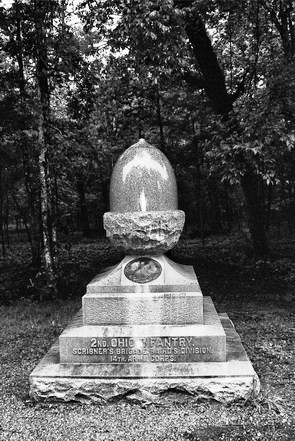 On November 23, 1863, Thomas went on the attack and drove Confederate troops from Orchard Knob. A day later heavy fog conspired to drive the Confederates from the seemingly well-positioned Lookout Mountain. With Bragg’s forces now concentrated on Missionary Ridge, Sherman’s troops moved toward the right flank and Hooker’s toward the left. Hooker was delayed and Sherman’s attack was fought back, so Thomas was ordered to move from his position at Orchard Knob, in the middle of the field, toward the base of Missionary Ridge. Thomas’s men not only marched to the ridge, but, without orders to do so, climbed it and took the position, driving Confederate forces back into Georgia. With the Confederate Army unable to return to the area, Chattanooga would now become the staging ground for Sherman’s march to Atlanta and onward to the sea.
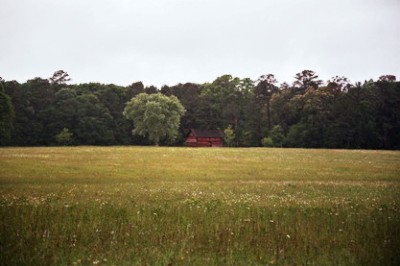
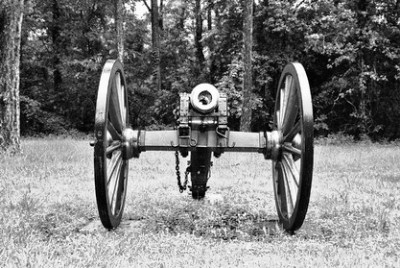
A couple things: First, the sheer number of men that were at Chickamauga is astounding. There are memorials to divisions from all over the country erected on the battle site. Even though Chattanooga was an important stronghold, it’s hard to understand why all these forces were amassed at Chickamauga Creek, on flat terrain, and at the same time. I guess it must’ve seemed like as good a place to fight it out as any. Also, if you’ve ever seen the lofty bluffs of Lookout Mountain, you’ve gotta wonder how the Confederate soldiers were driven off it. Even with a little fog it seems virtually impossible for the Confederate army to have believed that Union troops were scaling the bluffs. Plus, there was plenty of good mountain behind the Confederates, so the Union couldn’t have starved them off even if they’d wanted to. Add to that the faulty intelligence delivered to Rosecrans and there would seem to have been more than a few key errors on both sides. I suppose everyone could’ve used some walky-talkies. Thanks to the National Park Service for providing info for this post. See ya next time!
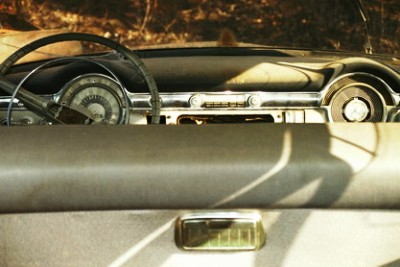
Well, it's been awhile. I felt like getting some new shots up, so here ya go. I'm now in Knoxville and things are pretty insane. So far, I've scaled tall bluffs, explored an old coal mine, been shot at (I think it was meant as "fun"; some fun!), and nearly put my hand on a copperhead. I've got photos of most of these adventures (Yes, I actually thought about taking my camera out to photograph the people shooting at me, but decided to just get moving. I DID take a photo of the copperhead.) and I'll try to get them up soon. In the meantime, here's my life from March to April: A dead dashboard at the auto salvage in Savage, MN; a winter reprise at Westwood Hills Nature Center, St. Louis Park, MN; and, finally, Maggie Valley, North Carolina.
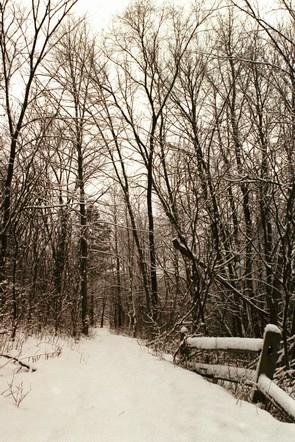
Stay tuned for much more from eastern Tennessee and beyond. For a preview, check my FLICKR site. I'm using a crummy digital camera for work and so the quality on the newer shots is a little lacking, but you'll get the, uh, picture.
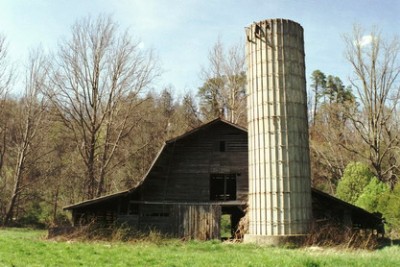
Well, this week I'm moving to Knoxville, Tennessee, so City of Dust is going to go on a little hiatus. I'll try to post again once things have settled down a bit, but I can't say for sure when that will be. The good news is that Knoxville, besides being the hometown of my favorite author, Cormac McCarthy, and the setting for one of the most famous murder ballads of the 20th Century, is nestled along the Tennessee River, at the foot of the Appalachian Mountains, not far from Smoky Mountain National Park, and just across the border from Asheville, North Carolina. In short, my camera is giddy with anticipation and, hopefully, posts will return to the original City of Dust format. That is, photographs and forgotten tales from the crumbling, kudzu-shrouded backroads of the American South; I'm just moving one state higher up. If you want to whet your appetite for the South, check out Searching for the Wrong-Eyed Jesus, the trailer for which can be seen here.
In the meantime, hell, there's an entire novel on this site, and it begins here. Further, over 300 years of history from the Central Savannah River Area of Georgia/South Carolina commences here. There's also a bunch of fictional oddities and lots of desert. I could use a break--and I bet you could too.
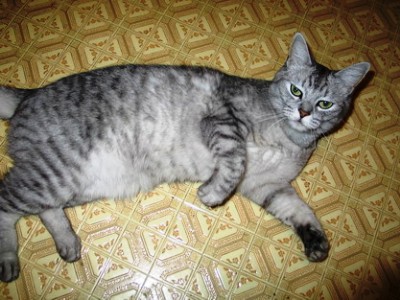
During my absence, City of Dust will be presided over by the bloodthirsty tabby pictured above. His name is McCarthy and, while he didn't write Blood Meridian, I'm sure he's capable of equally impressive feats of violence. Just because he's declawed and neutered doesn't mean he's not dangerous. He will forward any comments left here directly to me. And, if anybody has anything to say about Knoxville (or lives in Knoxville), please drop me a line--I'd love to hear whatever you have to say.
See ya in awhile.
J.
(CONTINUED) Thirty-Three
We drove around Tucson for awhile because there was nothing else to do. Again we discussed going to the police, but if that had seemed like a bad idea in Santa Fe, it felt like signing Jimmy’s death certificate now. Of course, I would have been unable to go to the police anyway. We stopped and got some fast food and ate a little of it. Then, at some point, we found ourselves on I-19 headed south. Within a couple of miles downtown Tucson gave way to ramshackle, weather beaten homes sitting on plots of barren yellow dirt, with all manner of rusted cars, desperate animals, and stricken children out front. From the highway we could see even more forlorn shacks in the distance, walls and roofs of wood or metal seemingly thrown up without thought to safety or permanence. A few miles farther and even these crude shelters thinned-out, giving the impression that neighborhoods did not exist in this place, but rather each family existed on their own island of dust, consumed by their individual troubles and difficulties, afraid that soon even the little they had would also be gone, consumed by the relentless desert.
A gust of wind blew yellow dust high into the cloudless sky and a sign on the highway marked an exit for Vallejo Dr. There was nothing around that wasn’t abandoned or destroyed, no gas stations or restaurants, just a forgotten road disappearing somewhere out into the Sonoran Desert. We were early, so I pulled the car off to the shoulder and got out. There was no one to be seen in any direction. I opened up the trunk, took the shotguns out of their cases, and laid them in the back seat. Then I got back into the car and took the 9 mm out of the holster on my shoulder. I held it in my hand.
“Are you ready?” I asked.
“For what?” Julie replied. “We don’t have a plan. Are we just going to offer them the money and hope they take it?”
She didn’t sound hysterical or angry; she sounded like someone that had simply considered the situation and found the odds greatly against her. She was right.
I put the gun on my lap. “We’ll do whatever we need to do to get your brother back safely. But we won’t know what that is until we meet these people.”
“I think it’s a trap.”
I looked around at the glittering desert that ran out in every direction. Some distance back traffic whistled up and down I-19, the sun flashing sickeningly off the aluminum semi-trailers. In front of us was nothing that I could see. “Do you have another idea?”
Julie turned to me and her face crinkled, as if she was going to start crying. She shook her head. I leaned over and kissed her. “We’ll be alright; all three of us.” She nodded like she didn’t believe me. I told her to unzip her windbreaker and get the .38 out of the holster. She did and I took the gun from her. It was loaded and the safety was off. I gave it back to her. “Fuck it,” I said, taking in that vast emptiness one last time. “Out here, if you think you need to shoot, just shoot.” It was 2:50 PM.
I fired up the Jag and we began driving slowly down Vallejo. I was watching for anyone that might be waiting for us, but nothing moved. Eventually the pavement ended and the road became dirt. About a mile off we could see a structure in front of us; an old house, sitting behind the remains of a wooden fence. As we got closer I could see that it was two stories high and made of brick that had been painted white. There were two windows above a rotted patio on the front, but they’d been boarded up. On the first floor there were no windows, but two doors. There were some rusted cars in the yard, but no vegetation. A few small outbuildings were scattered nearby and I wondered if there was anyone in them, their rifle sights trained on us. I narrowed my eyes against the glare, but I saw nothing in the yard, just the shimmering of the sun. As I pulled the Jag up I noticed the beige Land Rover parked alongside the house. It was the only vehicle visible.
I turned off the Jag and listened. Nothing. Not any sound at all. I reached into the back seat and grabbed the sack of cash and some ammo clips. Then I leaned over and put the gun in the back of my waistband. “You wait here,” I told Julie. She gripped the .38 more tightly and that pleased me. “If you hear any shots from inside, just drive out of here. Start the car and go. If anyone approaches you, shoot them.” She didn’t say anything. “Do you understand?” She looked toward the house and then back at me; she nodded. “Good. Now I’m going to go get your brother.”
I stepped out of the car and sank to my ankles in sand. I was almost to the front porch when a shot slammed into the front door of the house from my left side. For a moment I wondered if it was a warning shot, but a second shot came at me from a different direction and I dropped to the ground. I yelled for Julie to get the hell out, but didn’t hear the car start. I pulled the gun out of my waistband, let go of the sack, and began crawling through the sand for the house. I was at the front step when I saw movement behind the shell of an old car off to my left. I squeezed the gun in my right hand and waited. I could hear my heartbeat slamming in my ears and then everything seemed to slow down as, out of the corner of my eye, I saw a man begin to rise from behind the car. In one movement I pulled myself up to a squat, leveled the gun, and fired. I heard a return shot as I dropped back to the ground but I could not tell where my bullet went. I glanced back toward the car; no movement. My ears were ringing and I could smell the cordite. I quickly climbed onto the patio and looked toward the Jag. I couldn’t see anyone in it. I hoped that Julie had ducked down below the window to avoid the gunfire, but I couldn’t be sure. Just then another shot rang out from the right side of the house. It ricocheted off a brick near my head. I crouched down and tried one door and then the other. They were both locked. I crawled over to the left side of the house and raised myself up slightly, just enough to peer over the short brick wall that enclosed the porch. Nothing. I dropped back down, waited a moment, then raised myself up again. Still nothing. I raised myself one more time, a little higher. Nothing. I leaped over the side of the porch and pressed myself against the side of the house. Then I saw the man behind the car lying in the dust. He wasn’t moving. I looked one more time toward the Jag, but I still didn’t see Julie--or anyone else. I hoped the other shooter--and anyone else--would come after me.
Slowly I crept along the side of the house and at the back I saw a ramshackle set of wooden steps leading to the second story. I stepped around the corner and was almost to the stairs when a shot hit the railing, splintering the desiccated wood. I dropped into the sand again and tried to locate the shooter. There were two outbuildings on that side and I was pretty sure the shot had come from one of them, but I didn’t know which. I was pinned down, so I fired at the building on the left. I waited a moment but my shot was not returned. Then I fired at the building on the right and a split-second later a bullet whizzed a couple feet over my head. I unloaded the rest of my clip into the building and, as I was jamming a new clip into the gun, I saw the man run out from behind the building toward the front of the house. I shot three times in quick succession and he fell just a step before the house would’ve blocked my bead on him. Then I stood and picked my way quickly and carefully up the steps.
At the top of the stairs was a door and I eased it open then waited a moment before entering. Inside was a small entry room strewn with old newspapers, rotted clothes, and garbage. Dirt was two inches thick on the floor. Another door opened out of the little room. I opened it gently with my foot and stepped quickly back from the doorway but a voice from the other side said, “Come in.” I glanced around the jamb and saw a much larger room. On the far end was a small platform, perhaps a foot high, and Jimmy and a man were on top of it. Jimmy was seated, his arms and legs tied to the chair, and he was gagged and blindfolded. The man had a gun pressed to Jimmy’s temple. “You might as well come in,” he said. “Because, if you don’t, in a few seconds you’ll hear a shot and then all of this will have been for nothing.” I began to step into the doorway, leading with the gun, but the man said, “No, no, no, not like that. Put your hands up.” I hesitated, but the man drew the trigger back slightly on his own gun and Jimmy shivered, so I raised my hands over my head, hooking my index finger through the trigger guard of the gun, letting it hang free. I stepped into the dark, dusty room and got a good look at the man, who had long, greasy black hair and was wearing shorts and a tank top. He smiled as I came toward him and I knew then that he was no big-time dealer but a common street thug. He was undoubtedly working for someone else; I just hoped they wouldn’t show up. “You must’ve killed those guys, huh?” The guy laughed as I came closer. “I guess you’re pretty tough. The boss ain’t gonna like that. I’m not lookin’ forward to explainin’ it to him.” I was about ten feet away from Jimmy and could see his chest heaving. His clothes were spattered with blood and his face and arms were bruised. He’d been beaten up, but I couldn’t tell how badly. His right hand was tied tightly to the chair so I couldn’t see where his finger had been cut off.
“Where’s the money?” the man asked.
“It’s in the front yard,” I said.
He looked at me strangely. “The front yard?”
“I needed to have my hands free.”
He smiled again. “Of course. Is it all there?”
I looked around the empty room. There was nowhere to hide, no easy escape. “As much as we could get,” I said.
His smile quickly became a frown. “Where’s the girl?”
“In the car.”
Now he smiled broadly and it told me a lot about him, more than I would’ve liked to have known. “Ah, that’s good. Joey--that’s the guy who was tailing you--I guess you just killed him--Joey said the kid’s sister’s a looker.” He tousled Jimmy’s hair with his free hand. “I guess it runs in the family. Anyway, we had some plans for you guys. We sure as hell did.” He looked casually around the room and I noticed a bag and a pile of rope at his feet. Then he turned back to me and laughed. “But now it’s just me with the plans.” Suddenly he kicked Jimmy’s chair hard and the kid went head over heels off the platform. I tried to aim my gun, but it was too late. A bullet hit me in the left side and the shot I got off was so high it probably went through the roof. I reflexively dropped the 9 mm, put my hand to the wound, and fell to the ground. It hurt more than I could believe. I’d heard that sometimes there was numbness or a dulling of sensation, but I was not so lucky. Blood ran through my fingers, sticky and warm. I thought of Anne, shot in the stomach just like me, and wondered if she’d been in as much pain as I was in. It hadn’t seemed that she’d suffered, but maybe she’d just been unable to communicate what she’d felt. The thought was unendurable.
I heard footsteps approaching me from the platform, dull thuds against the old wooden floorboards. I heard the man kick the 9 mm away and when I looked up I saw him standing over me, the gun pointed at my face. He laughed. “Now you’re all going to die, but I’ll just get you out of the way first.” He looked around the room once again and said, “I don’t know where the girl went, but I bet I can find her. Personally, I wouldn’t have brought her out here for this. But the three of us will make a night of it now.” He drew the hammer back on the gun. “I just wanted you to know that before you died.” I closed my eyes. For a brief moment I thought of Anne and wondered if I’d see her. But then I thought of what might lay ahead for Julie and Jimmy and what my role had been and I felt something that there are simply no words for. If I couldn’t stop what was going to happen, if this was the place I’d brought Julie to, then I wanted this man to kill me. Seconds passed and nothing happened. Suddenly everything seemed strangely still and quiet so I opened my eyes and saw that the man had his hands up and a funny expression on his face. I could see that Julie was standing behind him and, though I couldn’t see much of her, I noticed that she wasn’t wearing shoes. I knew immediately that she had the .38 pressed to the back of the man’s head. The man tried to laugh. “Well, ha ha, let’s just take it easy now. I only wanted to scare…” But before he could finish his sentence there was a crack that echoed loudly through the big empty room. The man dropped to the floor and a fine mist fell across my face. Blood and brain matter; I could taste it on my lips. Julie just stood there, holding the gun in front of her. Her clothes were spattered with gore. She didn’t look at me and she didn’t look at the man she’d just killed. She didn’t even look at her brother. She just stared straight ahead, as if no one else was there. As if nothing had happened. I tried to say something, but a bolt of pain flashed through my side and I just groaned. Julie slowly lowered the gun and looked at me. I pointed to Jimmy, still tied to the chair, now sideways on the floor, struggling uselessly to free himself. Julie ran to him and it seemed to take her a long time to get the ropes off. I heard her cry out and I assumed she’d just seen his hand with the pinky finger hacked-off. A few seconds later she and Jimmy were by my side. Jimmy looked bad, but it seemed like he could get around. I, on the other hand, was in somewhat worse shape.
“My God,” said Julie, kneeling beside me, her hands already bloody. “We need to get a doctor.”
I shook my head. “Just get me out of here,” I gasped. “Let’s go for Mexico.”
Julie touched my side and the pain was excruciating. “You can’t get across the border.”
I managed to sit up. “Let’s worry about that when we get there.” I took a deep breath and saw stars. “We need to leave now before anyone else shows up.”
“He’s right,” Jimmy said. “Those guys were just hired for the job.”
“You mean there’s someone else?” Julie asked.
Jimmy picked the 9 mm up off the floor and then told his sister to take my left arm. But he didn’t answer the question.
They got me to my feet and we started for the door. Neither of them was strong enough to support my weight, so I worked to keep myself upright by favoring my right side. We stopped at the top of the steps and Julie got her shoes and put them back on. “Can you drive a stick?” I asked her. She nodded and then we started down the rickety staircase, slowly, fighting for balance. It seemed to take an eternity to descend one story. After that, it was easier to get through the yard to the car; the pain was lessening, but I was beginning to feel weak and woozy. Julie opened the back door for me, but I told her I was going to ride up front. “There’s something I have to tell you,” I said. “And I have to do it now.” Jimmy helped me into the passenger seat and when I sat down it felt like a hot poker had pierced my side. I struggled for breath. Julie asked me if I was okay and I nodded. I told Jimmy to grab the bag of cash off the lawn and then he got in the back seat, the shotguns across his lap. Julie came around the driver’s side. The keys were still in the ignition and she turned the motor on, backed around, and headed toward the interstate.
Thirty-Four
We could just see I-19 up ahead, the cars like cast iron toys, when I told Julie to pull over. There was no one else on Vallejo Dr, which was probably not unusual. Off the road was an old weather-beaten shack. I gave Jimmy the 9 mm and told him to get the .50 caliber out of my bag. The guns were a liability now and we had to get rid of them. If we found ourselves in a situation where we needed to start shooting, there’d be no hope for us anyhow. Julie gave her brother the .38 Special and then I told him to take all the guns and the shotgun bags to the shack and see if there was any place inside where he could hide them. He got out of the car and limped to the shack; at the house I hadn’t noticed that his leg was injured. He seemed to be having trouble holding the guns, probably because of his hand, which I’d forgotten about, but in a few moments he was back.
“There was some corrugated metal in there,” he said. “I put them under that.”
“Good enough,” I replied. Then I told him to put the sack of cash in the trunk; we couldn’t afford to leave that.
We were about 45 miles from the Mexican border, but none of us would get through looking like we did. We stopped at a motel in Green Valley and Julie put on a different coat and wiped her face and then went and got a room. I’d bled a lot and felt dizzy. I wanted to sleep, but knew I had to fight it. Taking off my shoulder holster hurt badly and the pain woke me up a little. Jimmy’s right hand looked terrible and, as Julie peeled back the filthy wrapping, he gagged. She took him to the bathroom and cleaned him up as best she could. I heard him cry out a few times. When he came back into the room he was pale and shivering, a frightened kid standing in his underwear. My clothes were too big for him, but he put on a shirt of mine and his own pants, though they were a little bloody. His right hand was swollen and yellow-green. His eyes were blackened and he had a number of small cuts on his face. Hopefully, he wouldn’t have to get out of the car. He laid down on the bed and closed his eyes while Julie wrapped a sock around his hand. Then Julie helped me to the bathroom. I carefully stripped off my bloody clothes, making sure not to look at the bullet hole yet, while Julie filled the tub with lukewarm water, repeatedly testing the temperature with her hand. If the water was too warm, I might start bleeding badly again; if it was too cold, I might go into shock. I stood there naked for a few moments, but finally I looked at the wound. It didn’t look as bad as I’d thought; just a blood-crusted hole below my stomach, the flesh around it jagged and purple-yellow. A thin stream of red still ran from the center of the wound. I touched the area gently and sucked in my breath. The pain came in waves. The bullet was lodged inside me. Julie turned when she heard me exhale and opened her mouth but didn’t make a sound.
“What’s wrong?” I asked. “Never seen a naked man before?” I tried to smile but the pain made it come out all wrong.
“You need a doctor,” she said.
“I know,” I replied, as she helped me into the tub. “But we have to get to Mexico.”
“Why?” she asked, wiping the flecks of blood off my face.
“Because it’s the only place where we’ll all be safe.”
I don’t think Julie knew what I was talking about, but after another minute the water in the tub began turning red and the hole in my side was flowing again. Julie helped me up and then dried me off with a towel. She put a sock over the wound and held it in place with my belt. Then she helped me get dressed. I was pale, but on first glance no one would know that I’d just been critically wounded in a gunfight with three drug dealers that were now lying dead in the desert.
Julie ran a washcloth over her face and arms and changed clothes. I could still see specks of blood in her hair, but there was no time for her to wash it. I knew I needed a doctor soon. She put the room key on the table and we went out to the car.
We got back on the interstate and Julie had the Jag over 80 mph in a few minutes. I told her to keep it to 75 and when she asked why I didn’t answer. I thought I saw her hand shaking on the steering wheel, but it was getting hard to stay focused on anything. I knew that if I died she had to understand that what she’d done was okay. She could live with it, as I’d tried to do. We were 35 miles from Nogales when I began to tell her what had happened after I’d left her in the plaza on the day I went back to San Francisco. I told her about my ex-wife and our baby and how maybe we were going to work things out. Then I told her how my entire life had died in my very arms and how I’d brutally murdered the man responsible. I said that I’d fled to Santa Fe out of fear and guilt and shame, but that I was not sorry about that now; I was sorry about other things. I had to stop occasionally when I lost my train of thought; everything was beginning to feel unreal. Behind me I heard Jimmy mutter, “Fuuuck.” I wiped my eyes and Julie began to cry softly, but whether her tears were for me or herself I didn’t know.
“You’ll learn to wake up each day knowing you’ve killed another person,” I said, starting to slur my words. “And you can still find joy and love and beauty in that day even though you’re a different person now, even though you’re different from most people now. You know something that it would be better that you not know, but there is strength in that.”
I truly believed there was no reason for Julie to feel guilty. But I didn’t believe that absolution was so clear for myself. I had now killed three people, but it was what had happened to Anne and our baby--and what could’ve happened to Julie and Jimmy--for which I was not sure I could ever forgive myself. I was suddenly confused about so many things and I tried to go on, to explain, but Julie stopped me. “We’re at the border,” she said quietly. I hadn’t even noticed.
We sat in a long line of cars and I could see a light pink stain on my shirt; the blood had soaked through the sock. Every now and then the noise of the traffic on either side of me would disappear for a moment and then reappear. I thought about why that was happening and then realized I was blacking out for short periods. Julie looked over at me and I knew she was frightened, but not for herself. It occurred to me that she might just tell the border guard we needed a doctor and that would be that. But then I faded out again and when I came to Julie had taken my wallet out and was holding my license.
“Tom, Tom! He’s coming. Take this.”
I saw that the guard was at the car in front of us, looking in the window. He motioned for them to pull over for inspection. I wondered if that meant they inspected every car or if this was random and our chances of being searched were now reduced. It was hard for me to follow the thought any farther. The guard came up to Julie’s window and she smiled and said hello and handed him her license. He asked her if we were staying in the border area and she told him we were. Then he asked her the purpose of our visit and she told him we were going shopping. He laughed at that and then asked for Jimmy’s identification. Jimmy handed his license up with his left hand, trying to keep his mangled right hand out of the guard’s view. The guard seemed to spend a long time looking at the license. Then he looked back at Jimmy.
“What happened to you?”
“I was hit by a car while biking.”
The guard looked at Jimmy’s license awhile longer.
“Are you two married?” the guard asked, pointing from Jimmy to Julie.
Jimmy managed to laugh. “Naw, she’s my sister.” It sounded perfectly natural.
The guard laughed too, but it did not seem genuine. Then he looked at me and any trace of a smile fell from his face. It was hard to keep my eyes open. I handed him my license, but I don’t think he’d asked for it yet. He looked at it for awhile, glancing up at me a few times. I’d actually forgotten that I was a fugitive. He was just about to say something when there was yelling from the next bay over, where the car that had been in front of us was being searched. Some dogs had started barking and it sounded like an argument had begun.
“We got something!” someone shouted.
The guard at our car turned to look at what was going on. Several more guards were running to the scene. The guard handed my license to Julie and said, “You folks have a nice time in Mexico.” But he wasn’t even looking at us anymore; he’d already stepped away from the car and started over to help his colleagues.
“That’s funny,” I said, as Julie slowly pulled away from the border station and out of the United States. “Who would smuggle drugs INTO Mexico?”
And that’s the last thing I remember.
Last
When I woke up Julie was holding my hand. I was in a small hospital room. There was a funny taste in my mouth.
“Where am I?” I asked.
“Mexico,” Julie said. “I had to use some of Mary’s money to bribe some doctors, but they said you’ll be okay. They got the bullet out, but you lost a lot of blood.”
I tried to sit up, but it hurt too much. “Good work,” I said, easing back onto the pillow. I asked for a glass of water and while Julie poured from a pitcher by the bed I thought of something I’d written the day before Anne had been killed: “…lives stained by blood are forever intertwined.” I smiled at Julie and she smiled back, a little sadly, it seemed. She looked tired and much older than that day I’d seen her at the Mission. I thought she was beautiful. We talked for a bit and she told me that Jimmy would be okay; it was just the tip of his little finger. I said that I figured she’d saved my life at least a couple times over. She replied that she thought we were about even, but I knew that wasn’t right. I noticed that she’d brought my bag in and I asked if she could hand me my cell phone. She dug around and found it. I only listened to the last message, from Ruben:
“Tom, the cops know you didn’t do it. I’d say you only did what had to be done. I don’t know where you are, but they’re still after you for killing that guy and taking off, so you better stay gone. By the way, I went to the Albuquerque airport to get my truck back, and as I was backing out of the parking spot the front wheel fell off.” He laughed and when he spoke again his voice sounded far-off and sad: “Hey, man, I hope to hear from you some day. I don’t know when or how, but try to get in touch. Take care.” The message ended and I replayed it for Julie.
“He sounds like a good friend,” she said.
“Yeah, I hope you get to meet him sometime.”
I was in the hospital for three days and on the fourth I was discharged. It was hard to walk and I still couldn’t take a deep breath without considerable pain. Julie and I went outside and Jimmy came across the street to meet us, still limping a little. He had a clean, white bandage wrapped around his right hand and the cuts and bruises on his face were lightening. He and Julie must’ve gone shopping because he was dressed in bright new clothes that were distinctly Mexican. He thanked me and began to apologize but I told him to forget it, that nobody owed anybody anything. Of course, it was I that owed them everything. I asked what we were going to do next and Jimmy said that they’d bought three tickets to Los Mochis that morning. No one had asked me if I’d wanted to go; they didn’t have to. The bus station wasn’t far and we waited on a bench outside, our bags at our feet. Jimmy held the cash, now in a small suitcase and totaling just less than $22,000, on his lap. Julie told me that after I’d come out of surgery she’d driven around looking for somewhere to park the Jag. She’d left the keys inside and the windows open. I hated to see that car go, but I knew she’d done the right thing; it would be stripped or smashed or lit on fire by now, gone without a trace. I dropped my cell phone in the garbage can next to the bench.
When it was time to board the bus Jimmy went ahead of us. I could see sorrow and happiness and more in Julie’s face as she took my hand and helped me up the stairs. We hadn’t really talked about what had happened back there in the desert and we would have to, for her sake, but not yet. She was sitting next to me, still holding my hand, when the bus pulled away. She told me that she was going to write Mary soon to let her know we were okay. She felt bad about the money. I looked over at Jimmy in the seat across the aisle; he was resting his head against the window, his eyes closed, the suitcase of bills wedged tightly between him and the side of the bus. I figured we’d have to keep moving from here on out. But it didn’t feel like running. I squeezed Julie’s hand. My story was getting better. THE END
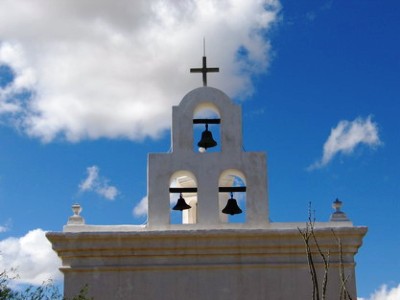
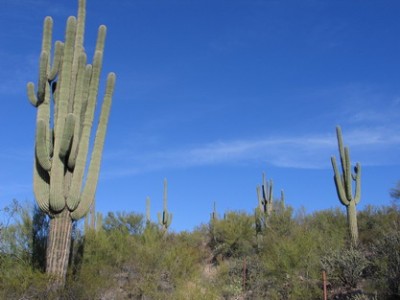
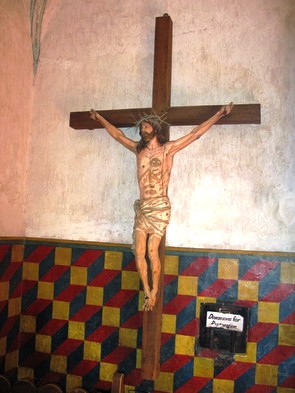
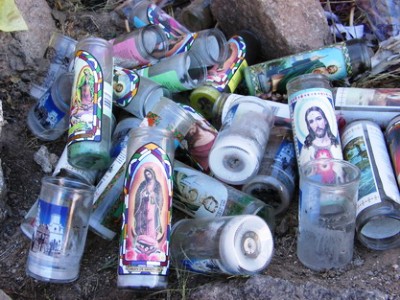
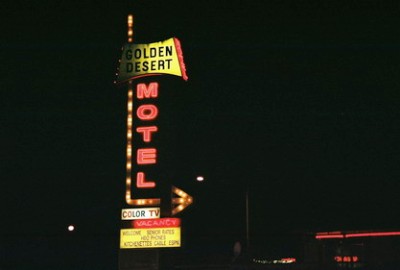
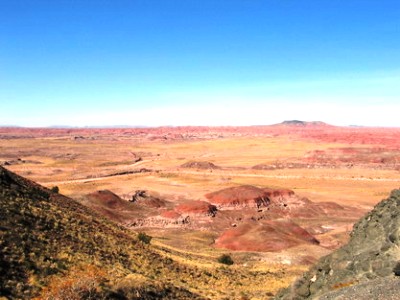
The top shot was taken somewhere near Mammoth, AZ, just before 77 meets the harrowing Highway 60. The remaining three photos are from Mission San Xavier del Bac, just outside of Tucson, AZ.
(CONTINUED) Thirty-One
The restaurant was called Rosarita’s and it was very dark inside. There were strings of tiny bulbs—probably Christmas lights—around the windows and along the top of the ceiling. It was a big place, with dark red carpet and red tables. Deep booths lined the walls, but it was late and there weren’t many customers. The hostess got up slowly from the chair she’d been sitting in and showed us to a booth. Our waitress brought us two glasses of water and menus. It was hard to know what to order.
“Are you alright?” I asked Julie.
She leaned forward and rubbed her eyes; they were still red. “I don’t know. I feel weird. None of this seems real. Maybe I’m just tired.”
I nodded. I felt the same way. Only I was starting to get used to the feeling. It occurred to me that I might feel like this for the rest of my life. “But I do like the desert,” I said, “Even at the worst of times; maybe especially at the worst of times.” I asked Julie if she’d ever lived anywhere else.
“I’ve never even thought about it,” she replied. “Maybe because I couldn’t imagine leaving Jimmy. Or maybe I just never had a reason to go anywhere else.” She hesitated a moment, then went on: “All my friends are in Santa Fe. I like working at the gallery. Even after all this time I think it’s a beautiful city.”
“It is,” I agreed.
The waitress came back. I asked for huevos rancheros and hash browns. Julie ordered a plate of nachos, the “Grande Plato.”
I didn’t know whether I should say what I had to say right then, but I figured it might be the last bit of calm for awhile, so I told her, “We can’t go back there, you know. Even if it goes better than we have any right to expect.”
“I know,” she said. “I’ve been thinking about that. I left a lot behind.”
I tell her that maybe Mary can pack up her apartment, that there might be a chance we can retrieve some of her belongings. I don’t know if that is true, but I hope that it might be. Then I ask her if there’s anywhere she can think of that would be safe to go. Maybe some place where she knows someone that could help us, someone like Mary.
She thought for awhile and then shook her head. “I can’t ask anyone to get involved. Mary can take care of herself. But what would I say to somebody else? How could I tell them?”
She was right and I was happy and I didn’t want to think about why.
“Do you know anyone?” she asked.
I thought of Ruben and shook my head. “I’m afraid I’ve burned a few bridges lately.”
Julie ran her finger down the condensation on her glass of water and said, “I haven’t even told my mother.”
The waitress brought our food and I started to feel better after the first bite. The portion was huge, but I quickly made my way through it. Then I started to help Julie work on the nachos; it really was a grande plato.
“I think we should go to Mexico,” I finally said.
Julie stopped eating. “Mexico? How will we get across the border? I don’t have a birth certificate or passport and neither will Jimmy.”
“If we go across at Sonora and act as if we’re going to stay within the border zone we might be able to get through with just our driver’s licenses. Or maybe we could leave the Jag on the U.S. side and walk across. I don’t know. We’ll have to see when we get there, but I think we should try.”
Julie ate another nacho and then said, “Okay.” Just “okay,” resigned, like there was no other option.
But for the first time in a long time I began to feel a spark of optimism. I thought that if we could make it through the next day then there might be a way out—completely out—for all of us. Yet I knew that the “if” was very big. And then, after that, we’d still need some luck at the border.
We finished our meal and I paid the bill with the last few dollars I had. I felt a little anxious to be out of money but then remembered that there were thousands and thousands of dollars back at the motel; it hadn’t occurred to me until then that petty cash was the one thing I didn’t have to worry about. When we returned to our room it was after midnight and as I closed the door Julie took my hand in hers. It was dark and I pulled her toward me and we kissed and then we kissed again and I ran my fingers through her hair and down her back. I took off the suit coat that had belonged to Mary’s dead husband, unbuckled the shoulder holster, and put the gun on the dresser. Julie unbuttoned my shirt and pulled it off me. After awhile we laid down on the bed and I took off her jeans and blouse and we kissed some more and then we stopped. I looked at her and she traced her fingers along my lips and I touched her cheek. “It’s too much,” she said. “I don’t want to feel this. Not until I know I’ll be able to feel it again.” I nodded and reached one hand down to pull the covers over us. She kissed me one more time and turned away, keeping my other hand tightly in hers and held to her chest. I pulled her close to me and, though I could not be sure, I thought that before long she was asleep.
Thirty-Two
I laid in bed for awhile listening to the cars and trucks on the interstate, trying hard not to think of what the next day held in store. I could faintly smell Julie’s shampoo and I remember that it reminded me of coconut and strawberries. It struck me that the combination seemed unusual and that’s the last thing I recall before thankfully--mercifully--falling asleep. When I woke I couldn’t tell what time it was. I could see light around the window, but the thick curtains made it impossible to tell if it was 6 AM or noon. We’d left the air conditioner on and the room seemed cold. Julie was still in my arms but I knew she was awake because she was squeezing my hand harder than she would have if she’d been asleep. I looked at the clock: 8:54 AM. I was glad for the decent night’s rest.
“How are you?” I asked.
“Scared,” she said, turning over to face me.
“Yeah, me too.”
We kissed and held each other.
“I want to thank you,” she said, her hand against my cheek. “You didn’t have to do this.” She looked sad and frightened and beautiful.
“You don’t have to thank me. Not now or ever. I should thank you.” She looked at me and I knew she didn’t understand. I wondered if I should tell her about what had happened back in San Francisco, but I immediately thought better of it. We already had enough to deal with on this morning. “When this is over you’ll know all about me,” I said, then pulled her to me again.
We kissed for awhile longer, running our hands over each other’s shoulders and stomachs and arms. In her touch I could tell that she was determined to do whatever had to be done that day. She’d found that reserve of strength that each of us must locate if we’re to get through the most dangerous times in life, those times that will destroy us if we aren’t strong enough for them. She would do whatever was necessary to save her brother or die trying.
Finally, I got out of bed and got some clean clothes and went to take a shower. When I came out of the bathroom Julie was standing in the middle of the room. She had taken the .38 out of its holster and was holding it in her hand, the barrel pointed to the floor. “I don’t know if I can use this,” she said. “I’ve never shot a gun in my life.” I went around behind her and raised her arms. I told her to grip the gun with both hands and hold it steady in front of her. Then I stepped away. “There won’t be much kickback with that gun, but there’ll be some. It’ll be loud, so don’t let that scare you. Just hold it as straight and level as you can.”
“Do you think I’ll have to use it?” she asked.
“I hope not,” I said. “We’ll have all kinds of trouble if it comes to shooting. Hopefully you won’t even have to take it out of the holster.”
“Then what are we going to do?”
I started putting my shoulder holster back on. “I’m not really sure. Maybe we can just give them what we’ve got and that’ll be the end of it. After all, this is all the money we could get.”
“What about the things at the gallery?”
I took the 9 mm out of the holster and checked the action. “I don’t believe they gave us time to sell many paintings. Besides, they’re not yours.”
Julie went to the bathroom and I sat back down on the bed and waited. I felt like I had a clear purpose and, at that moment in my life, it counted for something. But I worried that I wouldn’t be able to protect Julie. Her safety was my main concern and I was going to make sure that as long as I was up and breathing nothing would happen to her during whatever was to come.
It was 10 o’clock when Julie and I walked back over to Rosarita’s. I doubted she had an appetite and I didn’t either, but I wanted us to have something to eat. I asked her to put the .38 Special on before leaving the motel, but she insisted we wait until we got back. We had eggs and pancakes and coffee and Julie told me a story about how her brother had gotten himself stuck in a concrete drainage pipe when he was six. The fire department was called out to free him but after an hour of trying Jimmy was still in the pipe. It was determined that they’d have to crack the pipe but they didn’t want the ground to collapse and crush him. So, they’d brought in a backhoe and very carefully dug the soil off the top off the pipe. They’d had to work slowly and as the hours passed the whole neighborhood came out to watch. Some people brought food and water which they pushed in to Jimmy by using metal extension poles of the kind used to clean leaves out of gutters. When it got dark the firemen set up giant arc lights to work by. Finally, the pipe was exposed and a jackhammer was used to crack the concrete. Afterward, pale and cold, Jimmy had said that the jackhammer had made the pipe vibrate so much that his bones ached and he felt like his skin was humming. It had taken thirteen hours to free Jimmy and that night Julie had cried herself to sleep with relief, vowing never to let anything bad happen to her brother again. At the time she couldn’t have known how difficult a promise that would be to keep.
We paid our bill with some cash I’d taken out of the bag and went back to the motel. It was 11 o’clock and we decided to go over to the payphone. I helped Julie put the holster on and she trembled a little as I pulled the buckle snug. Then she put a windbreaker on over the gun and we put the money and our bags in the car. I went to return the key and then we drove over to 9th Street and parked across from the Empire Laundry. The payphone we’d been told to go to was at the corner and we’d be able to hear it ring from the car. We sat and watched the traffic on the street, not saying much to each other. I kept my eyes open for the Land Rover or anybody else that might look suspicious, but didn’t see anybody. At 11:58 the phone rang and, although we’d never discussed it, I got out of the car and ran across the street. I got to the phone on the third ring.
“Hello,” I said.
“Who is this?” asked the voice on the other end flatly.
“Tom Gould. I’ve come from Santa Fe to pick someone up.”
There was a moment of silence. “Yes, I was told that Jimmy’s sister hadn’t come alone. Why did you work so hard to lose my man?”
“I have some problems of my own,” I said. “Being followed makes me nervous.”
“I see,” replied the man. “What kind of problems do you have?”
“I’d rather not say. It doesn’t concern Jimmy or his sister. It’s my own problem.”
Another moment of silence and then the man raised his voice: “I don’t have time to fuck around here. If you want that kid back you better let me speak to his sister.”
I leaned into the phone and lowered my voice. “Listen, I don’t give a damn about the kid. Whether he lives or dies doesn’t mean a fucking thing to me. He’s going to wind up dead someday soon anyway. I only care about making sure nothing happens to his sister. That’s why I’m here. So, you deal with me. I read the note you sent and it said nothing about her coming alone.”
I held my breath for a few seconds and then the man laughed. “Fine, have it your way. I’ll tell you where to drop off the money and at that time you’ll be told where to find Jimmy.”
“No,” I said. “We’ll meet you in a public place, somewhere downtown.”
“I’m afraid I can’t do that,” the man replied. “Maybe you should speak to Jimmy.”
I heard some rustling on the other end and then Jimmy came on, his voice high and ragged. “Julie!” he yelled. “Don’t…” There was a loud thump and then I heard garbled shouting and more thumps. The man came back on the line: “I guess he doesn’t want to talk to you. It sounds like he’d like to speak with his sister.”
“I told you I don’t care if you kill him,” I said. “It’s only because his sister does that I’m trying to keep him alive. But you have to give us something I can work with.”
A few more moments of silence passed. “Okay, there’s an abandoned house at the end of Vallejo Drive, out beyond the Yaqui Indian Reservation. It’s south of town, off I-19. We’ll be inside with Jimmy and we can do the exchange there.”
“Fine. What time?”
“3 o’clock. And if you bring guns we’ll kill Jimmy, his sister, and you.”
Then the phone went dead.
Julie watched me walk across the street. “Is Jimmy okay?” she asked, as I got in the car.
“Yeah, I talked to him,” I said.
She was visibly relieved. “What do we have to do?”
“We’re going to meet them at an old house south of town, near the Indian reservation. He said to be there at 3 o’clock.”
She bit her lip. “I don’t like it.”
I started the car. “No, me either.” (CONTINUED)
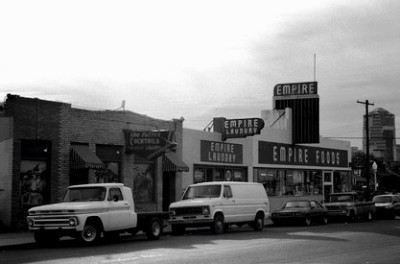
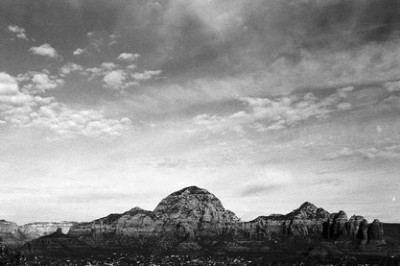
The top shot was taken on Route 66, Gallup, NM. The middle photo is the view across Sedona, AZ. The last photograph is 9th St., Tucson, AZ. We'll wrap this up next time.
(CONTINUED) Twenty-Nine
I fell asleep for a few hours just before dawn and when I awoke the sun was well up but the house was quiet. I lay in bed and listened for awhile, but heard nothing, so I got up and put on some clothes and went downstairs. When I entered the kitchen I was surprised to see both Mary and Julie sitting silently at the table drinking coffee. I could feel the tension in the room. No one said anything as I went to the coffee pot and poured myself a cup. Then there was nothing to do but join them at the table. I pulled out a chair and as soon as I sat down I realized why no one was speaking; there were no words worth saying, nothing that could be easily expressed that would befit our situation. Silence was the only appropriate choice and so I drank my coffee and kept my own council and some of my thoughts were no doubt similar to those of the two women sitting next to me and some necessarily different; none were like any I had known until recently, even though I had written stories full of violence and pain, love and uncertainty, difficult decisions and death. But now that I finally knew the difference between literature and flesh-and-blood life I doubted whether many of the characters I’d created could’ve survived in the real world for very long. I began to wonder how much of myself was of my own creation and figured that the less that was down to me the better were my own odds of survival.
We each finished our coffee and then Mary finally said that we better get going and we all went out to the garage and Julie and I got in the Jag. Mary waited until I’d backed into the driveway and then she closed the garage door and got into the passenger seat. “Let’s go to First National Trust,” she said. “It’s down by the convention center.”
It was a busy Monday morning in downtown Santa Fe. Groups of pedestrians were gathered at the crosswalks and it took us longer than usual to get the few blocks from Canyon Road to W. Marcy Ave. I kept watching for anyone that might be following us, but there were a lot of cars on the road and it was difficult to keep track of them. We drove around the block a few times looking for an empty meter, then gave up and pulled into the municipal lot. I waited in the car while Mary and Julie went inside. I looked around and watched the cars and people and nothing seemed suspicious and everything seemed suspicious. I was driving a car with the wrong plates on it and shotguns in the trunk. I was a fugitive from justice and on my way to Tucson to try to rescue a drug addict from drug dealers. Sitting there in that parking lot, I started to feel nervous.
After a few minutes, Mary and Julie came out of the bank holding a canvas bag. They got back into the car and Mary told me to go to the Bank of America near the interstate exit. Again I watched my mirrors, keeping to the speed limit or slightly below. I didn’t notice anything. I waited in the car while they went into the bank. Ten minutes later they came back out with a bag.
We repeated this routine at five more banks. Nobody had an account at the last two—Mary and Julie just went inside and stood in the lobby—but we figured if we were being tailed it would appear like we were rounding up every last penny available. Including the gallery money, we had $31,094.00. Then we went to Julie’s apartment so she could pick up some clothes. I was afraid someone might have been to her place over the last two days--they might even still be there--so I went with Julie and Mary stayed in the car. But Julie said her apartment was just as she’d left it and if anyone had been in they hadn’t left the slightest trace. She checked her messages, but other than a couple calls from friends wanting to get a drink or dinner there was nothing. She quickly packed an overnight bag and we went back to the car. As we were heading back to Canyon Road I turned off Alameda and noticed a beige Land Rover slow behind me. In my rearview mirror I could see the driver, a man in his mid-thirties with two day’s worth of stubble, look at the Jag. He was wearing sunglasses, so I couldn’t follow his eyes, but it seemed like he had noticed something. However, he didn’t make the turn, but sped up again and continued straight ahead. We might’ve attracted his attention for several reasons and nothing good could come from most of them. I glanced at Julie and Mary but they were absorbed in their own thoughts and didn’t seem aware of much else.
We got back to Mary’s and I pulled the Jag into the garage. No one had eaten anything yet and Mary said she’d make us all brunch. I would just as soon have gotten on the road, but we needed something in our stomachs. Mary made us blueberry pancakes and put out a bowl of fruit. Julie only picked at her food but I told her she should eat and so she finished what was on her plate. Afterwards I packed a small bag, put the .50 caliber on top of my clothes, and strapped the 9 mm over my shoulder. Then I put on one of Dane’s suit coats that Mary had given me; Dane had been bigger than I and there was no visible bulge from the holster. The .38 was still in the living room where Julie had left it and I picked it up and put it in my bag with the .50 caliber. Then all three of us stood by the garage door for a couple minutes.
“We weren’t being followed, were we?” Julie finally asked. “Maybe we should just go to the police.”
I thought of that Land Rover but didn’t mention it. Instead, I said, “I think it might be risky.”
Mary nodded and Julie seemed about to cry again. “Then what are we going to do?” she asked.
“You’ll know what to do when you get there,” Mary replied. She seemed to mean it.
Mary and Julie embraced and then I thanked Mary and gave her a hug and she wished us luck and told us to call when we could, though she wouldn’t expect to hear from us until everything was over. Then she opened the garage door and Julie and I got in the Jag and drove back out into the cloudless blue noon and down Canyon Road. That payphone in Tucson was 600 miles away.
Thirty
We merged onto I-25 south out of Santa Fe and continued down to Albuquerque on the busiest stretch of road in the state of New Mexico. But it was the middle of the day and traffic was light. Julie looked out the window at the desert passing by--the dry gullies, blown-out trailer homes, and sprawling gas stations--but as we got closer to Albuquerque even the remnants of the desert gave way to strip malls and car dealerships. We made good time through the northern part of the city and picked up I-40 west. Soon Albuquerque was behind us and the desert reared up again as the buildings fell away. The sky loomed turquoise overhead, the sun flashed off semi trailers stacked fifteen and twenty deep in the next lane. We had yet to speak a word.
We’d been on the road for over two hours when I stopped in Sky City to get gas and something to drink. As I pulled off the highway, I noticed a beige Land Rover in the rearview mirror, but it continued west on the interstate. I could not be certain, but I thought it might be the same one I saw in Santa Fe. I began to suspect we were being followed. We wound down the frontage road, the suddenly bumper-to-bumper traffic creeping along. On the left was a massive gas station, the pumps and concrete apron spread out like an airport runway, a couple dozen semis parked along the far side. On the right was a casino, and a constant stream of RV’s and pick-up’s pulled in and out of the parking lot, which was separated from the road with orange pylons and presided over by an Indian directing vehicles with a pink flag. We had to wait in line to get to the pumps and I asked Julie if she wanted anything. She said that she’d come inside and I figured that was a good sign.
Finally, we got to a pump and I told Julie that I’d lost my credit card and she’d have to pay for the gas. In a way it was true; I’d cut my card up into little pieces back in Santa Fe. Somebody would’ve been watching for those numbers, I’d felt sure of that. Now I was almost out of cash. She gave me her card and went into the station. A couple minutes later I went in to buy a soda and two ice cream sandwiches. I didn’t see Julie inside and figured she was in the restroom. There was a copy of USA Today at the newspaper stand and I thought about picking it up, but didn’t. There was nothing I needed to know. I went back out to the car and waited for Julie. I’d finished my ice cream sandwich and was starting to get a little nervous when Julie finally came through the door of the station with a USA Today in her hand. She tossed the paper in the back seat before getting into the car. She had also purchased a bottle of water, but nothing else. I handed her the other ice cream sandwich, which was starting to melt a little. I was surprised when she took it and said, “Thank you”; I hadn’t really expected that she’d want it.
“I’ve always loved ice cream,” I said, as I pulled out of the gas station and turned back toward the interstate.
“Me too,” she replied. “There’s a place in Santa Fe that makes their own and they’ve got flavors I’ve never seen anywhere else, like sour apple and grape bubblegum.”
And so began an hour-long conversation on ice cream. We talked about our favorite flavors, the best ice cream shops we’d ever been to, and our cone preferences. We discussed consistency and sweetness, texture and cream content. When the conversation lagged we racked our brains to come up with details, no matter how trivial, to keep us talking and keep time moving. We were just west of Gallup when we dropped down a slight rise and I looked in the rearview mirror and saw the beige Land Rover at the top of the hill several cars back. Julie was telling me about some handmade ice cream she’d once had at a festival in Colorado when I interrupted her: “I think we’re being followed,” I said. She looked at me but didn’t turn around. “There’s a Land Rover a few cars back. I saw it in Santa Fe this morning and it passed us back at Sky City. Now it’s behind us again.”
“Are you sure it’s the same one?”
“No. But I don’t like the idea that someone might be tailing us. Who knows what they have in mind?”
A few minutes later we crossed the New Mexico state line. On the other side of the road was the spot where Ruben’s truck had broken down. A sign ahead indicated the turn-off for south U.S. Highway 191. I eased up the exit ramp and the Land Rover dropped back. As I crossed over the bridge that spanned the interstate I saw that the Rover had also exited and was following at a distance behind us. On the other side of the interstate 191 dropped away in front of us, straight as an arrow and nearly flat as a pancake. I didn’t see a single car in the twenty-five or thirty miles that was visible up ahead. “See that?” I said, pointing at the ribbon of empty highway in front of us. “That’s good. We can’t afford to get pulled-over.” I knew Julie was frightened, but she didn’t ask what I was going to do.
I waited until we were about five miles from the interstate then downshifted and pushed the accelerator to the floor. I could feel the Jag grab the road and in an instant Julie and I were pressed back in our seats. Behind us the Land Rover also began to gain speed. We were in the Painted Cliffs and the landscape was desolate, barren scrub desert on either side as far as the eye could see. Ahead of us, rangeland spread out to the south, broken only by rotten fences and battered windmills. In less than a minute we were doing over 120 mph and the Land Rover was falling behind. Julie gripped the dashboard in front of her and looked straight ahead. We blew past an empty concrete block tavern with Witch Well, AZ painted on the side in huge red letters. There wasn’t another building around that wasn’t in utter ruin, destroyed by the very land on which it was built. I could still see the Land Rover in the mirror and so I know he could see us. Then the road began to rise and fall a little and after a series of dips I could no longer see anything behind us. We could have picked up Highway 61 at St. John’s, but I decided to continue south, to the resort community of Eagar. There we could choose from any number of back roads and, even if the driver of the Rover didn’t decide to exit at 61, there was little chance he’d catch us. But I kept the pedal down all the way to St. John’s and then hit it again until we were into the mountains outside of Eagar.
It was not warm inside the car, but by the time we were clear of Eagar my shirt was wet and my eyes stung. The gun in its holster felt heavy against my side. Julie turned to look behind us and, since she didn’t say anything, I figured she didn’t see whoever had been back there. We started to climb higher into the mountains and the scenery was epic. Pine forests dropped away below us at every turn, revealing endless vistas of rock and tree and sun and sky. However, the road would no longer permit us to outrun even the slowest vehicle and I could only hope with everything in me that we wouldn’t have another run-in with the Land Rover.
Julie looked out her window, toward the slowly sinking sun in the west, and said, “They’re going to know about us now. That guy—whoever he was—is going to tell them what just happened.”
“I know,” I said. “But I don’t think we had much of a choice. We don’t know what that guy planned to do. Maybe run us off the road. Or follow us to our motel. Maybe he would’ve just shot us and taken the money as soon as he had a chance.”
Julie was quiet for a moment then said, “But if that’s the case, then we don’t stand a chance against these people. Jimmy might already be dead.”
“I don’t think so,” I replied. “We’ve still got the money.”
Julie turned from the window and looked at me. “No, we don’t. We have some money.”
She was right. Maybe we didn’t stand a chance.
We followed 191 as it wound its way through the Apache-Sitgreaves National Forest. We were not making good time and I began to expect the Land Rover around every turn, but as we neared Clifton we were still alone. I took a little detour at Clifton and picked up Highway 75 heading back toward the New Mexico border. It was early evening and I told Julie I didn’t want to get to I-10 before dark, when we’d have some cover from our pursuer, who might be scouring the highway for us at that very moment. Yet I was pretty sure I really only wanted to prolong our time in the Peloncillo Mountains, the saguaros creeping up every boulder-strewn mountainside, the tops of the peaks tinged with purple as darkness advanced, before we had to head toward Tucson. In the mountains it seemed impossible to believe that we could ever be in any danger greater than that nature had conjured all on her own, a landscape apparently hostile to every form of life, though it really was not. Out here some things did survive, and this gave me hope that Julie and Jimmy and I could too. Finally, the sky went blue-black and the sun sank behind the cactus-flecked mountains.
It was pitch dark when we doubled-back west on U.S. 70. At Safford we got gas, then dropped straight south on 191 and hit the interstate. Unless the Land Rover had pulled up right next to us, it seemed impossible that he could’ve identified us at night. I kept the Jag at 80 mph and, while I’d like to have gone faster, I didn’t dare risk it. It took us a little over an hour to get to Tucson and by then my adrenaline was gone and I was bleary-eyed and exhausted. We’d been on the road for over 11 hours.
We stopped at a motel just west of town, off the interstate. I guessed we were about fifteen minutes from the payphone. The motel sat at the end of a frontage road and it was ringed by a high fence topped with barbed wire. The bottom of the fence was covered with plastic bags and newspapers and anything else that could catch the desert wind. The parking lot was cut-off from all traffic but that destined for the motel. Julie and I walked into the lobby.
“How long have you guys been on the road?” asked the Mexican girl behind the front desk.
“That obvious?” I replied.
She smiled.
“Something over eleven hours,” I said, as Julie signed the credit card receipt. “At least I think so. I kinda lost track.”
She smiled again and handed Julie the room key and I went outside and pulled the car up in front of our door. There were pick-up trucks on either side of us and a number more scattered throughout the lot. Some of the plates were Mexican and I imagined that many of the people staying there were contractors, migrant workers, illegal aliens, anyone that needed to keep moving if they were going to survive. Like us.
We went into the room and I put the sack of money on a shelf in the closet and then tried to shut the closet door but it was off its rail and just hung from the ceiling so I let it go. I’d decided to leave the shotguns in the car. Julie put our other bags on the floor and then we each sat on a bed and while I wished I could just go to sleep I couldn’t tell whether I was dizzy from fatigue or hunger or fear or some combination. In any case, I didn’t feel well. Down the frontage road, within walking distance, was a restaurant. “I need to eat,” I told Julie. “And you should eat too.” She nodded and we got up and stepped outside. I locked the door and as we started walking my legs felt weak, like rubber. I realized my hands were shaking. I looked to see if Julie had noticed but she’d begun to cry. I put my arm around her and pulled her off to the side of the road. She began to cry harder. I held her. I began to shake harder. I wondered if this would be my last night alive. Suddenly car headlights hit us, huge and blinding. I pulled Julie close to me, believing it would be the Land Rover, but then a male voice yelled, “Get a room!” and there was laughter as the car went on and darkness settled back upon us. Julie looked at me and said, “But we’ve got a room.” She seemed so earnest that I laughed and she sniffed and smiled. I took her hand in mine and we continued on to the restaurant. (CONTINUED)
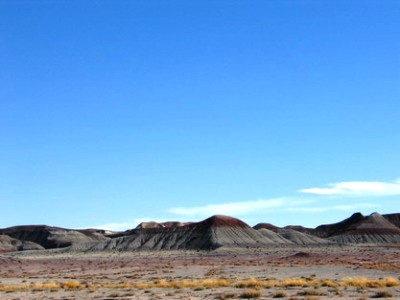
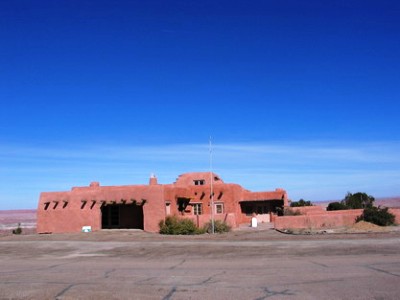
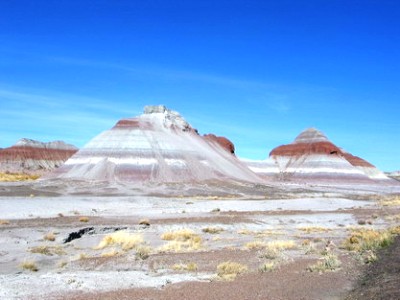
All photos were taken in the Painted Desert & Petrified Forest, Arizona, USA. And then there were two more posts.
(CONTINUED) Twenty-Seven
There was nothing to do except wait out the afternoon until it was time to pick up Mary from the gallery. Right then, time was one thing we didn’t need. We didn’t need time to think about what might be happening to Jimmy. We didn’t need time to think about what would be waiting for us in Arizona. And we didn’t need time to think about whether we’d ever make it back to Santa Fe. But we couldn’t think about anything else. Julie sat tearing at bits of Kleenex and I felt sorrier for her than I had for anyone in my whole life, with the stark exception of my murdered ex-wife; but that was different—that was my fault. I knew Julie was wondering what her life would be like without the most important thing in it—her brother. I thought that there was a good chance she’d never find out. I had to do something to occupy both our minds, so I dug around Mary’s house looking for a U.S. highway map. I managed to find a booklet that had the major roads in Utah, Colorado, New Mexico, and Arizona and I showed it to Julie.
“We’ll take I-25 to I-40 and then head into Arizona,” I said, and thought of the last time I’d driven I-40. It seemed like a long time ago; I wasn’t looking forward to driving it again. “In Flagstaff we’ll drop down to I-17.” I handed Julie the map, but it was ridiculous; we’d be following interstate all the way, first south, then west, and then south again. There was nothing to show or explain. Julie wasn’t listening anyway.
“Where do you think they have him?” she asked.
I shook my head. “There’s no way of knowing.”
“I wonder if they’re hurting him.” She began to cry. I put my arms around her and she leaned her head on my chest and wept. I thought of all the stories I’d read and the one’s that I’d written. I tried to recall every movie or poem or song that had ever meant anything to me. It all fell short of describing what I felt at that moment, a fire of emotions, good and bad, light and dark, all at a fever pitch. I saw that I couldn’t change whatever was to come and for that brief time I felt something unexplainable, inexpressible. But it had all come at a price that no sane person would willingly pay; now I only wished I could somehow cover the debt of the girl in my arms.
While Julie cried I thought about a story I’d written years earlier about a man, Orion, who set sail on a ship. Following an unspecified calamity--for one calamity is a good as another in such tales--he believed that he must leave behind everything he’d ever known in his life. It didn’t seem to him that it could much matter what he did after that. On the street he ran into a sea captain and, after talking for some time, the man mentioned to the captain that he was not sure what the next day would hold for him. “In that case,” said the sea captain, “why don’t you sign on with my crew?”
For many weeks the ship sailed from port to port, loading and unloading cargo, taking on passengers, and sometimes docking for days on the rotten outskirts of exotic cities. Soon Orion felt like he had never known a life previous, as if the salt and the surf, the flapping of the sails, and the calls of the hands as they moved about the deck had always been a part of him. It was not so much that he was happy, but forgetful, and in this forgetting was a peace that he had not known in some time. Each morning he woke with the sun to hear the creaking of timbers and the splashing of waves against the hull. Even far out on the ocean a company of seabirds always seemed to be near and he would watch them wheel around the masts. On some days dolphins would ride alongside, leaping in turn as they kept pace with the ship. He was learning the way of the sailors, assimilating their language and becoming more adept at their work. After a time, the sailors accepted him fully and soon he realized that there were others on the boat that had come aboard after him and that he was no longer the least experienced hand.
He became skilled at reading the weather, even in the dark of night, and the captain would come to ask his opinion of what might lay ahead. On such occasions he would look off to the horizon and consider the wind, as if it bore a message from a far-off and murky world. The clouds spoke to him and even in the most reckless tempests he would feel an otherworldly calm as the salt-sea swept over the bow and the gale lashed at him and his companions. Seeing Orion, the other sailors were becalmed and set about tying the sails and lashing freight to the deck with a certitude they would not otherwise have had. If it seemed odd to him that what had at first appeared to be the end of his life had instead brought him to a place where he felt a rightfulness he could not have imagined, he did not dwell upon it. He simply was and there was no need for anything other.
One morning Orion found himself in his bunk, chilled by the stillness all around. He left his cabin and went on deck. There were none of the usual calls amongst the men, not an order barked or a mistake roundly chastised. He was alone. The ship was rocking fore to aft, but did not seem to be moving. The sails lay unfurled and limp against the masts. The ship creaked and groaned with the rolling of the ocean. The sky was clear and though there was sunlight he could not place the sun above him. There wasn’t a bird above nor a fish beside the stranded vessel. He was seized with a terror so great that when he awoke he could not breathe and, lying there on his cot, he still felt a foreboding that would not leave.
As he climbed up to the deck the sun was just breaking over the horizon. The captain and some of the deck hands were standing along the bow, the sky lit in deep shades of red, a magenta strip of cloud just along the horizon. The very air seemed suffused in a rose light that was part mist and part fire. All the sailors turned as Orion approached but none said anything. He looked out across the sea, where thousands of miles away that crimson planet was rising quickly, as if to warn the men of their fate. Minutes past while Orion looked about, the men’s heads upturned as the heavens overhead seemed to lower onto them. The wind fell away and the blood red sky turned to black and yellow and green. Finally, the captain said, “It will be bad.” Orion nodded, but there was not much that could be done. Within minutes everything that could be battened down was secure, the sails taken in, and any loose items brought to the hold. Most of the men then stayed below deck, but the captain and Orion went back up to watch the slowly roiling sea and the churning clouds. Orion felt the hair go up on his arms. “I’ve never seen it so,” he said. The captain shook his head, “Nor I.” Soon the ship began to toss and the first waves crested the bow. Orion and the captain went below deck.
Normally the crew kept to their individual quarters when not above, but on this morning all hands were gathered together in the mess hall. The tables had been cleared of all cups and utensils but the ship began to pitch so badly that the men found it easier to sit on the floor. Some of the sailors were clearly frightened; others just as clearly were not. Under different circumstances, Orion would have found it interesting to consider why this might be, but instead he wondered how the great peace he had come to know so certainly had been so quickly imperiled. He’d grown to love the ocean and believed it would always be good to him. Even in the worst storms the thunder and lightning felt more like a benevolent promise than the threat of that which could not ever be fully reckoned. But now the creaking of the timbers grew deafening and from above the groaning of the masts could be heard. Each wave that crashed over the bow reverberated below deck with a sickening thud. Water could be heard coming down the steps from the deck. No one spoke.
The ship rose higher and higher and then dropped with the towering waves into a deep trough. A horrible cracking, like a tree being felled, boomed through the hold and the sound of wood snapping and splintering was followed by the rush of rain coming through the shattered deck into the aft hold. The captain staggered to his feet and steadied himself against a post. He struggled to remain upright and, in an effort to be heard above the tempest, roared, as if drunk:
“Said the mate of this vessel unique,
To the cap’n, ‘What port shall we seek?’
Said the cap’n, ‘We'll dock 'er,
In Davy Jones’ locker;
The bloomin’ old tub’s sprung a leak!’"
The men looked at their captain, and the captain looked at his men. He smiled. The first mate turned his head to see the other men and then, with some effort, stood. He boomed:
“There was an old sailor of Crete,
Whose peg legs propelled him quite neat.
‘Strong liquor," he said,
Never goes to my head,
And I know it can't go to my feet.’"
A few of the men began to laugh. A young sailor sitting cross-legged on the floor yelled:
“There was an old sailor of Compton,
Whose vessel a rock it once bump’d on;
The shock was so great,
That it damaged the pate,
Of that singular sailor of Compton.”
The crew laughed while the boat rocked and shuddered. Outside the wind howled and thunder cracked. The laughter of the men was swallowed up by the torrent pounding overhead. One of the oldest hands on the ship began to stand up but fell again after a wave pitched the boat sidewise. The men quieted in an instant, but the old-timer, now lying on the floor, began to laugh even before speaking. Several times he tried to get his breath and the men began to laugh just to see him. Finally, he caught his wind and sang at the top of his voice, in a reedy wail:
“A cabin boy on an old clipper,
Grew steadily flipper and flipper.
He plugged up his ass,
With fragments of glass,
And thus circumcised his old skipper.”
The men roared. Again the sound of wood snapping echoed from above. The sailors strewn over the floor clapped each other on the shoulder, tears in their eyes. The ship seemed as if it would burst apart. A voice trembling with fear and mirth and joy yelled over the din:
“There was a young sailor from Brighton
Who said to his girl, ‘You’re a tight one.’
She replied, ‘Pon my soul,
You're in the wrong hole;
There’s plenty of room in the right one.’"
Men clutched their stomachs and gasped. The captain fell back down to the floor, his face red and grotesque as he slapped at his knee. Suddenly the boat seemed to spin about in a complete circle and the men’s eyes grew wide and there was silence. Then all at once they exploded with laughter again, some pounding their fists against the very planks of the shuddering vessel. Orion joined them, thinking that if this was to be his death it was grander than he could’ve ever imagined.
It seemed to go on for hours; the storm’s fury matched by the sailor’s songs thrown again and again into its face, robbing it of its power. Finally the storm lessened and the men quieted and fell asleep where they lay on the wet planks of the mess floor. In the morning, Orion awoke early and went to the deck to survey the damage. The sky was blue and the sun, having just risen, shown softly down. A light breeze blew gently from the west. A gull cried overhead. There were large holes in the deck and the mizzenmast was gone. The mainmast was listing to one side and the rigging was twisted and torn. The captain was at the bow and Orion walked toward him. “I thought we were going to die,” Orion said. The captain nodded. “The funny thing was,” he continued. “After awhile I didn’t care.” He ran his fingers through his hair. “I wonder what you call it when you reach that point.” The captain kicked at a piece of wood on the deck and then looked to the east. He turned back to Orion. “Freedom,” he replied, and then laughed. “Congratulations, you’re a sailor.”
I wondered if I should tell the story to Julie; she was still leaning against my shoulder but her face was turned away from me. She had stopped crying but said nothing. I craned my neck around to see her better and realized she was asleep. I leaned gently back against the couch and closed my eyes. Mary wouldn’t be done at the gallery for a couple more hours.
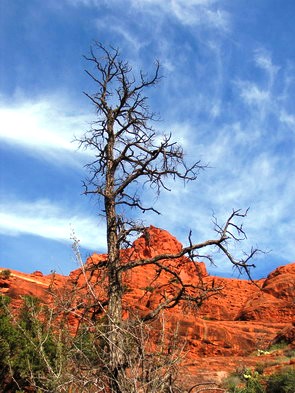
Twenty-Eight
I let Julie sleep and I may have even dozed myself. When it was time for me to go to the gallery I tried to slide from under her but she woke and turned to look at me. I gave her a pat on the leg and told her I was going to get Mary. She didn’t say anything.
On the way to the gallery it occurred to me that it had been a couple of hours since I’d thought of the fact that my ex-wife had recently been shot right in front of me and that I’d beaten her killer unrecognizable with a fireplace poker. It was the longest I’d gone without playing through the scene in my mind since it had happened. As soon as I thought of it I wished I hadn’t; I wanted to save as much pain and guilt and anger as I could for Tucson, where it might get me through whatever was waiting.
I pulled the Jag in front of the gallery and looked around, wondering if there was someone out there watching. I hadn’t passed a single car on the way down and there’d been nobody behind me. Mary came out holding a cloth bag. She carefully locked up the gallery, got into the car, and put the bag on her lap. The bag was lumpy, stuffed full of bills. I turned the car around and headed back to the house.
“How is she?” Mary asked.
“Okay.” I said. “She slept for a couple hours this afternoon. She woke up just as I was leaving.”
Mary nodded and looked at me. “You’re really okay with this, aren’t you?”
“What do you mean?” I asked.
“I mean you’re ready to go down there with her.”
“Yes,” I said. “I am.” Mary started to say something but stopped. “I have no reason on earth not to help,” I continued. “I have nothing left to lose.”
Mary frowned. “I think if things go wrong you’re going to find that might not be true.” She turned and looked at me and almost smiled. “And if things don’t go wrong you’re going to know it’s not true.”
I wasn’t entirely sure what she meant, but I had a guess. I knew she was glad I was there.
We pulled up to the house and Mary told me to wait while she opened the garage door. There was an empty space next to her vehicle and she waved me in and then closed the door again.
“Do you think anyone is watching?” she asked.
“I don’t know,” I said. “I was wondering that myself.”
She went to a bench along the wall and returned with two screwdrivers. She handed one to me, then started removing the plates from her car. It was a smart move; I was a wanted man and the police were probably actively looking for my car. Exchanging my California plates for New Mexico ones at least provided some cover for interstate travel. I just had to make sure I didn’t get pulled over for something stupid; having Mary’s plates on my car wouldn’t play too well with the police either.
After we’d swapped the plates we went inside. Julie was sitting on the couch where I’d left her. Mary began to tell her about our plan to make it look like we were getting the money together the next morning but stopped when she saw the .38 in its holster on the table. “I guess you two have already talked about the plan.” Julie didn’t say anything so Mary got the two shotguns and handed them to me. “Put these in your trunk and don’t forget the boxes of ammunition. I’m going to start dinner.” On my way out to the garage I grabbed the Fed Ex envelope and put it in the car as well; there seemed to be no reason to leave it with Mary.
That night Mary cooked a feast. She made cornbread, stuffed peppers, chicken fajitas, and sopapillas. I set the table and poured wine. Mary called me over to the stove and quietly asked if Julie had needed the sedatives. I told her that she had not and that I was glad because we needed her to be alert and un-medicated in the morning. Mary nodded and went back to her pans.
I doubt that any of us felt like eating that night but we finished everything on the table. There wasn’t much left to say and the food kept the silence from feeling awkward. We lingered over the table all evening, asking for another tortilla or a little more wine. There was no pep talk that could be made that wouldn’t make our situation seem even direr, no plan to be got down by memory, no getaway that could be conceived of yet. But there was a strange comfort, an affection that came from fear and danger and longing and maybe something else besides. We were bound by bonds stronger than family, bonds formed and strengthened by the knowledge that one of us was not there and he was in trouble. Julie and I would either get Jimmy back or possibly lose our lives in the trying. Mary faced the danger of survival and what that would mean to her if we failed; it was a risk every bit as big as ours. But seated around that worn wooden table it seemed to make an almost mystical sort of sense.
We all helped to wash and dry the dishes, though Mary had a dishwasher, and then we each said goodnight and drifted off to our rooms. I took two sleeping tablets but awoke in the middle of the night, the desert moon high and bright, shining through my window. I looked at the clock: 3:04 AM. There was nothing I could do but lay awash in dread and doubt. I was a writer—or had been—and while I had at times considered myself tough, even imagined myself involved in the acts of savage violence I depicted, I was not a criminal or a gunfighter or a murderer. But I had become these things and, lying there in that bed in New Mexico, I no longer knew who I was or what else I might become. Could I become the kind of person that I would need to be to get Julie’s brother back and keep her safe? A year ago, a month ago, even two weeks ago, I could not have been that person. But now it seemed as if it might be possible. This thought was the only comfort to be found in that still and harrowing night. (CONTINUED)
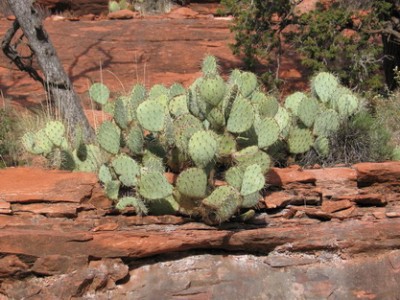
The top photo in this post was taken in the Petrified Forest, AZ. The second and third shots are from Courthouse Butte, Sedona, AZ. I'll wrap this up in three more posts. I promise.
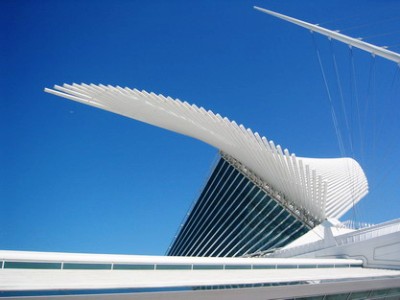
(CONTINUED) Twenty-Five
I don’t know if Mary slept that night, but I didn’t. Mary had given Julie some prescription pills that should’ve knocked her out for at least eight hours, but when I saw Julie the next morning she looked worse than either Mary or I. She sat down in the dining room and put her head in her hands. Then she looked at Mary. She turned and looked at me and her face crumpled and she began to sob. Mary went back to the bathroom and returned with a pill bottle.
“If this keeps up, give her two of these.”
I took the bottle from Mary. If Julie and I were ever going to get Jimmy back, Julie had to get a hold of herself. As it was, she was in no state to travel, let alone confront what might await us in Arizona. I needed her to get the past the panic on her own, so I was going to do everything I could to make sure I wouldn’t have to use the pills.
Mary left for the gallery and I made Julie a cup of tea and found a box of tissues. The tea grew cold on the table as Julie cried. I asked her a few things about Jimmy--what she thought he might have done, who she thought might have him--but she would only shake her head in reply. Finally, she said, “You can’t come with me.”
“Why not?” I asked.
She sniffed and wiped her nose. “Because there’s no reason why you should.”
“So, you think you can do a better job on your own?”
She started to cry again, but more softly.
“It’s dangerous,” I continued. “Neither of us should be under any illusions about that. I think…”
“But that’s what I mean,” she interrupted. “There’s no reason for you to risk your life. You don’t know me. You don’t know Jimmy. You don’t know anything about us. And I don’t want you to do this.”
I watched Julie rub the tears from her cheeks with the palms of her hands. If she went to Tucson she would never come back. Nor would her brother. And she knew it. “Listen,” I said. “You’re not Captain Ahab asking your crew to sacrifice their lives for something that may exist only in your own mind. You’re right that I don’t know your brother, but I know he’s in trouble and I know he needs help. And I think I do know you.” She started to say something but I continued: “And I’m not going to let you go down there all by yourself. It’s suicide. You know that, don’t you?”
I didn’t expect her to answer and she didn’t. “Maybe we should call the police,” she said.
I thought about this for a few moments. “I don’t know,” I said, finally. “Maybe you’re right. They could be bluffing. But if they’re not, we’re putting Jimmy’s life in danger.” She started to cry again. “Why don’t we go through with the plan for tomorrow and see if we notice anyone following us.” She looked at me strangely. I’d forgotten that Mary and I had not told her about our meager plan.
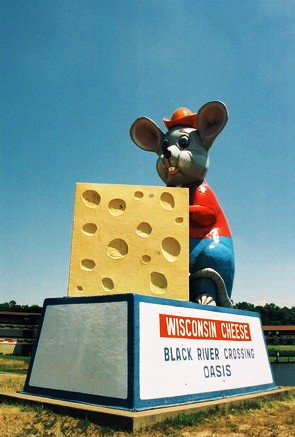
Twenty-Six
By the time I’d shown Julie the .38 Special she’d be wearing she was sobbing and having difficulty catching her breath. I didn’t think she’d ever be able to use the gun, but there was no reason for her not to carry it. I tried to give her the weapon, but she wouldn’t take it. After a few minutes she’d calmed down and I put the gun in the holster and handed it to her again. “They’ll kill us,” she said. “If they see us with guns they’ll kill us.”
I hefted the 9 mm in my hand. “Maybe not.” I tried to smile. “We might kill them.”
She glared at me, angry and fearful. “I told you I don’t want you to come with me. You can’t be a hero. This isn’t like one of your books.”
“You’re right,” I said. “I can’t be a hero. A hero would be someone that had something to lose.” Then I added: “And there are no heroes in my books. You’d know that if you’d read any of them.” She watched me as I checked the safety lock on the Beretta. “I’ll tell you about my life when this is over,” I said. “But not now.” I wondered if that was true. Would I really tell her? Or did I just figure I’d never have to?
We went back out to the living room, the thick curtain still drawn. It was difficult to tell what time of day it was. We sat on the couch and I asked Julie to tell me anything about Jimmy that might help us--the type of people he associated with, the jobs he’d had, the trouble he’d been in--anything that might give us a clue as to what sort of people we were dealing with. But instead she started talking about when Jimmy was young and her father left and how she’d had to raise her brother by herself.
“I knew Jimmy was going to have a hard time even when he was a baby,” she began. “I was still a kid but I could just tell. I was glad…” She reached for a tissue and wiped her nose. “I was glad my father left before Jimmy had a chance to know him. Jimmy never would’ve made it even this far if my father had been around. I don’t feel any anger toward my dad. I guess I don’t feel anything, really, except gratitude that he went away when he did and never came back. My mother was never any use to Jimmy either. I felt sorry for her but I suppose I’ve always loved her. She embarrassed me. After my dad left she got even worse. I don’t know why. She should’ve felt free.”
I asked her if she’d wanted to raise Jimmy all along. She gave me an odd look that I couldn’t interpret then said, “Yes, I did. Like I said, I knew he was going to be in trouble--he just didn’t seem like he’d fit anywhere--and I thought because I recognized it I could help him. At first I was too young, but by the time I was 11 or so I took over from my mother. I knew there was nobody else that could do it. I tried as hard as I could.” She started to cry again. “And I know he’s tried, too. He’s fought with himself. But it’s like he was cursed.”
“It’s more than just being gay, isn’t it?” Again she looked at me strangely. “It’s not hard to tell,” I offered. “In my line of work it pretty much goes with the territory.”
She shook her head. “No, it’s not all because of that. It’s hardly that at all. Although I knew very early that he was gay. I think girls are better at picking up on that than boys are and, after all, I was his sister. That’s another reason I was glad my father wasn’t around. It would’ve been terrible for Jimmy. My father liked to fight.” She pushed her hair back and began to pick at a spot on the sofa. “I’m not sure if my mother even knows. If she does, she doesn’t say anything about it.”
“Can you tell me what Jimmy’s been into?” I asked again.
She reached for another tissue and dabbed at her eyes. Then she balled it in her fist and squeezed it. “I don’t know. He’s been into a lot of things. At first it was just stealing. Small things. From the grocery store or people’s yards. He didn’t do many drugs then. He drank a lot. He got caught stealing a car and spent some time in a juvenile hall. When he came home he started…” She paused for a moment and took a little breath. “He started working on the street. Going with older men, I guess. He was probably seventeen. Sometimes I didn’t even know where he was living. He really got into drugs around then.” She stopped and I thought she might start crying again, but she didn’t.
“What kind of drugs?” I asked.
“I don’t know. Almost anything, I think. Sometimes he was talking a mile-a-minute and other times he could barely keep his eyes open. I always knew when he was on something. When I saw needle marks on his arms I finally told him he had to do something or I’d call the police. It’s the only time I’ve ever threatened him. He agreed and went into treatment. While he was away I met my ex-husband, Steve, and when Jimmy came out we all lived together for awhile.”
“How did that go?”
She sighed. “Okay at first. Jimmy really seemed to be trying to stay clean. He got a job and paid Steve and I rent though we told him he didn’t have to. Steve was really good about it, too. I thought he might not want Jimmy around, but he was understanding and good to both me and Jimmy. But gradually he started to turn back to the street. He would be gone for days at a time and when he came home it was difficult to talk to him. Steve and I began to fight about what should be done. I wanted to do everything I could for Jimmy. I was his sister. Steve said that Jimmy didn’t want to be helped and I’d just have to face up to that. I knew he might be right, but I couldn’t live like that. I had to keep trying. Eventually Jimmy started stealing from us and one day he took Steve’s watch--it had been his grandfather’s. Jimmy wouldn’t admit to anything and they started fighting. Jimmy was no match for Steve. Steve broke Jimmy’s nose and left that night. We never got the watch back even though Jimmy tried. Or said he tried. I don’t know. Steve came home after a couple days, but it wasn’t the same. I knew if I didn’t forget about Jimmy it would only be a matter of time until Steve left for good. But I couldn’t forget that he’d hurt my brother. I was afraid he was beginning to remind me of my father.” She paused. “I can’t blame Steve for leaving. I think he believed Jimmy would drag us down with him.”
I couldn’t tell her that Steve had been right nor could I tell her that she’d loved her brother more than her husband. She probably already knew these things anyway. So I asked her if she kept in touch with Steve.
“No. I haven’t spoken to him in a couple years. I do think about him sometimes though. I hope he’s happy. I wish things could’ve been different.”
I didn’t bother to ask again about who she thought might have kidnapped her brother. She didn’t know. It was probably drugs. Whether small-time or something more serious I wasn’t sure. It didn’t really matter; either way it was bad. We knew they’d already hurt Jimmy. There was no reason to think they wouldn’t just as easily hurt us. I got up to make us some tea and as I waited for the water to boil I saw the Fed Ex envelope on the kitchen table, a piece of Jimmy’s finger stuck in a plastic baggie. Suddenly I felt sick to my stomach. (CONTINUED)
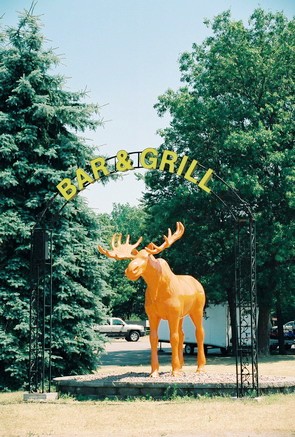
Nothing says fear and gun play better than the state of Wisconsin, and that's where these photos were taken. Four more episodes of A Loss for Words remain.


