skip to main |
skip to sidebar
I was dining--alone, as I now always did--at the Pink Adobe in Santa Fe. I’d heard that Sam Shepard ate there regularly when he was living in town and, since I liked his stuff well enough, I was hoping some of the inspiration would rub off on me. It had been some time since I’d come up with anything usable—at least anything I’d dare show anyone—and I was getting desperate. Actually, I was desperate in more ways than just that one. Awhile back all of my moorings had been cut and since then I’d been staying out in the desert, moving from one town to the next as boredom or panic dictated. Mostly I’d been staying on the outskirts of slightly-seedy, sand-choked little towns like Winslow, AZ, Española, NM, and Elko, NV. But for the last few days I’d gone a bit upscale.
I’d actually begun to think that being monolingual was my main problem. Aside from the ubiquitous Spanish, all around me I heard Russian, French, German, and even ancient Indian dialects that tribal law stated could not be written down or recorded. It had occurred to me that, for the first time in my life, English was failing me and perhaps these other languages contained the words I wanted. But then I figured that the language required to say whatever it was I thought I needed to say probably didn’t even exist and, anyway, I was certainly in no shape to invent it.
I was mulling over these and other similar thoughts, feeling suitably dour as I worked at my enchiladas, when I noticed a boy and girl through the window. Or, rather, I noticed the girl. Chestnut brown hair, black leather coat, dark blue wool skirt, and light grey stockings. As I watched her talk to this boy I became transfixed. She seemed very serious and did not smile, although he occasionally did. I watched them for some time until I had finished my meal and paid for it.
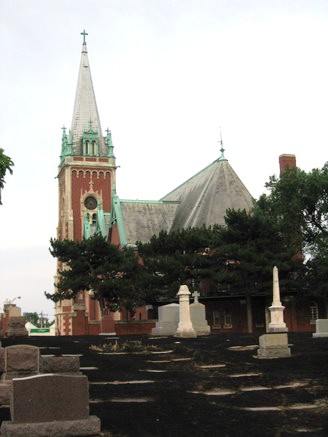
I walked across the Old Santa Fe Trail, looking at the girl as I did. Our eyes met and I held my glance a beat longer than would be usual, then walked up the steps to the San Miguel Mission. I stood out front of the old church and looked down on the couple. To give myself cover, every now and then I pretended to check my watch and look impatiently up and down the street. After a short time the two embraced and, as the girl rested her head on the boys shoulder, she looked directly at me. I held her stare and could see that her eyes, seeming now to me quite willful, were a soft grey, the same color as her stockings. Very nice, I thought. But was the boy a friend, brother, or lover? Not that I really cared. A guy I knew once said that boyfriends are a little like herpes: they tend to go away for awhile. Of course, that guy was dead now and I never had been able to find out just what had happened, although I'd been told a gun had been involved.
The two parted and I watched the girl walk down the street and go into a coffee shop. I thought for a moment. I knew that if I went after her, regardless of what happened or did not happen—because, let’s face it, nothing in this world is a sure thing—I’d hate myself for it. Then again, self-hatred was an emotion I’d recently taken to cultivating nearly to the exclusion of all others. I think it was probably right then that a series of events was put into motion that I would indeed come to dearly regret. Yet I hesitated and for a brief instant on that cool, clear fall day, another face flickered warmly in my mind. Quickly I pushed it away and thought again of those soft grey eyes before starting down the road. (CONTINUED)
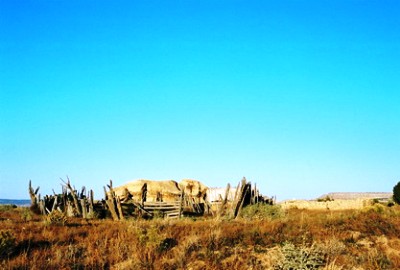
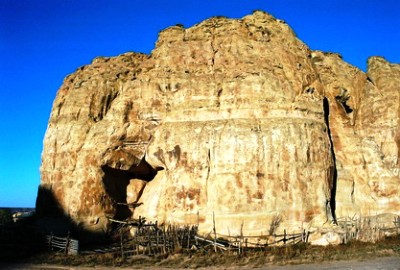
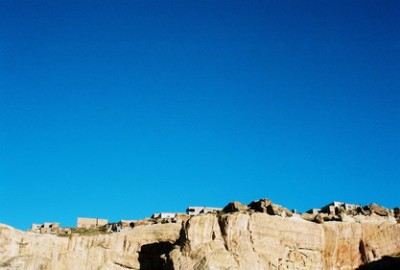
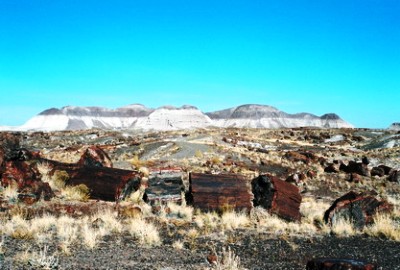
I know, photos of Santa Fe, NM would've probably made more sense here, but instead it's more shots from Acoma Pueblo, Sky City, NM. Well, except the bottom one, which is Petrified Forest National Park, AZ.
Shelly and I are at the Waffle House. It’s early and we’ve been up all night. There are a number of reasons why we haven't slept. All of them are bad. Shelly’s staring at me bleary-eyed and anxious. She’s wearing the same blue dress she wore yesterday. It’s a dress I used to love seeing her in. And taking her out of. But right now I’m feeling damp and wrung-out and sick to my stomach.
Our waitress comes over to take our order. She’s young and nervous and her name is Danielle. I guess that it’s her first day. Shelly orders coffee, two eggs, and toast. There is no cheer in her voice, only fear and exhaustion, like sandpaper, catching at her throat, each word a brittle, dead leaf. I try to sound pleasant, like me and Shelly are just two people out for a normal breakfast, while I order a pecan waffle. But as soon as I say the words the thought of butter and syrup and fried batter makes me want to retch.
When Danielle flips her hand over to write on the order pad I see two thick scars across her right wrist—widthwise, not lengthwise. Whether these cuts then were simply a cry for attention or the result of a fundamental lack of understanding as far as the basics of physiology go I cannot say. In any case, Danielle smiles perkily and says, “Be right up, ‘kay guys?!”
Danielle’s departure leaves Shelly and me in silence. I try to think of something to say but nothing comes to mind. For hours, Shelly has been telling me things that I’ve tried to convince her are simply not true. In response, she’s told me that truth, once and for all, now has to be the same for both of us. Just before we came into the restaurant I’d said that I didn’t think truth could ever be exactly the same for any two people. She just looked at me and said, “You make me sad.” It was difficult for me to admit that, right there, might indeed have been a solid truth, cold, objective, and utterly removed from any necessity of interpretation.
I hear Danielle call the woman at the hash brown station “mom” just as a man steps to the counter. A waitress tells him he can sit anywhere, but the man only shakes his head nervously and mumbles something I don’t understand. The waitress seems startled and the man says something that sounds to me like “cowboy.” He starts to fidget. The waitress frowns. “What’s that, hon’?” she asks. “Comfrey,” he replies. The waitress is silent. I realize that the man is retarded, though probably only mildly, and it’s not immediately obvious. I turn to Shelly, but she has also begun to follow the exchange. “Commie,” says the man quietly. The woman looks to another waitress for help, but the other waitress only smiles, making the woman giggle a little. 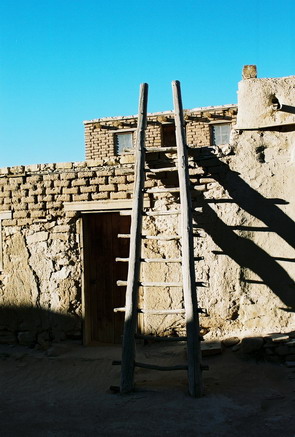 The man notices this, closes his eyes tightly, as if it was difficult, then opens them and screams, “Collie! Collie! Collie!” The restaurant goes dead quiet. Everyone turns to look. Seconds pass. Waffles begin to burn. Hashbrowns go unsmothered and uncovered. “Collie!” he screams again and, with his balled right hand, begins to punch himself in the face. Four, five, six times the man strikes himself, in the cheek, the mouth, the eye. Finally, he pulls his fist back one last time but, instead of hitting himself, he throws a handful of change at the counter. Coins explode through the kitchen and dining area, so many that he must’ve been intending to pay mostly in pennies. In tears, the man points to a mug and says, “Cobby!” The waitress is stunned. “Coffee?” she whispers. Tears flow down the man’s face. Thick red welts have risen on his forehead. “Yuh!” he yells, but turns to leave the restaurant. As he exits the door he punches the frame and screams again, then runs across the parking lot, around a truck, and out of view.
There is no way to restore normalcy to the Waffle House. A man puts some bills on the counter and rises, most of his meal uneaten. Then another couple leaves. Still no one speaks. I turn to Shelly, but she is already getting up, the tears already beginning. I look at Danielle, but she is frozen, her mouth hanging open, as a few other waitresses begin to talk amongst themselves and a cook scrapes seared eggs off the skillet. I motion to Danielle, but she does not see me. So, I pay for our food, the food we never even saw. It’s just as well, I think. I didn’t want to eat anyway. I leave a nice tip for Danielle in the hope that she’ll show up for work again tomorrow morning. But tomorrow morning is a long way off and there are other tragedies to attend to, so I head off into the glimmering sunlight after Shelly.
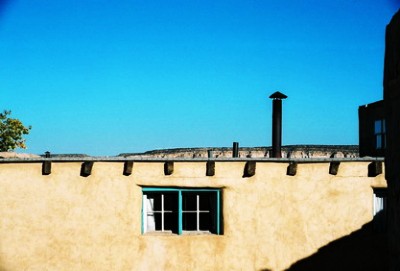
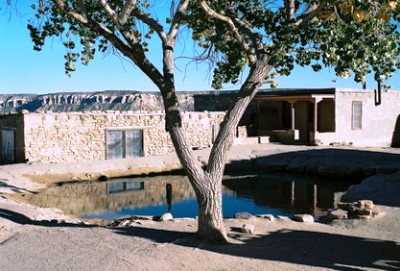
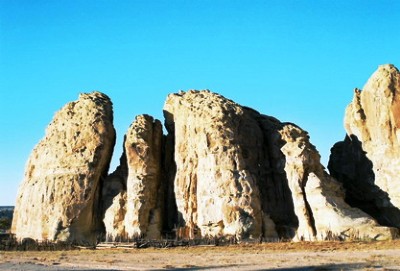
All photos are from Acoma Pueblo, Sky City, New Mexico. The top three are from on top of the sandstone mesa, about 400 feet high. The community has been occupied for several hundred years and remains so to this day.
Well, as seems to happen with some degree of regularity, City of Dust is going to go on hiatus. Someday my life may actually contain some semblance of stability and perhaps I’ll quit my ramblin’ ways, but ‘tis not now, apparently. This time it’s off to the desert, namely, New Mexico and Arizona. You know, many major figures throughout history have spent significant time in the desert. Moses. Jesus. Clint Eastwood. All these guys logged serious miles amongst the sand, the stones, and the snakes. Whether you’ve come to be tempted by Satan or have simply returned as a ghost to exact revenge on the town that did you wrong, the desert has the landscape, both physical and psychological, that you’ll need to get the job done. So, hey, I’m in good company.
How long will I be gone? Dunno. At least a couple weeks, so it’ll probably be late-November before another post appears. But it should be a good desert-themed one. I’m looking forward to taking lots of photos and will be armed with two cameras. Yes, two cameras! In the meantime, I’ve been posting photos on Flickr, all of which have appeared on City of Dust at some point, but Flickr is a nice way to get a few shots up elsewhere. Also, Phirebrush has a few photos and some scrawling of mine in their current issue (#32). Oh, and Snaps Magazine should have a photo or two as well in the Transportation and Weather issues. I'd heartily recommend these last two venues even if I wasn't a contributor.
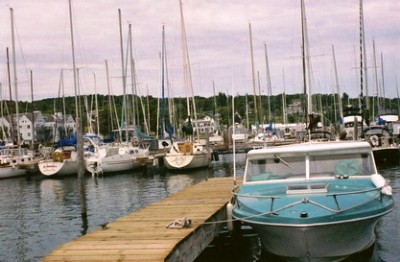
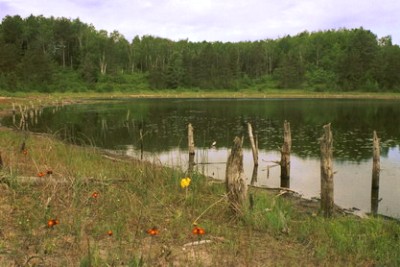
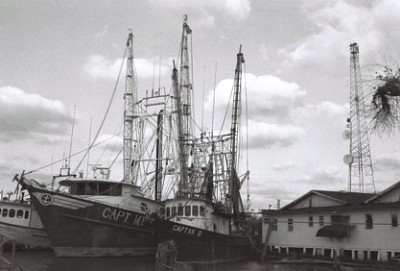
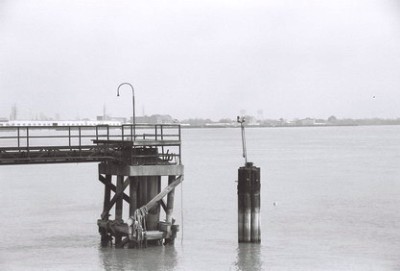
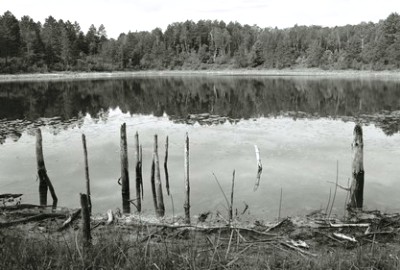
As for the photographs here, I thought one last look at water was appropriate. These were all shot with woefully expired film. The top photo was taken in Grand Marais, Minnesota, USA, with Kodak Gold that expired in 1996. The middle photograph, a mosquito-ridden lake in northern Wisconsin, and this last, Bayfield Harbor, Wisconsin, were shot with decade-old Seattle Filmworks film made out of old movie stock leftovers. Do you know how hard it is to find a place to process that stuff these days? Anyway, I find the idea of working hard to get an once-in-a-lifetime shot while never really being certain that your film is fit to be processed exhilarating. You can’t achieve that feeling with digital, can you? Nope, I thought not. Have a happy Halloween and I'll see you toward Thanksgiving.
"Happy is the city which in time of peace thinks of war." Ancient inscription in the armoury of the common-wealth of Venice, Italy.
 "I wasn't always like this. You know, I had a home. A job. A wife and kids. But right now, right here, that doesn't just seem like a lifetime ago, it seems like those things belonged to another person. I feel no greater connection to my memories than if I'd found a box of polaroids on the ground and glimpsed the random moments of another man's life. No, those things happened to somebody I don't know and I'm somebody else. Someone bad." Rod Stevens, Venice, California.
"Hear, O ye Venetians, and I will tell you which is the best thing in the world: to contemn it." Inscription on the tomb of Sebastian Foscarinus, sometime Duke of Venice, Italy.
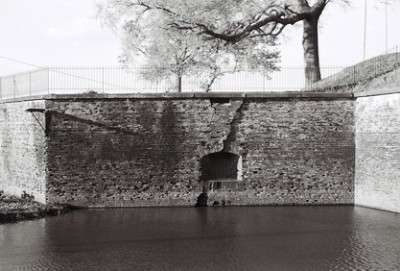
I managed to scrounge up enough material on Fort Jackson, an important Civil War fortress 65 miles south of New Orleans, to actually do a post with some historical content. Remember when I used to do such posts regularly? Well, don’t get your hopes up ‘cause this will probably be just a one-off for the time being. Anyway, Fort Jackson is way down the Louisiana Delta, on the west bank of the Mississippi River, near the present-day town of Triumph, a bit north of Venice, LA. After Katrina I don’t know how much of this area remains. I imagine it got hammered badly. On the other hand, the fort was mostly bricks and low earthworks, so if it didn’t get completely washed out into the Gulf of Mexico it might still look pretty much as it did when I took these photos on the day after Easter, 2005.
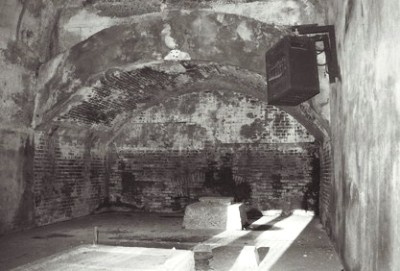
Fort Jackson was the brainchild of namesake Andrew Jackson, who recommended to then-Secretary of War John C. Calhoun that a fort be built at the mouth of the Mississippi to keep out the Spanish. General Jackson was considered to be a military hero following the Battle of New Orleans in 1815 (yes, THAT battle, three years AFTER the War of 1812), so the U.S. Government listened to him. Fortifications had been on the site as early as 1746 and Fort Bourbon erected in the 1790’s. Promptly destroyed by a hurricane in 1795, Fort Bourbon was quickly rebuilt before slipping silently into obscurity. Construction on Fort Jackson was begun in 1822 and the fort finally occupied in 1832. Built in the shape of a pentagon, the red brick walls are 20 feet thick and the entire structure surrounded by a moat. The foundation is made of cypress logs laid so as to level the fort in the swampy ground.
In the 1840’s it had been thought that Fort Jackson might be an important stronghold in the Mexican War, but it wasn't. Jackson was then of only minor importance until the Civil War, when Louisiana seized the site for the Confederacy on January 8, 1861. The people of New Orleans felt safe knowing that Fort Jackson (and its sister fort, St. Philip, just to the east, on the other side of the river) were protecting them from the Union. Further, the mouth of the river had been obstructed with the wrecks of old ships and a heavy chain run from bank-to-bank. Yup, nothing like a big ol' chain to stop a boat. The Daily Picayune of New Orleans wrote: 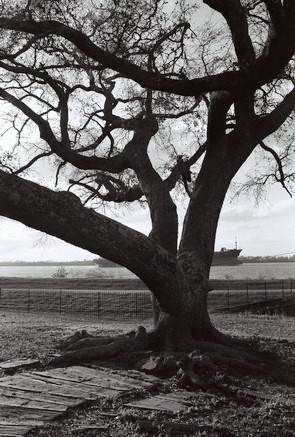 "By land we are impregnable and the coast and river's assailable points are susceptible to a degree of defense that floating wood or iron cannot make an impression." Well, that wasn’t quite right because on April 18, 1862 USN Commander David D. Porter's armada began shelling Fort Jackson. The barrage continued all night and one of Porter’s schooners was sunk. However, USN Flag Officer David G. Farragut's Western Gulf Blockading Squadron had been standing by and on April 20th breached Fort Jackson’s outer obstructions. Yet it took until the early morning of April 24th for Farragut’s ships to move past the two forts and fully engage the Confederate flotilla, eventually sinking or capturing thirteen vessels and breaking the back of the Confederacy’s naval presence on the Mississippi. The unhappy soldiers at Fort Jackson mutinied on April 27th and half the men left their posts. On April 28th, Confederate soldiers blew up their prized ironclad ship, aptly named the Louisiana, before CS Brigadier General Johnson K. Duncan surrendered both Forts Jackson and St. Philip to Commander Porter. Two-hundred and twenty-nine Union soldiers died in the battle along with 782 Confederates.
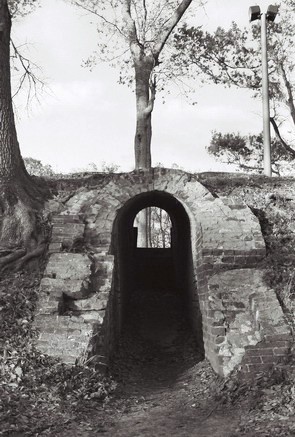 Following the Civil War, Fort Jackson became a prison and later a military training base. Thereafter, it was basically abandoned until 1898 when the threat of the Spanish-American war brought about a restoration and the addition of two large coastal guns. Fort Jackson became a training base once again in 1917-1918, during WWI, but afterward both it and Fort St. Philip were sold as surplus government property. Mr. and Mrs. H. J. Harvey of New Orleans bought Fort Jackson in 1927 and,in 1960, donated it to the Parish of Plaquemines for the purpose of restoring the fort and 82 acres of grounds. Jackson and St. Philip were immediately classified as National Historic Monuments, though Jackson was then called, “a veritable jungle with mud-filled tunnels infested with snakes.” Thus, levees were built to hold the river back and an automatic pumping station installed to keep the fort dry. Now, of course, one can’t help but wonder how those levees and pumps held up during Hurricane Katrina and what, if anything, might be left of old Fort Jackson. Anybody know? As for St. Philip, it's still privately owned, in bad repair, and was reportedly accessible only by boat BEFORE Katrina. It's probably gone now.
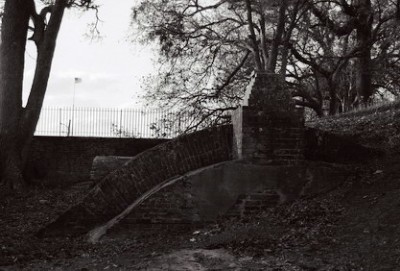
Thanks to Houghton Mifflin for info on the battle of Forts Jackson and St. Phillip and Civil War Album for historical detail on the life of Fort Jackson. Civil War Album notes that their information is courtesy of “the Fort Jackson tour guide” but whether this was a book or person I do not know.
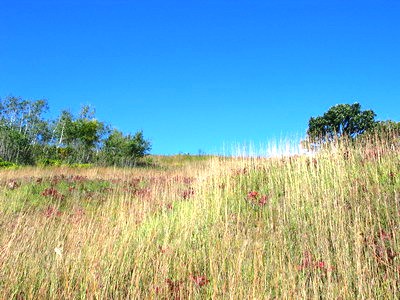
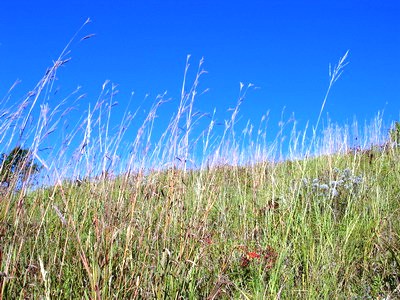
South of the Twin Cities, in Hastings, Minnesota, USA, not far from the Mississippi River, is this dry prairie, or sand coulee, if you want to get technical. This was my workplace for the second half of September and all these photos were taken on the clock. Ha! For days on end we waded through a sea of big bluestem, little bluestem, and indian grass collecting native seeds. 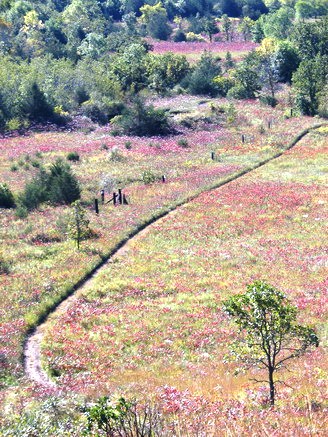 This was certainly a good place for such work. Still, if you spend eight hours a day working someplace you inevitably find yourself looking forward to leaving when five o'clock rolls around. These shots are to remind me that there are many, many worse places to find oneself toiling. Anyway, the top shot is the hill we climbed up and down all day, the middle photo is the path we walked every morning, noon, and evening to get to and from the site, and at the bottom is some nice, tall big bluestem (AKA Andropogon gerardii). While quiet, sterile subdivisions ring the prairie on every side, this place is safe from development. I hope.
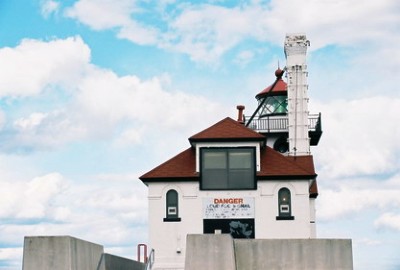
Canal Park/Lake Superior, Duluth, Minnesota, USA; August 28, 2005; Afternoon.
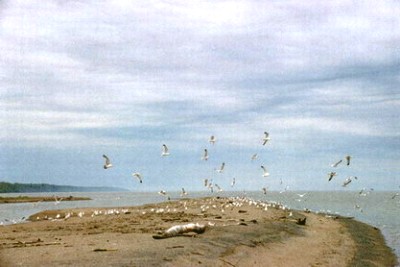
Mouth of Brule River/Lake Superior, Wisconsin, USA; June 13, 2005; Afternoon.
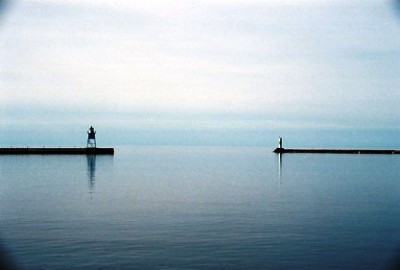
Harbor/Lake Superior, Grand Marais, Minnesota, USA; September 8, 2005; Morning.
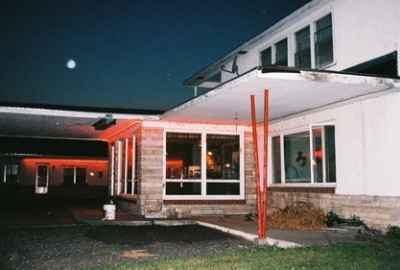
The couple next door—that’s room 6—is fighting again. I’ve been here two and a half weeks, three more days than they have, and have grown accustomed to these recurrent challenges to their connubial bliss. I’ve also become quite good at estimating their duration. So, I put down my notebook and head over to the Cenex gas station for the usual: an ice cream sandwich.
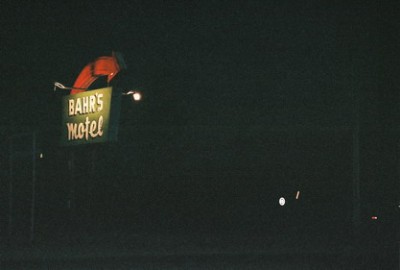
Outside, it’s dark and a cloud of insects surrounds each of the lights in the parking lot. In the distance, lightning flashes soundlessly. I walk across the street to the gas station, where groups of kids have gathered, some inside pick-up trucks, others just sitting on the curb. I pass two teenage boys and catch a bit of conversation. One boy says that “this guy” might have “some stuff” by tomorrow. The other kid replies that that’s not good enough, that he’s talked to a friend who knows someone that will have something by midnight and it should be down at the Cenex in a few hours. The boys are rail-thin, their t-shirts and ratty jeans hanging off their bones. One of them runs his hand over his face continually, another fidgets, kicking at stones as he talks. They both look flushed and damp, although the night is cool. I’m not surprised: meth is rampant around here, consuming the young, feeding off boredom and bravado.
I walk into the store and get my ice cream sandwich, then leave through the other door and head toward the highway. I stand on the gravel shoulder, eating, and there are no cars, only insects and the breeze off the prairie. Then there’s some more lightning on the horizon. Through the darkness I can see some ramshackle homes on the other side of the road. I can’t imagine that anyone lives in them. I smile at one thing: I don’t live in them either.
After finishing the ice cream I turn back toward the Cenex where, in the parking lot, a fight has broken out. One of the skinny kids I saw earlier, the one that couldn’t wait until tomorrow, is up against a big guy in a green cut-off t-shirt that reads “DEERE” in yellow ink. The skinny kid looks like he’s had his nose broken and blood covers the lower half of his face. Under the yellow lamps the blood looks like tar. Everyone that was in the lot earlier has circled these two and they’re shouting and clapping their hands. The woman from the counter is standing on the sidewalk. She’s yelling for everyone to leave, saying that she’s called the cops, that they’re on their way. No one pays her any attention. The skinny kid’s friend yells something in his ear that I can’t make out then gives him a pat on the shoulder. Suddenly the kid lunges for the big guy, flailing and swinging wildly. The big guy steps lightly to the left, as if in no real hurry, and punches the kid in the center of the face with two sharp shots. The crowd yells and claps their hands, everyone smiling or frowning or swearing. A couple people are holding wads of bills. The kid staggers backward but stays on his feet. Big drops of blood fall onto the gravel. His friend gives him another pat and the kid squares up again, fists up in front of his chest. I can’t help but admire him, this doomed teenager, for his tenacity, his refusal (or inability) to recognize physical pain, and his willingness to see a lost cause through to the bitter end simply because he can imagine no other option, even though he must know somewhere deep down that the price he’ll have to pay could be very high indeed. But I don’t really have the stomach for this and I turn back toward my room. Behind me I hear two more pulpy thuds and a louder chorus of cheers. The cashier starts yelling about the police again. I don’t turn around to see what’s happened.
Back in my room I can hear the woman next door sobbing, so I leave the light off. I just sit on the bed, looking out the window at the lightning now growing closer, wishing I could click my heels and be someplace else, someplace good. But I figure it’s been a long time since there was any place like home. After awhile I hear sirens over at the Cenex. The woman next door has quieted, so I get up off the bed, turn on the light, and get back to work.

It's been awhile. The past month has seen one trip to Urgent Care, dozens of games of Surfin' Safari pinball played, thousands of acres of forest walked, millions of mosquito bites, and a handful of rare goblin fern sightings. Each rare plant find prevented a stand from being logged. For the moment, there's no time to do a "proper" post, whatever that would be, so this is just to get the date stamp to look a bit more reasonable.  Also, let me just say, I've watched more CNN over the past month than in my entire life previous. What happened following Hurricane Katrina was a tragedy on countless levels. It was terrible to watch and my heart aches for the people of New Orleans and their lovely city. May that voodoo spirit bring it back to life quickly. To see some past posts that included photos and words about New Orleans you can go here, here, or here. For a post on Hurricane Ivan, go here. Anyway, these shots are of the Superior National Forest, just off the Gunflint Trail in northern Minnesota. Otherwise, please stand by, a real post will be with you shortly.

(CONTINUED): When I stopped by the trailer I saw it'd been empty for some time. Weeds were grown-up in the yard, a rusted wagon that'd been left outside barely topped the bluegrass already gone to seed. I walked up to the door, gave a little push, and it swung wide open. Inside the memories flew at me, thick in the air, but what stopped me where I stood were the things: a matchbox car, a little shoe, a book about a cartoon train. All around were cast-off bits of a life that was once mine, that I’d come back to claim, yet in my gut I knew somethin' had gone wrong.
I drove to town, found a phone book, and looked for “McDaniel, Lois.” Nuthin'. I checked under “Harrison,” her maiden name. Nuthin'. I called information, but there was no record, not even a notice that the number was unlisted. I stopped by the city offices and asked the clerk if she knew how I might go about findin' a resident, a family member. I was referred to another office down the hall and then a second, upstairs. In the third office I was asked for some information, including my name and relation. “Husband,” I said. “And she’s my children’s mother.” The man typed for a bit at his computer, then glanced at me and excused himself. When he returned he introduced me to a social worker who led me to another office and closed the door behind her.
“Mr. McDaniel,” she said, “When was the last time you saw your wife and kids?”
“It's been five years,” I answered, looking away from the woman and out the window at the cars moving through the parking lot.
“You haven’t been in contact at all since then? With no one from her family?"
“No,” I replied, tryin' to remember just what it was I thought I’d felt five years ago in that other parking lot, the one at Eastbridge Mall. “Her parents been dead a long time and she’s an only child.”
“I see.” The woman took a short breath. “Mr. McDaniel, I’m sorry to tell you that your wife was killed in an auto accident two years ago.”
It was like fallin' through thick ice into black, frigid water. “I'm sorry?” I said, the words just a reflex, 'cause I knew in an instant that what I'd heard was correct.
“Your wife was a passenger in a vehicle heading eastbound on County Road 9 very early on the morning of June 2. At Beyer Avenue the car veered off the road and struck a bridge abutment. Your wife died at the scene. The driver died two days later in the hospital. His blood-alcohol level was twice the legal limit.”
I tried to catch my breath. I felt like I was gonna vomit. “My kids?” I asked.
“It says that your wife’s aunt took them in.”
I hadn’t known that Lois had an aunt. “Where’d they go?”
“I’m sorry, Mr. McDaniel, I’m afraid I can’t tell you that. You may wish to speak with a lawyer if you’d like to find out more.”
I ran a cold hand over my face. “Are they nearby?”
The social worker looked over my shoulder, toward the door. A large poster on the wall beside me read, "Be the Bridge." She shook her head slightly.
I stood up and swayed. The fluorescent lights seemed to flicker. I heard the woman say, “I’m very sorry, Mr. McDaniel,” but I was a million miles away.
 Now I see those last times so clear. They run through my mind fast, like a movie that’s sped-up. Me burstin’ into the bedroom, Lois swearin’ and wavin’ that gun, that guy tryin’ to hide in the closet. Then I see the food court and Lois’s little fist, the mascara runnin’ down her cheeks. I see those times over and over and I swear I don’t know what it is makes people act the way they do to one another, tearin’ the one’s they love most to little bits. Sometimes it seems somethin’ mean and hateful just settles on a man from the day he’s brought into the world and he can’t tell right from wrong. I’ve heard people say that they have no regrets in life and if they had to do it all over again they wouldn’t change a thing. To me, that kinda talk might as well be from outer space. If I had to do it all over again I’d change most everythin’. Not EVERYTHING, but near enough. Try to make things right. My mama used to say that it was the times that made people behave so hard to one another. It was a sign of the times, she’d say. Well, right now I think I’d like to know some different times. Just some different times is all.

A COUPLE THINGS: I'll be disappearing into the north woods of Minnesota for the next month or so, on the hunt for moonworts and goblin ferns. There's a chance I'll get something up in a couple weeks, but it's likely that the next post won't be until late September. So, have patience, skim the archives, stop back occasionally, and eventually I'll pop up again (hopefully with lots of photos of northern Minnesota).
Also, August 10 marked the one-year anniversary of City of Dust. There's been 73 posts, just a little over one a week. City of Dust was originally supposed to be a photoblog documenting the back alleys of the Central Savannah River Area, USA, but I soon started to add historical information about the places I'd shot. Then I just started to add historical information that I thought was interesting, even if it was barely related to the photos. Then I ran out of photos of the CSRA and started putting up photos from all over the place with any variety of text: song lyrics, fiction, street encounters, and whatever else occurred to me. It's been fun, but I feel like some focus has been lost. I'd really like to get back to photographing decay, abandonment, and lost places. I think City of Dust was strongest when it had a nice, tight focus, as documented in the Photoblogs Magazine feature earlier in the year. So, I'm gonna think about what I want to do over the next month and see where I think City of Dust should go. Not that it really cares what I think. Thanks to everyone that's stopped by and sent me their stories and words of support over the last year. It's really been great to hear from so many people! Stay tuned.
My mama’s name was Mary and my pa’s was Joseph, but I don’t believe my conception would’ve been immaculate. When I think about it, I imagine that there was some screamin’ and some cryin’. There may have even been a little blood. It’s not healthy for a grown man to think too much about the day he was made, but I admit that I think on it a fair bit and a good deal more than I’d like. In fact, when I consider my parents, or even my childhood, I’m always drawn to that event, an event of which I have no recollection and for which I may or may not have actually been present. Voltaire said that “madness is to think of too many things in succession too fast or of one thing exclusively.” I think that’s ‘bout right. Of course, he also said that “every man is guilty of all the good he did not do” and that’s a load of bullshit. It’d be more accurate to say that every man is guilty of all the good he thought he was doin’. Now, that’s a lesson it might take a man his whole sorry lifetime to learn.
Years back I had a wife, Lois, and two kids, Mikey and Rebecca Ann, and I loved ‘em more than I loved my own life. But I was dogged by somethin’ inside and drinkin’ hard to shut it out. One weekend I was coming back from a run to Clearwater, makin’ good time ‘cause I was poppin’ black beauties to stay awake. I made it into town just after midnight and stopped by the bar to have a few drinks before headin’ home. I remember leavin’ the bar after it closed and climbing into my rig, but I don’t recall much else ‘til I stumbled into the bedroom and saw my old lady in the sack with some other fella. I started yellin’ and screamin’ and Lois started yellin’ back, tellin’ me that I was a drunk and why didn’t I go back to town and find one of my whores. I tell her I’m going to kill the prick she’s with and then I'll slit her throat from ear to ear with my pocket knife. She opens the drawer on the night table, takes out her pistol, and shoots me in the left shoulder. The bullet went in one side, out the other, and into the wall. I remember lyin’ on the floor bleedin’ and watchin’ that other guy, his pants half on, tryin’ to crawl into the closet. See, me and Lois, we was a lot alike, and neither of us would back down from a fight. If I’da been that guy, I’da stood my ground and protected the woman I was with—I’d done so before. Thinkin’ of Lois with a coward like that hurt me more than the hole in my shoulder, and I moaned, “Aw, baby, why?” just before everything went black.
Well, I got fixed up but had to stay away for awhile. It was then that I made a decision. I was finally gonna do somethin’ good, somethin’ that'd hurt me but save the people I loved. I had a friend of mine get ahold of Lois and ask her to meet me at the food court at the Eastbridge Mall. She agreed and on the day we were to meet I put on my best clothes, shaved, and combed my hair just right. I was doing somethin’ important, more important than getting’ a loan at the bank or goin’ to a funeral. This was my family.
We met outside Burger Time and I could tell Lois was excited to see me. She asked me why I was so dressed up, then started talkin’ a mile a minute about what the kids was up to and how her boss was pissin’ her off again. It made the tears well in my eyes to hear her go on like that. Then she started talkin’ 'bout us takin’ the kids campin’ soon. Finally, I had to say, “Lois, I’m not comin’ back.” She put her hand to her mouth. “We’re not buildin’ no kinda life for our kids and they gotta have a chance. I know it’s me that’s the problem. I believe it's best if I go.” Lois started to cry. “But the kids need you,” she said, frowning. “I need you. I know we had some bad times, and this last was the worst yet. But we can work it out. We can be good to each other, maybe get someone to help us. I want you to come home.” She pounded the table with her tiny fist: “I want you to come home now!” I shook my head. “Baby, I’m sorry. I love you and the kids but I just think it’d be best if I wasn’t around.” I started to stand up. “Bastard!” she hissed. “You selfish bastard.” I was afraid she was gonna make a scene and I started to back away from the table. But she didn’t get up, just looked at me, her make-up running down her cheeks. I couldn’t read what was in her eyes: sorrow, fury, fear, hate, or love. As I walked across that hot parking lot outside the mall I thought I’d just done the most noble, strong-hearted thing of my life. I figured that must be true because I hurt so bad I felt like I was gonna die. For a second I turned and looked toward the mall; Lois hadn’t come out yet. I almost went back inside but instead I got in my truck and drove away.
Five years later I was a different man. Things had gotten rough and I’d learned a good deal. I‘d fought myself some and studied on the battles of other men. Finally, I thought I’d earned some love and came seeking the forgiveness of my family. I didn’t know that what I’d need—what I’d spend the rest of my life lookin’ for—would be forgiveness from myself. (CONTINUED)
I've developed a pilonidal cyst. I'll spare you the gory details, but part of my treatment is soaking in warm water and trying to drain the puss and goo out of a small hole in my lower back. Swell. As a grown man, sitting in a tub makes me feel like a chump. To boost my morale, I've composed a shanty to sing while soaking. Now, with some bubble bath, my favorite toy boat (HMS The Congaree Queen), and some rum, things aren't so bad. So, I thought I'd share my shanty with everyone. I apologize for its length, but I have to soak for long stretches. I also apologize for some of the expletives, but I've heard that life at sea can get a bit coarse and I wanted the song to be authentic. Without further ado, ahoy!
The Captain stumbled up to me; Said, “Aye, my lad, we’re fucked; The first mate, he’s been keel-hauled; The lieutenant’s gone off drunk; The hold is full of water; And the mast’s gone by the boards; So, now’s the time to kneel down; And pray out to the Lord!”
‘Cause we’re goin’ down! Goin down! We’re goin’ down! Goin’ down! We’re looking for the shoreline; But there’s water all around. We’re goin’ down! Goin down! We’re goin’ down! Goin’ down! Without some kind of miracle; The men will all be drowned.
I ran along from stem to stern; And a bell rang on the deck; Somebody yelled, “The Captain’s dead!”; So I went down to check; There below the Captain hung; His wings all shorn and clipped; “What a fuckin’ way,” I screamed; “To go down with the ship!”
‘Cause we’re goin’ down! Goin down! We’re goin’ down! Goin’ down! The men all jumping overboard; And no hope to be found. We’re goin’ down! Goin down! We’re goin’ down! Goin’ down! Wind and fear and blood and brine; The ocean’s ghastly shroud.
On for days and days we tossed; So many I lost count; Around me there lay dying men; But I dare not look about; From each great wave, we’d bottom-out; And then another swell; I heard a voice beside me moan; “Dear God, this ship’s in Hell!”
I opened my eyes and swore I saw; A strand up through the rain; But without no food or water; I was sure I’d gone insane; But, no, I spied a tattered man; There standing on the beach; A crowd came forward and then they roared; As he began to preach:
“There you see a frigate smashed; With one lone man aboard; In due time he’ll find this beach; Or be dash’d upon the shore; Let’s stay a bit and watch him come; Perhaps throw him a rope; But if at last the ship it sinks; We might as well go home.”
‘Cause he’s goin’ down! Goin down! He’s goin’ down! Goin’ down! “He’s sailed ‘cross many miles; Just to run a-ground.” He’s goin’ down! Goin down! He’s goin’ down! Goin’ down! “There’s cadavers in the crow’s nest; And a corpse there swingin’ ‘round.”
‘Cause he’s goin’ down! Goin down! He’s goin’ down! Goin’ down! “There may be one more corpse to swing; So let’s all gather ‘round; There’s one last soul upon that ship; Who prays that he’s been found!”
It’s nearly dusk and the sand makes it difficult to walk. You don’t know where you are. The mosquitoes swarm and you slap at them blindly, little spatters of blood on your neck and arms. But the horseflies are worse. In the distance you hear an ATV, a dog, and the crack of a rifle. A woman appears farther up the trail. She is thin, with long, black hair, and her cotton dress flutters in the cool breeze. She stops and turns her wan face toward you. You raise your hand in greeting, hoping that she can provide you with some direction, but she steps off the trail and into the brush. By the time you reach the overgrown deer trail she’d been following there will be no trace of her.
You continue, looking for landmarks; a twisted pine tree in the distance, a shallow lake off to the side. “That must be Blue Lake,” you mutter. Then, farther on, “No, THAT must be Blue Lake.” A man approaches, big and barrel-chested, a flannel jacket over soiled coveralls. A rifle rests against his right shoulder. You slow and begin to speak, but the man shakes his head and gestures vaguely toward his ear with all three of the fingers on his left hand. You form a word, but suddenly realize the futility: He is deaf. Fear settles into your shoulders, making them ache. But this does not seem to be the fear of wandering further into the darkening wilderness. You have been lost in the north woods before, in more remote places than this, in worse weather, and with much more at stake. This fear is different, somehow more dangerous because you cannot identify it.
By the time you get back to the trailer it’s almost midnight. The full moon provided barely enough light to travel by, but the tangles of vegetation finally gave way to wider, more familiar trails. Your arms, hands, neck, and face itch terribly, small welts rising on your skin. 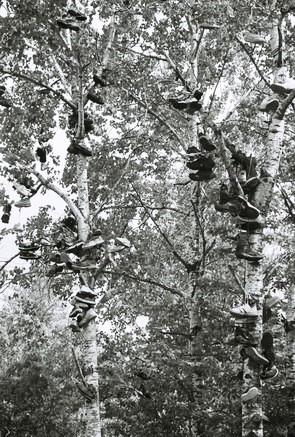 You open the door to the musty trailer, top-of-the-line in 1955, and light the kerosene lantern. A few insects immediately begin to work their way through holes in the window screen. The door is warped and swings open with a gust of wind. You stand up and pull it shut, hard, then slide a screwdriver through two strips of metal that used to hold a sliding bolt. You sit on the bed and stare at the backs of your red, swollen hands. How long have you been out here now? Three weeks? A month? All night the fear has been building, growing stronger, more personal, more insistent. You turn off the lantern, lie back on the moldy foam pad and pull the ragged sleeping bag across your chest.
You wake sweating in the night, traces of a nightmare like wisps of dark smoke on the horizon. You sit up and look out the window at the yellow moon; in a few minutes it will sink behind the pines. In the distance, a loon. A coyote. A gunshot. You get up, light the lamp, and pull a suitcase out from under the bed. You remove three thick stacks of twenty dollar bills from the others and weigh them for a moment in your palm. You pick up a pen and two crumpled manila envelopes from the cracked formica table. The addressee on the first: Mrs. Anna Lund. The addressee on the second: Mr. Bill Nichols. One stack of bills goes in each envelope. You take a few bills off the third stack and stuff them in your pocket, then throw the remainder back in the case and kick it under the bed. You’ve just turned off the lamp when you hear a wet snuffling from below the window, followed by grunts, and a series of bumps against the side of the trailer. You freeze until the noise fades into the distance and there, in what remains of the moonlight, you laugh grimly. One problem solved, another created. As you lay your head back on the damp pillow, eyes following the willowy shadows on the ceiling, you decide to wait for dawn. This is fear. This, then, is Wisconsin.
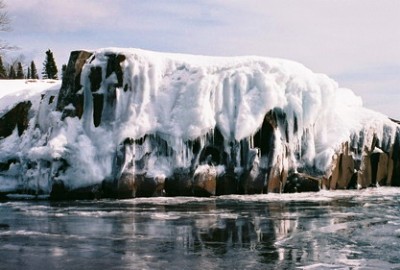
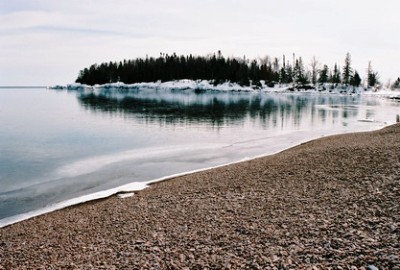
Las Vegas, Nevada: 117 degrees F. Death Valley, California: 129 degrees F. My old home, Augusta, Georgia: 100 degrees F (heat index=110). Twenty-four people dead in Phoenix, Arizona, where it's now been 100+ F for as long as anyone cares to remember. 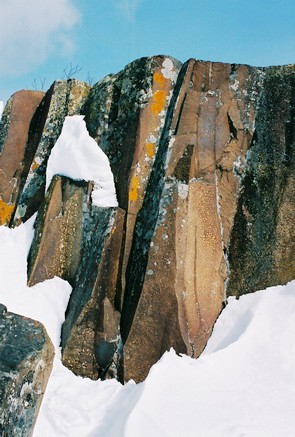 The Weather Channel running a story entitled, "Save your pet from heat exhaustion." Man, it's hot. So, here are some photos from cooler times. This is Grand Marais, Minnesota, up by the Canadian Border, sometime last February. Looks good now, doesn't it? I was cold as hell when I took these photos, a brutal north wind coming at me right off Lake Superior. But, let's forget that for now and just admire the ice. Actually, up here we didn't even make it to 70 degrees F today, so I'm not entirely sure what the rest of the country is complaining about. If you want further frosty photos I posted some others here awhile back. Just remember to keep your head down when those thunderstorms start rollin' through.


 This night is unwelcome. The wind has risen, the sun has set too soon. Beyond the window, black birds are gathering in the tree tops. The birds speak to you; you try to believe you don’t understand what they are saying. Would that you could sleep. To awake on the other side, the danger passed, was once easy. The dawn arose clean and forgetful. But now there comes a knock at the door that you need not answer, for he will show himself in.