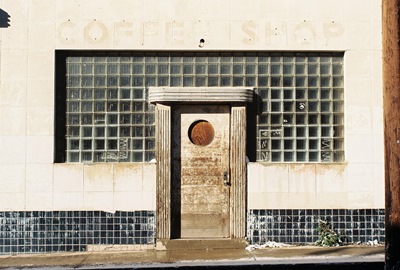
Yesterday’s post on the ghost town of Fierro, NM was heavily historical. In the introduction, I painted a portrait of Fierro as entirely vacant, quiet as a stone, a place where humans rarely tread these days. While that is relatively true, it’s not the entire picture, even aside from services at St. Anthony’s Mission Catholic Church and the occasional family reunion. Fierro does get visited and, judging by the evidence, its visitors are an interesting bunch. So, I thought it would be worth taking a look at who’s been there recently and what they’ve left behind. There might even be something here that'd be useful to know if you’re thinking of making the trip yourself.
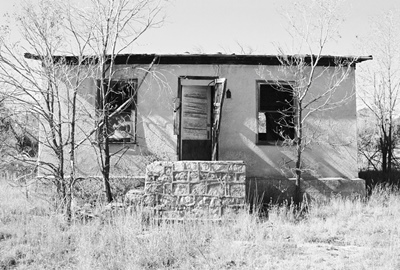
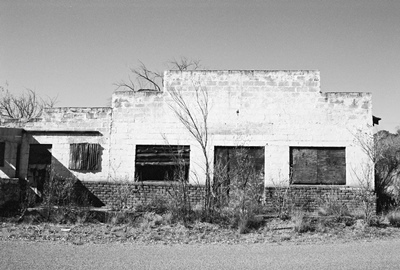
Most of the graffiti in Fierro is in the house shown at bottom, which was last owned by the Araujo family, who also operated Araujo’s Grocery in the building next door.
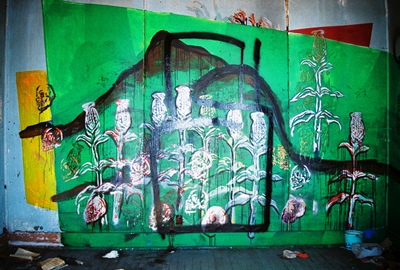
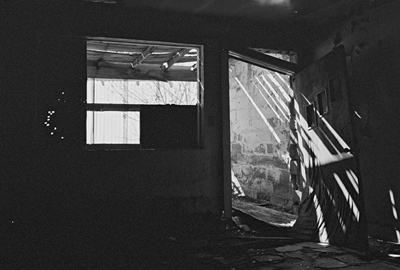
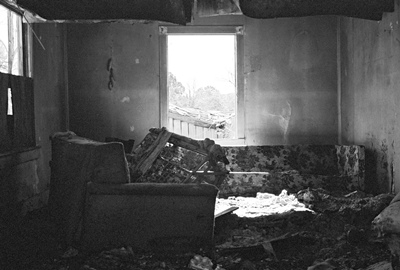
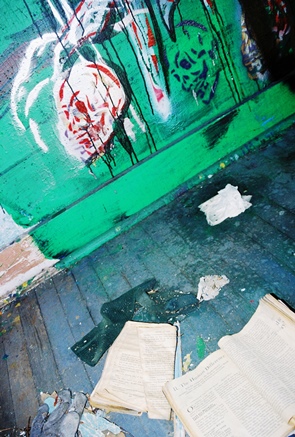 The Araujo’s rented the home out, but one person that probably didn’t sign a lease was whoever painted the green wall of skulls and maize set against the backdrop of a mountain shown above. The artist clearly spent some time in Fierro and, in fact, the room was swept clean and full of the evidence of a fairly prolonged stay. That evidence included some unusual reading material, such as a book about the influence of computers on society which lay open to a chapter titled, “The Human Difference.”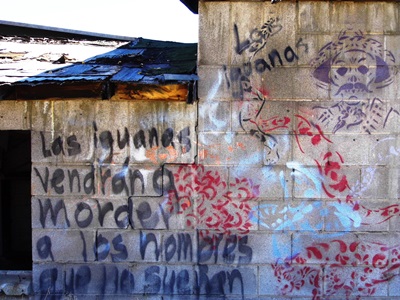
Judging by the stencils, it’s possible the same person wrote this stanza on the back of Araujo’s Grocery itself: Las igyanas (sic) vendrán a morder a los hombres que no sueñan. This is a slight rearranging of a line from Federico Garcia Lorca’s poem, Ciudad sin sueño (Nocturno del Brooklyn Bridge), written in 1929-1930. The translation is: “Iguanas will come to bite the men who do not dream.” Lorca’s work is often pretty surrealistic, but, to me, he is inciting his reader NOT to sleep, but to do, in which case being bitten by iguanas is, in fact, a worthy and motivating experience.
Lorca was executed by a firing squad loyal to Spanish fascist dictator Francisco Franco in 1936, and appears in The Clash tune Spanish Bombs. (“Federico Lorca is dead and gone.”) The Pogues composed an entire song to him, "Lorca’s Novena," in which his corpse walks away. Seeing Lorca’s words as graffiti in a ghost town is quite rare.
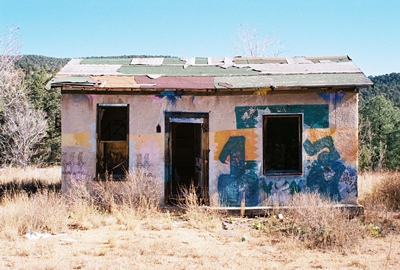
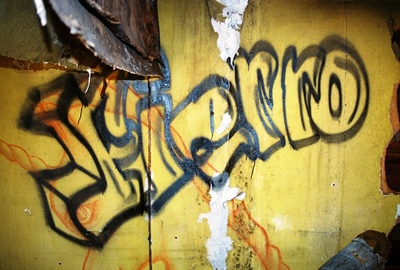
Other visitors to Fierro would seem to include members of Sur 13, the Sureños, a prison gang allied with the Mexican Mafia, MS-13, and the Crips. Their tag is visible in the shot above, as well as elsewhere inside the house.
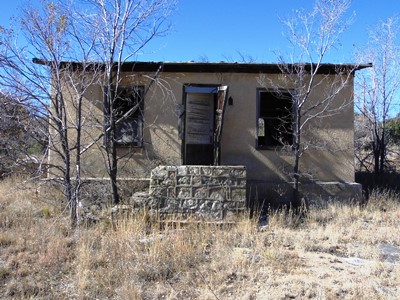
So, while for many ghost towns it is their history that compels, it’s also true that these places have a present and a population of sorts, even if transient. As always, it is only the future which remains uncertain.


 where one, the


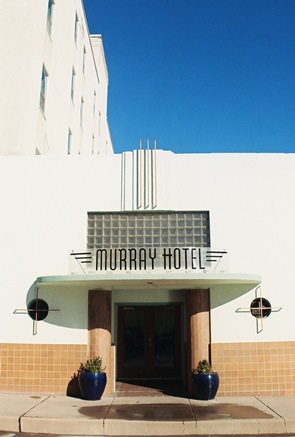 It’s been awhile since we’ve visited an operating historic hotel, but over the last couple years we've seen the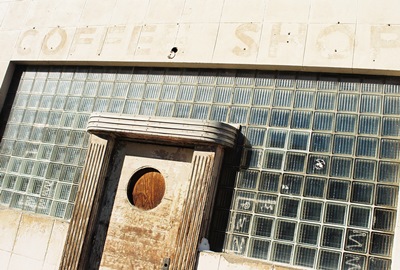
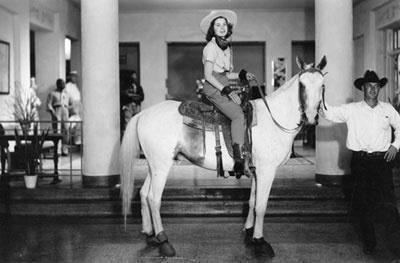
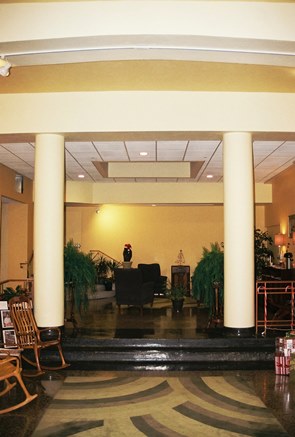 Kingston, and the Black Range. The Murray, however, was warm and inviting and sipping complimentary herbal tea in the lobby, which looks just as it did when Martha Ryan parked her horse there, was…well, not exactly a rugged, Western way to spend a holiday evening. But I can’t ever complain when in Silver City, even if snowbound and unable to brave the elements for just the short walk to Billy the Kid’s childhood cabin. The rooms were likewise cozy and still have a vintage feel to them, despite the extensive updates.