Friday, July 29, 2005

This is Wisconsin


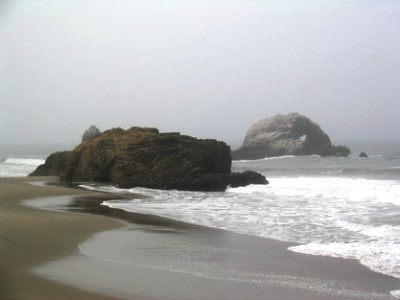
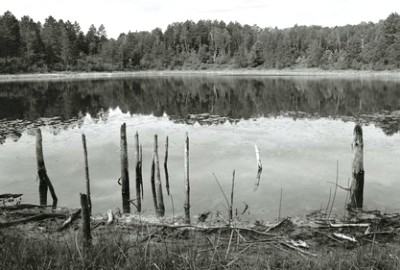
It’s nearly dusk and the sand makes it difficult to walk. You don’t know where you are. The mosquitoes swarm and you slap at them blindly, little spatters of blood on your neck and arms. But the horseflies are worse. In the distance you hear an ATV, a dog, and the crack of a rifle. A woman appears farther up the trail. She is thin, with long, black hair, and her cotton dress flutters in the cool breeze. She stops and turns her wan face toward you. You raise your hand in greeting, hoping that she can provide you with some direction, but she steps off the trail and into the brush. By the time you reach the overgrown deer trail she’d been following there will be no trace of her.
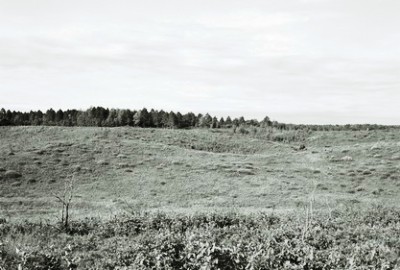


You continue, looking for landmarks; a twisted pine tree in the distance, a shallow lake off to the side. “That must be Blue Lake,” you mutter. Then, farther on, “No, THAT must be Blue Lake.” A man approaches, big and barrel-chested, a flannel jacket over soiled coveralls. A rifle rests against his right shoulder. You slow and begin to speak, but the man shakes his head and gestures vaguely toward his ear with all three of the fingers on his left hand. You form a word, but suddenly realize the futility: He is deaf. Fear settles into your shoulders, making them ache. But this does not seem to be the fear of wandering further into the darkening wilderness. You have been lost in the north woods before, in more remote places than this, in worse weather, and with much more at stake. This fear is different, somehow more dangerous because you cannot identify it.

By the time you get back to the trailer it’s almost midnight. The full moon provided barely enough light to travel by, but the tangles of vegetation finally gave way to wider, more familiar trails. Your arms, hands, neck, and face itch terribly, small welts rising on your skin. You open the door to the musty trailer, top-of-the-line in 1955, and light the kerosene lantern. A few insects immediately begin to work their way through holes in the window screen. The door is warped and swings open with a gust of wind. You stand up and pull it shut, hard, then slide a screwdriver through two strips of metal that used to hold a sliding bolt. You sit on the bed and stare at the backs of your red, swollen hands. How long have you been out here now? Three weeks? A month? All night the fear has been building, growing stronger, more personal, more insistent. You turn off the lantern, lie back on the moldy foam pad and pull the ragged sleeping bag across your chest.
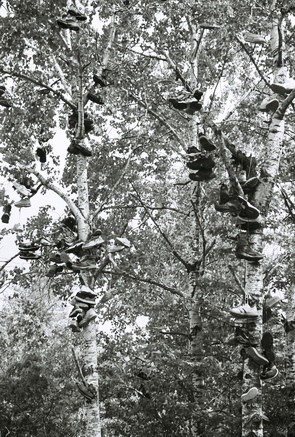
You wake sweating in the night, traces of a nightmare like wisps of dark smoke on the horizon. You sit up and look out the window at the yellow moon; in a few minutes it will sink behind the pines. In the distance, a loon. A coyote. A gunshot. You get up, light the lamp, and pull a suitcase out from under the bed. You remove three thick stacks of twenty dollar bills from the others and weigh them for a moment in your palm. You pick up a pen and two crumpled manila envelopes from the cracked formica table. The addressee on the first: Mrs. Anna Lund. The addressee on the second: Mr. Bill Nichols. One stack of bills goes in each envelope. You take a few bills off the third stack and stuff them in your pocket, then throw the remainder back in the case and kick it under the bed. You’ve just turned off the lamp when you hear a wet snuffling from below the window, followed by grunts, and a series of bumps against the side of the trailer. You freeze until the noise fades into the distance and there, in what remains of the moonlight, you laugh grimly. One problem solved, another created. As you lay your head back on the damp pillow, eyes following the willowy shadows on the ceiling, you decide to wait for dawn. This is fear. This, then, is Wisconsin.

Wednesday, July 27, 2005

Heat Wave


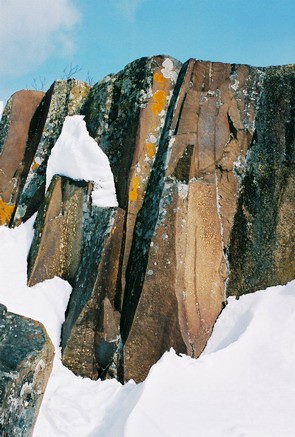
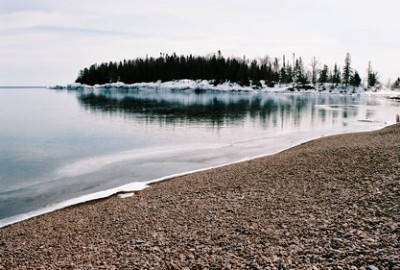
Las Vegas, Nevada: 117 degrees F. Death Valley, California: 129 degrees F. My old home, Augusta, Georgia: 100 degrees F (heat index=110). Twenty-four people dead in Phoenix, Arizona, where it's now been 100+ F for as long as anyone cares to remember. The Weather Channel running a story entitled, "Save your pet from heat exhaustion." Man, it's hot. So, here are some photos from cooler times. This is Grand Marais, Minnesota, up by the Canadian Border, sometime last February. Looks good now, doesn't it? I was cold as hell when I took these photos, a brutal north wind coming at me right off Lake Superior. But, let's forget that for now and just admire the ice. Actually, up here we didn't even make it to 70 degrees F today, so I'm not entirely sure what the rest of the country is complaining about. If you want further frosty photos I posted some others here awhile back. Just remember to keep your head down when those thunderstorms start rollin' through.
Friday, July 22, 2005

Land's End


The land begins to fall away, slowly at first, then more quickly. At ever-increasing intervals patches of dark blue flash off the horizon, somewhere beyond the trees. Two strips of blacktop lead in either direction, the rolling southbound lane initially providing the traveller with no reason to believe the road will ever end. Towns rush by, their names riddles: Happy Jack, Port Sulphur, Nairn, Empire, Triumph. Clusters of small homes punctuate miles of dense foilage, refineries, and debris. Nearby are ghosts: of the Civil War, of Mardi Gras, of the Mississippi Delta. From the depths of the Delta call the ghosts of The River, as it has always been.


To the west, the Gulf of Mexico stretches out, to the east, the Mississippi River, kept in place by a tall levee. Beyond that, a slip of land and then the Gulf again. It's disorienting to look into the distance on every side and suspect that there is nothing but a vast and sultry, if unseen, expanse. Yet it can be difficult to tell land from water, the boundaries transient and mutable. When, inevitably, land and water meet, land occasionally seems to gain some slight advantage. But water waits, patient, knowing it will finally win. It always does. On Easter Sunday, 2005, the ground was in retreat as far as Venice, Louisiana.


Five hundred miles north and three generations previous a blueswoman from Louisiana looked at the black water of the same river and saw similar earthworks built against it. Staring into the roiling depths that flowed through her country, her body, and her soul, she moaned, "If it keeps on rainin', levee's goin' to break." Rivers, towns, levees, and lives may seem fixed and permanent, but they are not.Memphis Minnie knew this 76 years ago and was moved to sing about it. We forget, yet, someday, we will not.

Saturday, July 16, 2005

Man Versus Himself


It’s 7AM and I’d like to be somewhere else. Instead, I’m standing behind the geology building on the campus of a Big 10 University. It’s Saturday and a few of us are drinking coffee or eating donuts. Almost everyone is grumbling about the apparent waste of a perfectly good Saturday. It’s only late spring, but the morning is muggy and I can feel sweat on my forehead and upper lip. As I listlessly pace up and down the sidewalk I wish I was back in bed. At one point, I’m at the far end of the walk, just about to turn around, when I see a man on the other side of the parking lot. Our eyes meet for an instant and he immediately begins to shuffle toward me, not quite limping, but not walking with complete ease, either. I stop and wait; I’ve got nothing else to do.

“I’m Richard,” the man says as he approaches me. I can see that his faded blue eyes are watery and pinkish and a bit clouded. “I lost half my penis in Vietnam, but that doesn’t make me any less of a man than you.” He offers me his hand, as if to affirm his manhood, and I take it, if only to hide my sudden alarm. Richard clasps my palm, squeezes, and shakes it vigorously. “You ever read Dostoyevsky? Fyodor Dostoyevsky.” I reply that I have, and yank slightly on my arm, trying to extricate myself from the man’s grip. “Good. Good. Which of his novels do you like most?” Another tug and Richard lets go of my hand. He makes no sign to acknowledge our brief struggle, just stares at me intently, waiting. For a moment it occurs to me that he looks too old to have been in Vietnam. Then I reply: “Crime and Punishment, I suppose.” “Ah, yes, of course. It’s common to hear that, but the book is indeed very fine. Very fine. Have you ever read The Idiot?” “Yes,” I say. “Where the prince loses his mind at the end? I have read that.” “Ah,” sighs Richard. “Prince Myshkin wanted to save his friends and it drove him mad. The impulse to save is not of love, but foolishness. No one has ever written about the conflict between man and himself as well as Fyodor Dostoyevsky.” He pauses for a moment, straightens himself, then looks me square in the eye: “I lost half my penis in Vietnam, but that doesn’t make me any less a man. No, not at all.” Again he offers his hand and again I take it. I notice my classmates are staring. Again Richard won’t let go.


“Have you ever read The Demons? You may know it as The Possessed.” I tug but his grip is stronger this time. “Um, no. I haven’t.” “Politics, you know. Politics is horseshit. It makes liars out of men. And worse. I’ve seen it. Know it to be true.” I’m concerned about my hand and give a hard pull. Richard finally releases me, but is quiet for several moments. “I’d like to ask you to buy me a cup of coffee,” he eventually says. “We could talk for awhile,” “I’m sorry,” I reply. “But I have to go on a field trip. The van will be here any minute.” “I see. That’s too bad. I’ve enjoyed our talk.” Richard holds out his hand and I’m reluctant to take it, but do. “I lost half my penis in Vietnam, but I’m a man. Yessir, a good man.” By way of getting loose I turn abruptly to where the van has just pulled up, saying, “Take care,” as I do. Halfway to the van I look behind me. Richard is about to go around the corner of the building, but sees me and waves. I wave back. At the van a classmate asks me, “What was the deal with that crazy guy?” “He just wanted to talk about Dostoyevsky,” I reply. The student is puzzled: “Talk about what?” I climb into the van, the instructor already beginning a monologue about karst topography and limestone sinks. I close the door and the van pulls away.

Wednesday, July 13, 2005

Steve McQueen's Mustang


"Hey, remember Steve McQueen? Bullitt?!" I look over at the man on the next bench. I can see that he's tall and missing several teeth. He's holding a 40 ounce can of malt liquor in his right hand and pointing at me with his left. "1968! What kind of car did he have?!" "Car?" I mutter, turning back to glance at the Willamette River, wondering if anything good can come out of a conversation that begins as this one has. "I don't know," I say, frowning. "A Mustang, man!! A damn Mustang!!" He takes a long drink from the can, crushes it in his hand, then reaches into a bag for a fresh one. "Hey!" he exclaims, gesturing toward the woman next to him, "This girl's nothin' but trouble. She's gonna be the death of me. She gets us kicked outta every place we go." The woman, who could be 35 years old or could be 55 years old, laughs, a thin hissing, like air leaking from a tire. She has fewer teeth than her boyfriend, who says, "Shit, the river's the only place we got left. If things don't get better I might haveta throw myself in the drink." I start to say something, but the man smiles broadly and begins to roar with laughter.


Then he suddenly becomes serious: "When my old man died my brother and I got the cabin. Wisconsin. I went up there to drink. Wasn't hurtin' no one. Not hurtin' NO ONE! Then they changed the damn locks. I broke the window and got back in. Shit, it was MY PLACE. They can't keep me outta MY PLACE. Called the damn cops. My own brother. I had guns, but what am I gonna do?! Shoot cops?!" He cackles loudly and begins to imitate a shoot-out: "Bam, bam, bam, rat-a-tat-tat, kaboom!" Then louder, meaner: "Bastard! I'll kill him! If I could find him, I'd kill 'im!" A jogger runs by, glances toward us for an instant, then looks ahead, expressionless. The girlfriend begins hissing again as the man takes another pull on the can. He points at me: "I swear, if things don't start lookin' up, don't get better soon, I'm gonna throw myself in the drink. Jump right in." "That seem's a bit drastic," I offer. He roars again, "Shit, yeah! That's fucking HARSH!" We both look out at the Willamette River. "But I might," he says, quietly. "I just might." A long minute passes. "Steve McQueen!!" I turn away from the river, startled. "Steve McQueen!!" he repeats. "Man, Bullitt!!" I smile and say, "1968." "Yeah! You remember that car?" "That Mustang?" I ask. "Shit, YEAH," he says excitedly. "That's right!! That sweet Mustang. That's DAMN RIGHT!!"

Wednesday, July 06, 2005

The Desert, Night

It was night. The desert spread out in all directions. A darkness had fallen so thick that he could no longer see his own feet as they moved steadily under him. How many miles had he come? He didn't know. It was growing cold now and the beads of sweat on his brow stung him as the wind picked up. Above, there was not a star to be seen, the moon nothing more than a memory, or possibly a dream.
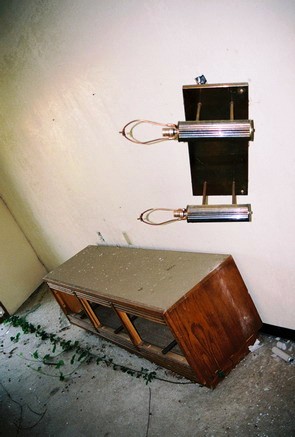
A mistake had been made. Recently, or perhaps a long time ago. He couldn't be sure anymore. But not taking the easy way out had at some point become no way out at all. And this felt not like a crossroads, but a dead end. He turned up his collar against the rising gusts and sat down in the sand, which held a last trace of warmth from the vanished sun. He felt a stone under his hand, lifted it, and threw it into the inky distance. Nothing. He would wait.
Tuesday, July 05, 2005

Holocaust Memorial, Portland, OR


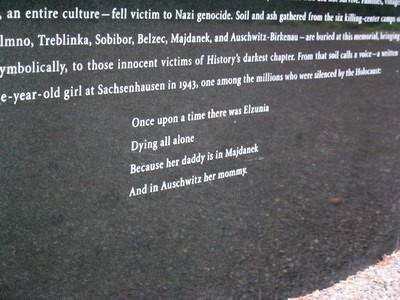
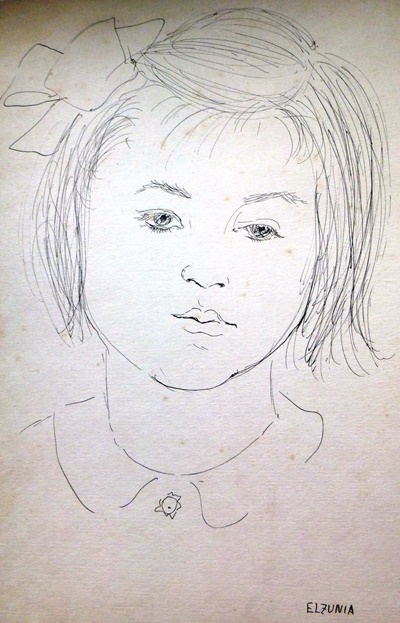
On a wall of the Holocaust Memorial in Washington Park, amongst the pine trees which overlook the city of Portland, Oregon, a short verse is inscribed in stone. Written in 1943 by a nine-year-old girl imprisoned at Sachsenhausen, the four lines read:

Once upon a time there was Elzunia
Dying all alone
Because her daddy is in Majdanek
And in Auschwitz her mommy.

AUGUST 2016 UPDATE: Below is a sketch of a young girl submitted by Jules D. The drawing, bearing the name "Elzunia," was found in an antique store in Kraków, Poland a couple decades ago. It seems likely that it is a tribute to the girl whose poem is inscribed on the Holocaust Memorial, and thus is a moving accompaniment to this post. I thank Jules for allowing me to post it here.

Friday, July 01, 2005

Hurricane Ivan


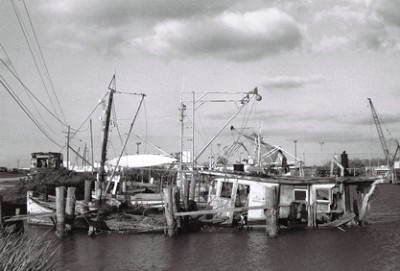
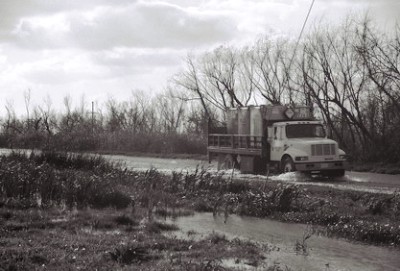
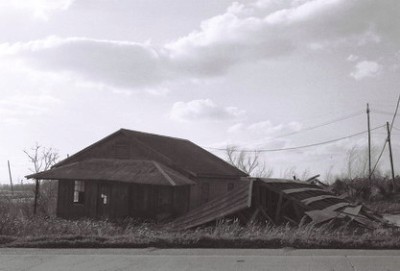
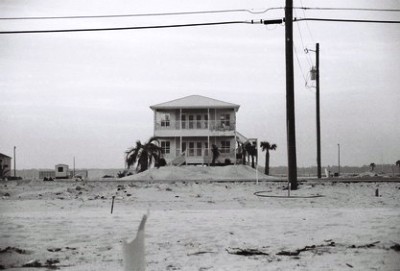
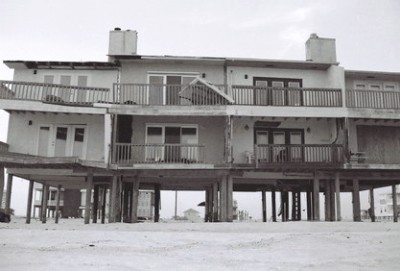
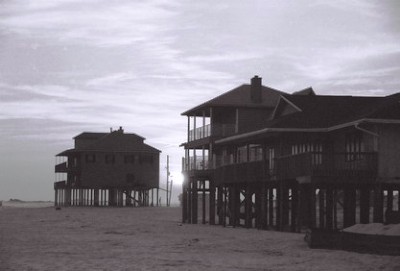
On September 16, 2004, Hurricane Ivan slammed into the Gulf Coast of the United States. The Category 3 hurricane had lost some force by the time it made landfall at approximately 2 AM, but that was little consolation for residents of coastal Alabama and the Florida Panhandle, who had to contend with 125 mph winds and a 16 foot storm surge. The center of the hurricane came ashore near Mobile, AL, but Pensacola, FL, about 35 miles east of the eye of the storm, got hammered. Over 7 months later, the damage done by Ivan could still be seen up and down the Panhandle Coast. Construction was proceeding all around, but destruction lurked in every corner. Countless blue government issue tarps were still nailed to roofs and many windows remained boarded.


It is, of course, the beach communities that bore the brunt of Hurricane Ivan. Shifting sand and tides make life on these strips of land precarious under the best circumstances. Ivan made life impossible. These photos were taken just west of Fort Walton Beach and, while the hurricane stilts helped to a degree, the devastation was widespread. The majority of homes were badly battered, with shutters hanging loose, stairways gone, and roofs ripped-up. While a few hammers clattered here and there and a power saw or two rang out, many residents had obviously not yet returned to what may have been vacation homes. Most haunting were the broken stumps of hurricane stilts that were visible every so often, the gorgeous homes they had once supported nowhere to be seen.


A few feet beyond where these photos were taken, access was impossible. The road remained buried under several feet of sand and not a structure was visible on the horizon. On this beautiful late-March evening, with a light, warm breeze blowing and the ocean gently lapping at the shore, it was hard to imagine the fury that had torn this neighborhood apart. Some residents might tell you that living in such a place made the risk worth it. Gazing out across the ocean, ankle-deep in perfect sand, gulls wheeling overhead, wrecked homes in every direction, I wouldn't have tried to argue with them.

Monday, June 27, 2005

The King


The icon. The hero. The superstar. The one who is everything we desire to be, yet cannot be. Will never be. In kinder, gentler times, we allowed our heroes to scale great heights, saw in their climb some hope for our own victory. We cheered them on, their fame a mechanism for our own transcendence. It was only when we realized that their success would be of no use to us, that our redemption through their stardom was a lie, that we began to throw stones, to knock down those we had idolized only moments before. If they could not bring us up to their level, we'd bring them back down to ours. Then we went searching for a replacement. Now, humiliation is the price of admission. Paris Hilton, Ben Affleck, Jessica Simpson, The Bachelor, The Swan, The American Idol. We demand celebrities we cannot respect. It is as if we finally understand that the superstar will never free us from the mundanity of our own lives. And we hate them for it.


We still create stars, but only after the candidate has relinquished their dignity, something we, of course, would never dream of doing. Unless and until we get the opportunity to take their place. Most of these poor, unfortunate souls will be quickly discarded, their future the final degradation offered by tabloids or scandalous courtroom drama. But for those select few whose stars burn brightly and continuously in the collective consciousness, who can truly do no wrong--for it is not allowed--the price is highest. They must allow us to deify them. For, as Harry Crews has written, "Men to whom God is dead worship one another." The cost is far too steep, the lie far too big to be sustained. The price, ultimately, is death. And in that death comes the greatest fame.

Friday, June 24, 2005

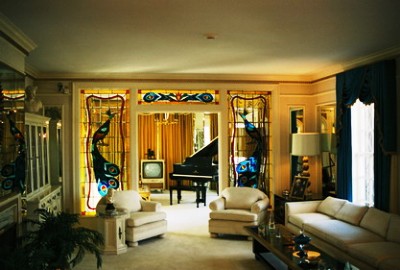
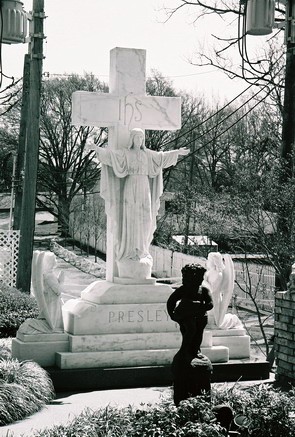
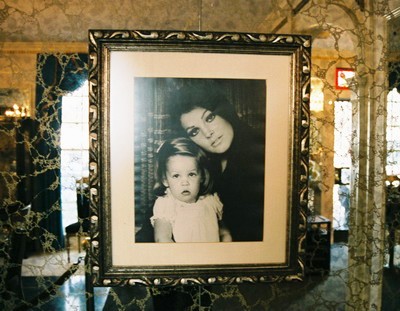
In the House Where Elvis Lived


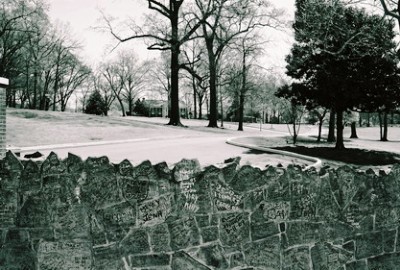
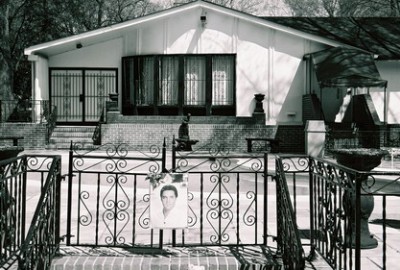
FROM GALWAY TO GRACELAND: Oh, she dressed in the dark and she whispered amen; She was pretty in pink like a young girl again; Twenty years married and she never thought twice; She sneaked out the door and walked into the night; And silver wings carried her over the sea; From the west coast of Ireland to West Tennessee; To be with her sweetheart, oh, she left everything; From Galway to Graceland to be with The King; She was humming Suspicion, that's the song she liked best; She had "Elvis I Love You" tattooed on her breast; When they landed in Memphis, well her heart beat so fast; She'd dreamed for so long, now she'd see him at last; She was down by his graveside day after day; Come closing time they would pull her away; Ah, to be with her sweetheart, oh, she'd left everything; From Galway to Graceland to be with The King; Ah, they came in their thousands from the whole human race; To pay their respects at his last resting place; But blindly she knelt there and she told him her dreams; And she thought that he answered or that's how it seemed; Then they dragged her away--it was handcuffs this time; She said, "My good man are you out of your mind?"; "Don't you know that we're married? See, I'm wearing his ring"; From Galway to Graceland to be with The King; "I come From Galway to Graceland to be with The King." Beautifully written by the one and only RICHARD THOMPSON.
Monday, June 20, 2005

The City of the Dead

"(St. Louis Cemetery #1) is the mother cemetery...the Vieux Carré of the dead; as confused and closely packed a quarter as the living metropolis." Grace King, author, 1895.

On my last evening in New Orleans I decided to go visit the oldest boneyard in New Orleans, St. Louis Cemetery #1, founded in 1789. Yes, on my last EVENING. I'm not sure why it didn't occur to me that the cemetery would be CLOSED at night. Maybe I thought I'd be able to peek through a fence or something (it's actually surrounded by a tall, white wall). In any case, the cemetery was outside the safety-circle the desk clerk had drawn for me, but I wouldn't realize this until I got back to my hotel room. So, I set off, crossed Canal St., and kept going. I soon passed a man who bid me a very hearty "Good evening!" I responded in kind, and thought, "Very friendly folks around here!" About a block later I caught the vibe. Abandoned grocery store on one side, boarded-up building on the other. Very few people on the streets. My antennae went up. Way up. But I was pretty close, so, sun going down, I pressed on. Another guy walked past, and he, too, offered a friendly "Hello!" Only, this time, I thought I detected a trace of amusement in his tone. When I made it to the cemetery it was, of course, locked up tight as a drum. I circled it, just to feel like I'd accomplished something, and found a hole someone had bashed in the wall. It was large enough to crawl through and, incredibly, I actually considered squeezing in. Luckily, I realized that other people may have recently done the same thing and I didn't want to meet them under the circumstances. So, I turned around, kept my head down, and quickly walked back to my hotel in the dark. Failure.
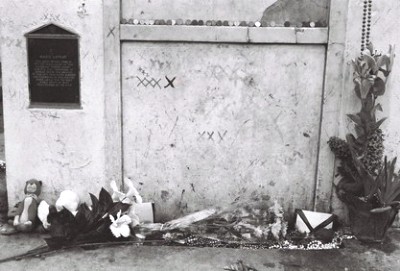


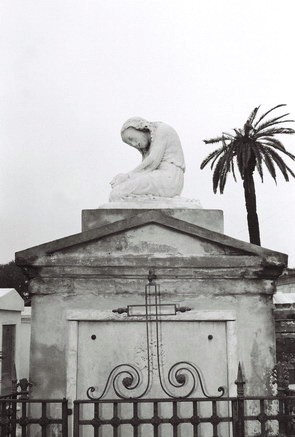
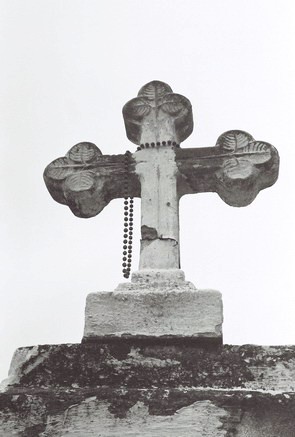
But, if at first you don't succeed, try, try, again. On my most recent trip to New Orleans I went to the cemetery first thing in the morning. This time it was open and there were plenty of tour groups out and about. A very different atmosphere. But I did appreciate the sign out front: "Visitors are welcome but enter these premises at their own risk." The graves are above-ground because the water table is so high that a heavy rain would have buried coffins popping up left and right. When space is needed, a coffin (at least 1 year and 1 day old) is removed, burned, and the remains pushed to the back of the tomb or set in a space below the vaults. Homer Plessy (1863-1925), a black man who sat in a "whites-only" railroad car, leading to his role as plaintiff in Plessy v. Ferguson, is buried there. Remember, Plessy lost his case and the ruling put into law the "separate but equal" doctrine in the US. Also buried in the cemetery is Marie Laveau (1794?-1881?), the Voodoo Priestess. She and her daughter reportedly haunt the cemetery, and return fully to life on St. John's Eve (i.e. Midsummer's Eve), when they lead followers in a wild celebration (i.e. orgy). People requiring a little voodoo in their lives leave coins, stuffed animals, "X"'s--ANYTHING--to get Ms. Laveau to help them. Then, those in need turn around three times, knock thrice on the tomb, and their wishes are granted. Tradition has long held that the Laveau tomb is the one in the middle shot there, but the grave itself has always been unmarked. Did I try to get a little voodoo going on? Wouldn't you like to know. The statue in the top shot is "The Weeping Woman." This last photo features the ubiquitous beads of New Orleans. Thanks to Grave Addiction for providing some info on the Voodoo Queen. They've got lots of interesting photos and facts at the site if you want more. 'Til next time.

Friday, June 17, 2005

The Big Easy


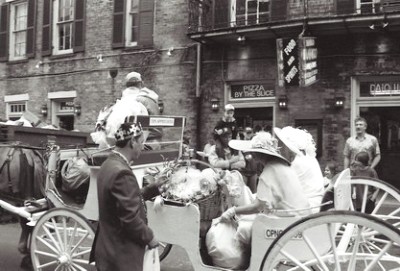
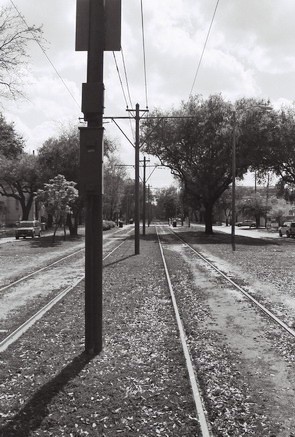
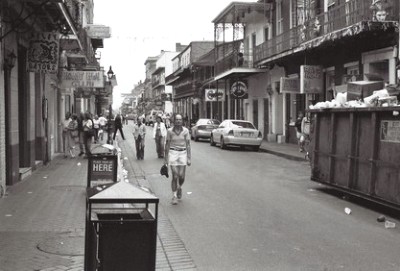
The first time I visited New Orleans the desk clerk at the hotel I was staying at took my map from me, then drew a thick, dark circle around the downtown area. "New Orleans isn't really a dangerous city, as long as you stay inside this circle, especially at night." I appreciated the advice, but he needn't have bothered. If there's a seedy part of town, some place where no tourist has any business being, then I will automatically, magically, find myself there. The first time I went to Chicago I got woefully lost and drove right up to the notorious Cabrini Green Housing Project. (This was before muggers on crack were replaced by joggers who've had too much frappuccino.) In Charleston, SC, I took a few wrong turns and found myself in the only place I was expressly told not to go. As darkness fell, a man trudged down the sidewalk, past burnt out buildings and overflowing trash cans, a TV hoisted on one shoulder, the power cord dragging behind him. My first night in London was spent in a basement hovel in Earl's Court, complete with pre-dawn knife fight outside the window. ("Aw, c'mon, just put that thing away before the police come," one guy finally pleaded. Surprisingly, it seemed the suggestion was taken, and I listened to their footsteps ricochet off in different directions.) And on and on. Trust me, I'm not showing off here. There's nothing particularly fun about winding up on the toughest street in town. You're grateful if all it takes is a little spare change to secure safe passage through some of these neighborhoods. I'm only relating this as a set-up for the next post. But don't get your hopes TOO high--it's probably not what you think. Anyway, the top and bottom photos are from Bourbon St., early on Easter Sunday, 2005. (The guy with the crown wants stuffed animals from the ladies in the carriage.) This middle shot is from the Garden District during a wait for the trolley.
Tuesday, June 14, 2005

Hotel No-Tell


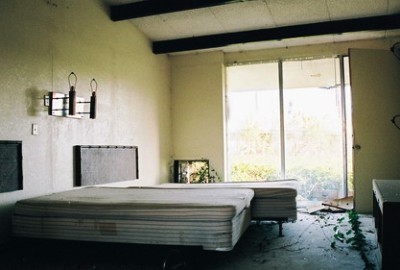
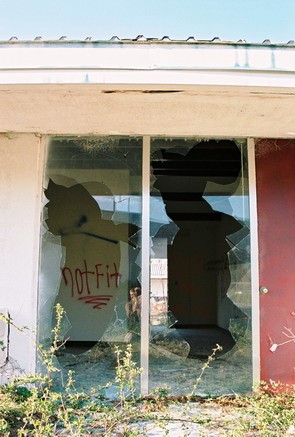
Sometimes things just don't work out. The interstate is built 20 miles to the east. There's no money coming in. You can't cover your loan. Your wife says she's had enough. Anything. Disaster. Whenever I'm in an old house, particularly one that's still furnished, I can't help but wonder what happened. Death? Disease? Divorce? A litany of potential transgressions and illegalities. But, in each case, whatever occurred had to have been powerful. For this event, or sequence of events, transformed something that once must've meant everything--every hope, dream, or aspiration--and turned it into less than nothing. A rotting shell, the decaying objects inside, once cherished, now hardly the worst of it. A home become a place to flee. When I came across this motel in south Georgia, a little off I-75, I took the broken glass and shattered wood to be proof of calamity. Each room individually decorated, a children's playground out back, a laundry facility. Evidence of plans and passion. Now, nothing of use remained. To understand, to feel what might have been, you have to get close, and risk seeing something of yourself reflected back at you.

Friday, June 10, 2005

Neon Night


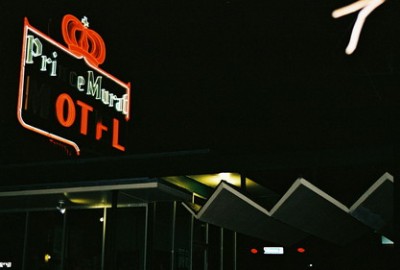
I don't know what it is about old neon signs that I find so romantic. Of course, neon is best late at night, in a light rain, the bright colors reflecting off wet pavement. Extra points are awarded to signs with a few burnt-out letters. Bonus-extra points go to signs that blink on and off, molded glass tubes winking ambiguously in the darkness. We're not talking about signs advertising Subway sandwiches or ATM machines. No, we're talking about signs that evoke moods, memories, and movement, somehow flashing the cracked ambitions of generations of Americans back at you. This is a shot of the Prince Murat Motel, Tallahassee, FL. They sell alcohol at the front office in 40 oz. cans. I'm reminded of the Thunderbird Inn, Savannah GA. The Thunderbird is across from the Greyhound station, where the most reasonably-priced accomodations in any town can be found. One night, I was staying at the T-bird when I heard the door to my room open. I sat bolt-upright in bed and immediately my eyes locked with those of another gentlemen, who was halfway across the threshold. He stopped dead in his tracks, whispered a hoarse apology, then quietly backed out. Did he mistake my room for his, the locks on the doors, for some strange reason, the same? After all, I was sure I'd turned the deadbolt before going to bed. Or did he pick the lock, hoping for a free room for the night? I didn't ponder these questions (nor a couple others) for too long, as I quickly fell back asleep. Hey, he seemed like a nice person. Unlike the woman in the parking lot who, later, towards dawn, screamed for a solid hour about her lost comb. Oh, and I'm not disparaging either the Thunderbird or Prince Murat. They beat a corporate chain any day. Hell, it seems everyone I know has spent at least one night at the T-Bird.

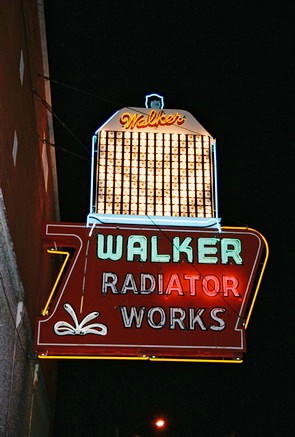
Phirebrush, an on-line magazine, has posted 5 photos of mine, which is quite nice of them. The shots are in the new issue, #28, in the photography section. All 5 are from the CSRA, including shots from the Phinizy Swamp, Sand Bar Ferry Rd., and even the spooky honky-tonk/mission. Yup, all the old haunts. Also, the other night, I caught Big Sandy and His Fly-Rite Boys at Lee's Liquor Lounge. Now, I'm no fan of nostalgia or revival, but Big Sandy brings enough personality and flair to rockabilly and swing tunes that they seem wholly contemporary. "Chalk it up to the Blues," a song off the last record, can be found here. It's a good soundtrack for neon in the night, I think. This is Walker Radiator Works, Memphis, TN. It's dark, letters are burnt out, I only regret that a fine mist wasn't falling. But, if you listen closely, you can hear heels clicking down the sidewalk and off into the night.

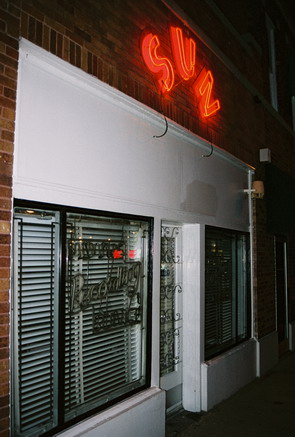
I feel like I'm cheating a little bit, since this shot was taken right next door to the radiator works. Yup, Sun Studio, Memphis, TN. But, it goes well with the shot from Snaps Magazine, which was taken from inside (during the day, of course). So, yeah, sure, this post was written under the influence of too much Dashiell Hammett, too many Veronica Lake movies, and my apparently unquenchable desire to hop in a car and drive to a city--any city--with no regard for what happens once I get there. I don't know about where you live, but if it's not pouring with rain and you aren't subject to extended power outages, you're better off than I.
Monday, June 06, 2005

Waiting and Watching


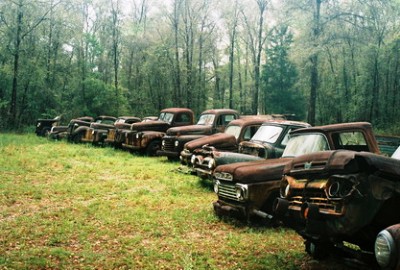
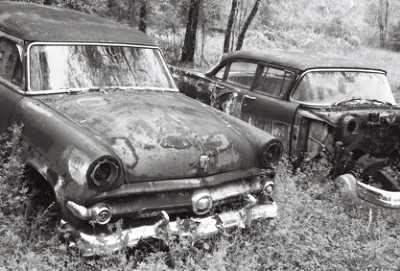
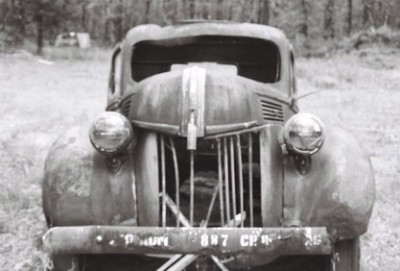
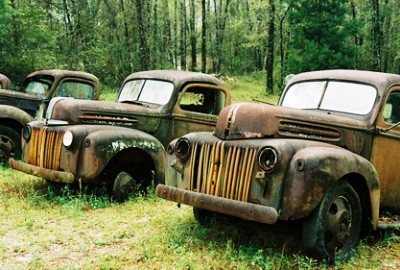
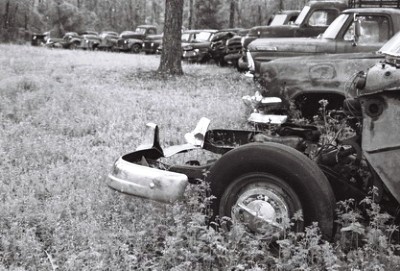
Somewhere along a barren stretch of US Highway, between Tallahassee and the Panhandle Coast, a phalanx of battered trucks waits. Wounded sentries standing guard over the hot Florida blacktop, these relics hope patiently for a call to return to service, though the call will never come. One foggy morning this spring, as the mist lifted into the trees with the rising sun, I stopped to pay my respects. We may return in a later post, as I was much impressed by the austere display of rust, torn rubber, and cracked glass.

I'd also like to mention Snaps Magazine, an on-line 'zine featuring a new topic each issue. This edition is dedicated to music, and I was pleased to get a photo of mine included. Yeah, I actually DO have some music-related shots, and they aren't of broken guitars and smashed drums. Although, I would like some pictures like that! My photo is of Sun Studio, Memphis, TN. You know, the place where Elvis Presley was discovered by Sam Phillip's secretary, Marion Keisker. At first, Sam didn't think the kid had anything. But Marion pestered her boss for a year to bring him back in. And the rest, as they say, is history. The shot is of the room where Elvis, Howlin' Wolf, B.B. King, Johnny Cash, Jerry Lee Lewis, Roy Orbison, and so many others first did their thing. This is where Rocket 88, the original rock and roll song, was recorded by Jackie Brentson, with Ike Turner playing a mean piano. I won't tell you which page my shot is on--you should flip through and see for yourself. Yup, flip. The format is pretty cool, so take a look at Snaps Magazine.
Thursday, June 02, 2005

Minneapolis, Minnesota


I first went downtown sometime early in junior high school. For years I'd peered out the car window as my mom drove down Hennepin Avenue on the way to my grandmother's, fascinated and frightened by the assortment of misfits shuffling down the sidewalk. I was especially struck by Block E, on Hennepin between 6th and 7th, which, for some reason, I took to be the center of downtown. I wasn't entirely wrong. Anchored by Moby Dick's bar, Shinder's bookstore, and the Rifle Sport Art Gallery, with the 1st Avenue nightclub (riding high on the fame brought by Purple Rain) and Northern Lights record store across the street, I sensed an importance to this area that I couldn't yet understand. When I finally did get out on the streets to see things for myself, within 5 minutes of walking down 7th St. I was asked if I wanted to buy some weed ("Uh, no thanks.") and if I could spare some change. I told the guy I only had a nickel (minus the dime for bus fare back to the suburbs). He laughed and said, "Aw, man, I'm not gonna take your last nickel!" It felt like I'd found a home.

My friends and I started going downtown a lot, just roaming the streets on foot or bike. Sundays usually ended at the 7th St. Entry, 1st Avenue's small annex, where all ages punk rock shows were held. But Block E was considered a blight, and shortly after my first visit the whole thing was torn down. In one of those moves that is utterly baffling, yet so common it hardly elicits response, a parking lot was put in. Oddly, the parking lot sorta worked. It kept the area open and provided a handy meeting place. This was not what the city wanted, so some dumb-cluck got the bright idea to pipe classical music into the lot as a way to discourage the riff-raff from loitering. Naturally, it failed. The music only served to add an interesting contrast to the urban life happening all around.
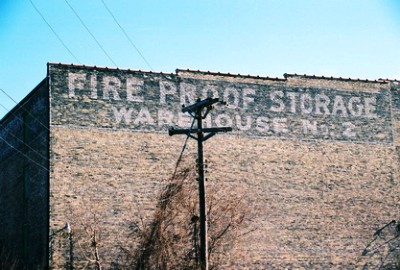
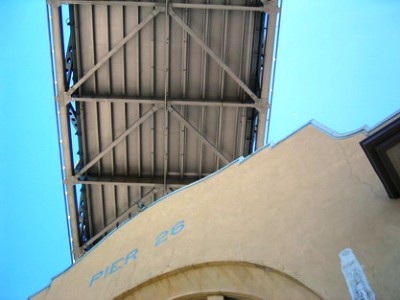
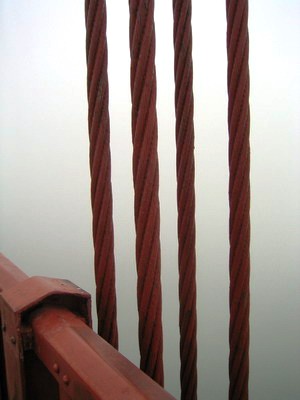
That's the way things stayed until a few years ago, when the much-ballyhooed Block E Development Project finally got underway. Now, instead of a parking lot, there's blight of another sort. Featuring a Border's bookstore, an umpteen-screen megaplex, and a video arcade for adults (?!), this new monstrosity is a sight to behold. Oh yeah, did I mention the 21-story Le Meridien Hotel? The complex is bright and loud and makes the surrounding streets feel small and claustrophobic. When I first saw it, during a visit back from Georgia, I actually became disoriented and found myself walking away from where I wanted to go. And, of course, new bars have opened to serve the crowds that had previously viewed Hennepin Ave. as "too dangerous." Interestingly, police have said that downtown has become HARDER to patrol, as drunken suburbanites beat the crap out of each other every weekend. Girls in cocktail dresses now line the sidewalks at bar close, crying, "Oh my God, I'm so drunk!" before falling to the curb and throwing up. This is probably not the legacy of Moby Dick's, which offered its down-at-the-heel customers only a "whale of a drink", not a popularity contest.


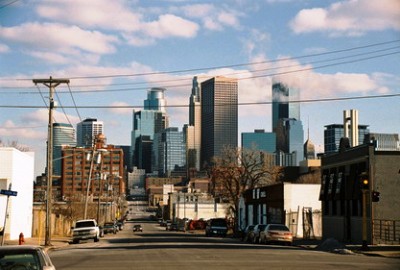
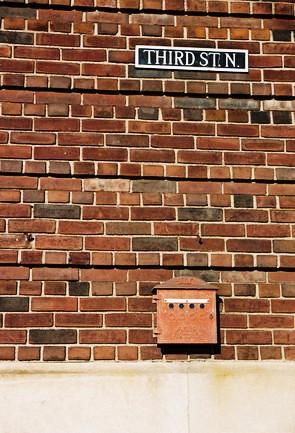
One frigid night this winter I decided to brave the crowds and check out a gig. Only, because it was so cold, there was hardly anyone out. Late that night, after the show, a guy stopped me to tell an old story: His car had broken down and was now at the gas station. Could I give him a ride over there? For old time's sake, I agreed, telling him that with my car's badly leaking radiator we'd be lucky to make it. On the drive over, he proceeded to tell me how I should fix the radiator leak. The advice wasn't going to help me, but I appreciated the effort. As we neared the station he pulled another familiar trick: Could I go just one more block down? It was then that I realized he really wanted to go to Palmer's, a tough bar infamous for an incident years ago during which a patron killed the bouncer. (Further confirmation of the previous paragraph: This just happened again, but at Nye's Polonaise Room, a formerly quiet place that was famous for the elderly woman that played the piano.) After the guy thanked me and got out of the car, he walked over and started shaking hands with his friends out front, a fascinating and frightening assortment of misfits. As I turned around and drove away, I was glad that some things, at least, never change. By the way, these photos were taken in the Warehouse District, soon to be the Lofts-and-Sushi-Bars District. I don't take many photographs in Minneapolis, so this has been a rare post. Whoa.

Tuesday, May 31, 2005

(Sittin' on) The Dock of the Bay


(Sittin' on) The Dock of the Bay was written by Otis Redding and guitarist Steve Cropper. Otis wrote the first verse on a houseboat in Sausalito, CA after playing the Monterey Pop Festival. The song was recorded December 7, 1967, three days before Otis died in a plane crash near Madison, Wisconsin at the age of 26. Cropper, devastated, began mixing the song even as divers searched a lake for Redding's body. A final verse had yet to be written, and Cropper retained Otis's scratch-whistling at the end of the tune. Upon release in January 1968, the record spent 12 weeks on the charts, four of those at the top position, Billboard's first posthumous #1. It's 2:38 of bittersweet moanin' and pleadin' brilliance by the man from Dawson, GA. You can listen here.

(Sittin' on) The Dock of the Bay: Sittin' in the mornin' sun; I'll be sittin' when the evenin' come; Watching the ships roll in; And then I watch 'em roll away again, yeah; I'm sittin' on the dock of the bay; Watching the tide roll away; Ooo, I'm just sittin' on the dock of the bay; Wastin' time; I left my home in Georgia; Headed for the 'Frisco bay; 'Cause I've had nothing to live for; And look like nothin's gonna come my way; So I'm just gonna sit on the dock of the bay; Watching the tide roll away; Ooo, I'm sittin' on the dock of the bay; Wastin' time; Look like nothing's gonna change; Everything still remains the same; I can't do what ten people tell me to do; So I guess I'll remain the same, yes; Sittin' here resting my bones; And this loneliness won't leave me alone; It's two thousand miles I roamed; Just to make this dock my home; Now, I'm just gonna sit at the dock of the bay; Watching the tide roll away; Oooo-wee, sittin' on the dock of the bay; Wastin' time (whistle).