skip to main |
skip to sidebar
(Sittin' on) The Dock of the Bay was written by Otis Redding and guitarist Steve Cropper. Otis wrote the first verse on a houseboat in Sausalito, CA after playing the Monterey Pop Festival. The song was recorded December 7, 1967, three days before Otis died in a plane crash near Madison, Wisconsin at the age of 26. Cropper, devastated, began mixing the song even as divers searched a lake for Redding's body. A final verse had yet to be written, and Cropper retained Otis's scratch-whistling at the end of the tune. Upon release in January 1968, the record spent 12 weeks on the charts, four of those at the top position, Billboard's first posthumous #1. It's 2:38 of bittersweet moanin' and pleadin' brilliance by the man from Dawson, GA. You can listen here.
(Sittin' on) The Dock of the Bay: Sittin' in the mornin' sun; I'll be sittin' when the evenin' come; Watching the ships roll in; And then I watch 'em roll away again, yeah; I'm sittin' on the dock of the bay; Watching the tide roll away; Ooo, I'm just sittin' on the dock of the bay;  Wastin' time; I left my home in Georgia; Headed for the 'Frisco bay; 'Cause I've had nothing to live for; And look like nothin's gonna come my way; So I'm just gonna sit on the dock of the bay; Watching the tide roll away; Ooo, I'm sittin' on the dock of the bay; Wastin' time; Look like nothing's gonna change; Everything still remains the same; I can't do what ten people tell me to do; So I guess I'll remain the same, yes; Sittin' here resting my bones; And this loneliness won't leave me alone; It's two thousand miles I roamed; Just to make this dock my home; Now, I'm just gonna sit at the dock of the bay; Watching the tide roll away; Oooo-wee, sittin' on the dock of the bay; Wastin' time (whistle).
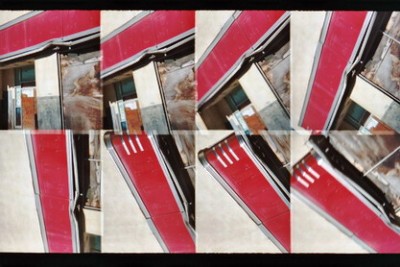
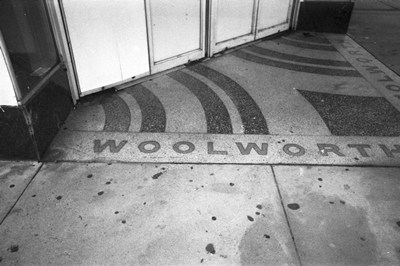
This is a conclusion. It's also a test. Today's post is the VERY LAST from the Central Savannah River Area, USA. It also marks the beginning of a format change. In the future, each post will include three photos that are somehow related and, although I will write something or other, text will be kept to a minimum. Don't worry, I haven't got a notebook full of poems I've been waiting to spring on you. I promise the text will be relevant, at least as relevant as it ever is. Also, in the last couple days, I've received comments fleshing out the details regarding the fire at the Hampton Terrace Hotel and verifying that the window the Galt sisters scratched their names into with Emily's engagement ring (before Emily's fiancee was killed in the Civil War and she leaped to her death) still exists. This is in addition to fact-filled comments on the brick factory, brick manufacturing, and the haunted honky-tonk (the main character from 3 Faces of Eve actually danced on tables there!). Man, I love this stuff. If you have info related to anything you read here, please leave a note. In fact, if you have a CSRA story that fits with City of Dust's style (sure, just a wee bit dark), then let me know and I'll post it. 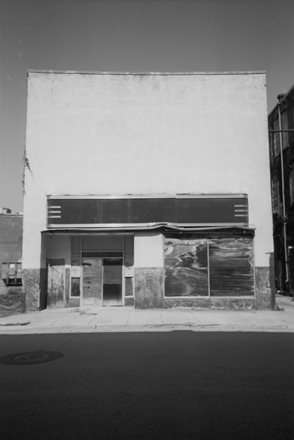 Hell, if you've got a good story from somewhere ELSE lemme know. Yes, YOU can now be a part of CoD. And thanks to everyone that's commented so far. This is also a good time to mention that James Brown, "the most famous person to come out of Augusta," according to Mayor Bob Young, got his statue. Awhile back I did a bit on why the James Brown festival was cancelled last year (domestic assault) and speculated about the status of the life-size bronze statue that went with it (gathering dust in a warehouse). Well, on May 6th, 3 days after the Godfather of Soul turned 72 years old, the statue was unveiled in Augusta Common. What the hell, they already had the thing made! Actually, regardless of his personal problems, I'd say the guy deserves a statue in his hometown. James attended the ceremony, but did not perform, a change from the original event. Rev. Al Sharpton, Brown's former road manager, was also present, and offered a prayer of dedication. At least he was supposed to. Nobody I know actually attended the event! No, I don't consider golf a valid excuse. (You know who you are!) So, if anyone can offer an eyewitness account, please do. A great picture of James at the edge of The Terry during the unveiling of JB Blvd. in 1993 can be found at the Augusta Chronicle. The shot is about 1/3 of the way down the page. The next post will be dedicated to Otis Redding. Check back to find out why. Oh, and the pictures are a last look at the Woolworth's that runs between Broad and Ellis. We've seen it before. Rumor is the building is soon to be renovated. G'night.
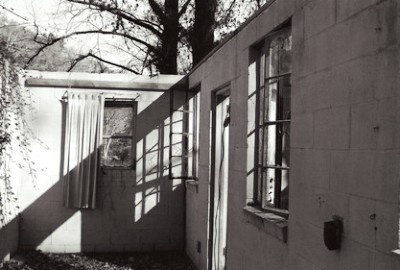
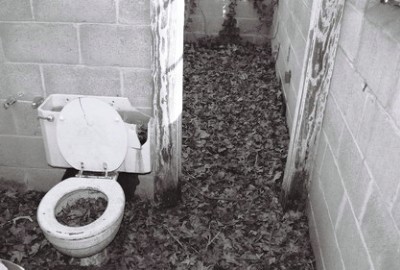
And with a new day comes...a change in film stock! The photos for this post were shot this winter with Kodak TX 400 film that expired in 1996. None of that refrigerator storage either. I've never paid attention to expiration dates anyway. While shooting a roll of toasted film would be very annoying, it wouldn't make me throw up for two days like some other things I can think of. Anyway, this post is all about the North Augusta that was and then, overnight, was not. It's also about the North Augusta that ALMOST was and the one that soon will be. Confused? Anyway, if the stars had aligned just a little bit differently many years ago the entire world might know all about North Augusta, SC. These first few photos mark a last return to the bath house on Buena Vista, by Crystal Lake. We've seen this place before in technicolor.
The story starts in the late 1800's with James U. Jackson, whose dream was to build a city on the bluffs across the river from Augusta and get rich doing it. In 1890, with the help of the Mealing family (of Getzen's Pond "fame"), Mr. Jackson began acquiring land. Eventually Jackson found himself with over 5,000 acres (about $100,000 worth), comprising an area that ran along the river's edge and up present-day Georgia Avenue. With some decent acreage under his belt, James U. hired a design firm out of New York and entrusted them with the layout of the new town. He also built a bridge across the river at 13th St., surely making enemies of the folks running the suddenly-obsolete ferry service, but ensuring that people could get in and out of his new town of North Augusta with supreme ease. By 1897, Jackson had bought Augusta's trolley system out from under them (via previous owner W.B. Dyer) and immediately ran a line across the new bridge to N.A. Service was soon extended to Aiken, and the longest inter-urban trolley system in the world was in full operation.
 By the turn of the century things were looking pretty good for N.A. and James Jackson figured that all that remained was to build one of the largest luxury hotels in the nation on a hill above the town. And so it was that in April of 1902 construction of the Hampton Terrace Hotel was completed at a cost of $536,000. In those days, half-a-mil got you a five-story castle with 600 rooms and a full-sized eighteen-hole golf course that was literally right outside the front door. The building itself was longer than two football fields and contained enough glass to put windows into 70 standard residential homes. In fact, the Hampton Terrace was so big that people have said it essentially WAS North Augusta and, though the hotel was built in the spring of 1902, it took until December 1903 to get the place furnished and ready for business.
The Hampton Terrace was an immediate success. Wealthy folks who'd been flocking to Aiken to escape spending cold winters in their northern mansions were delighted that such a luxurious pad had gone up just down the road. James U. didn't need a winter retreat himself; he'd just finished his own mansion, Rosemary Hall, up on Carolina Avenue. In North Augusta, the hotel was the most profitable industry bar-none, out-earning both cotton production and the entirety of the town's banking operations. In fact, the hotel was often booked-solid far in advance and other lodges and hotels were built nearby to take up the overflow. One smaller joint was the Sesame Lodge, which didn't mind catering to sub-millionaires, tagging itself as a place where "less formal folk can feel more comfortable."
Through the first decade of the century the Hampton Terrace Hotel was really swinging, attracting the richest of the rich and the most famous of the famous. It was around this time that movie moguls, scouting the country for a good location to establish the nascent motion picture industry, wandered into North Augusta. It seemed perfect: the weather was warm, the sun shone a lot, there was this big hotel, and rich people were coming to visit anyway. To that point, the CSRA had not been a hotbed of movie making activity, although at least portions of some early features had been filmed nearby. These included silent movies such as The Littlest Rebel (1914), From the Valley of the Missing (1915), The New Governor (1915), and Charity (1916). (The New Governor, incidentally, was a notorious film. Originally titled The Nigger, the NAACP launched the first media protests in its history against the movie and D.W. Griffith's wildly racist Birth of a Nation, released the same year.) Yet, by the time The Great Moment (1918) and The Arizona Bandit (1920 & filmed entirely in N.A.) were in theaters, North Augusta's shot at becoming Hollywood was long gone. There are really two reasons why Paris Hilton and Ozzy Osbourne don't live in North Augusta. While the first was probably more important, the second was certainly more disastrous.
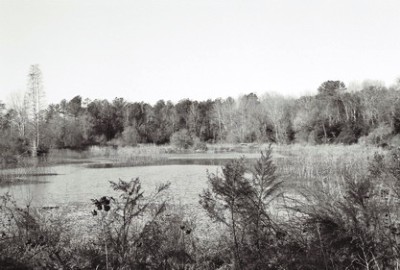
When the citizens of North Augusta heard that the town was on the verge of becoming Sin City, every man, woman, and child must've imagined their sleepy burg suddenly being transformed into a modern-day Sodom presided over by Satan himself. Um, actually, you know, they may have been right! Anyhow, there was an immediate call to let the moguls know that while their vacation money was one thing, North Augustans would appreciate it if the heaving bosoms and debauched dandies were filmed elsewhere, thank-you-very-much! And so the moguls left: Hello Hollywood, CA! That was effectively the end of that. But worse was to come. Above is yet ANOTHER shot of Hammond's Ferry. Soon to be subdivided.
In the winter of 1916, the Hampton Terrace Hotel closed briefly for improvements and modernizations. It's a good thing this is the last post of CSRA history, 'cause my memory is fading. I used to actually know what the improvements were. I THINK a major part of the process was the installation of electric lights or some-such. Anyway, the re-opening was going to be huge and the hotel was totally booked. 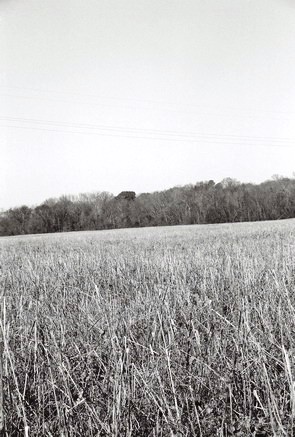 Then, on New Year's Eve, just before the grand unveiling, the hotel burnt to the ground. And I mean, COMPLETELY. There was nothing left. A total loss. However, there actually IS a little left. If you go by the old site, you can still see some of the old brick stairs. Also, I've heard that one of the greens from the golf course can still be identified. Of course, I don't have pictures of these things. You'll have to make do with this doomed field, probably being plowed under as I type. What do you expect? I can't even remember what the CAUSE of the fire was! The new (?) electrical system? A cow tipping over a lantern? Wait, that was Chicago, wasn't it? Anyone? Help?! No, Google had nothing on the subject and there's only one (very rare) book that I've seen with the info.
Well, everyone expected James U. to immediately get on with the business of rebuilding. But, shockingly, he didn't. Not ever. As a consequence, many people mark New Year's Eve, 1916 as the night that North Augusta's dreams burnt down around her. In recent years, even the Palmetto Lodge (AKA Seven Gables Inn), a grand hunting lodge built for Hampton Terrace guests and a witness to the great fire, had found itself empty and forgotten. But, again, no, I have no pictures. I didn't even make an effort to visit the lodge, despite thinking about it on several occasions. Word was that it was not wise to try to get inside. In my defense, one of the owners was recently convicted of narco-trafficking and boasted of refusing to serve members of the NAACP and James Brown when the place was open! So, you'll just have to pretend this piece of grass, now probably crushed by a dozen bulldozers, represents the forlorn Palmetto Lodge. Or, um, maybe not. Geez, this final CSRA post is making me a little addle-brained, apparently. Anyway, yeah, N. Augusta is now in the throes of big change, including riverfront development (N.A.: "South Carolina's Riverfront") and even a supposed rehabilitation of the Palmetto, possibly by the city itself (if there's an extra $900,000 lying around). Hey, it might not be Hollywood, but at least Sandra Bullock won't steal your parking space. (IMPORTANT NOTE: As of 2008, the Palmetto House is back up and running under new, law-abiding ownership. Go pay a visit if you're hungry or looking for a nice, historic meeting hall!)
Thanks to P. Hughes over at the Henry Shultz/Hamburg site and Ramblin' D. Rhodes for bits of movie info. More on the NAACP's reaction to Birth of a Nation, in particular, has been written by Dr. Susan Zeiger. Also, Augusta Magazine, the North Augusta History Page, and the Aiken Chamber of Commerce helped out. Now, someone please remind me: How DID the hotel burn down?
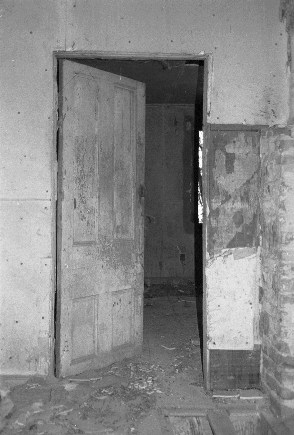 Once again, City of Dust is going on a brief hiatus. I'll be out in the Northwest for the next 11 days, so things will be a little quiet around here. Also, for those of you keeping score, this is the penultimate post from the CSRA to be done in the usual style. In one respect, City of Dust WILL NOT END since I'll still be posting photos and adding commentary of one sort or another. But, in another way, it does feel a bit like the end since I will have completed what I set out to do. And that, of course, was to document the forgotten corners, vacant streets, and abandoned buildings of the Central Savannah River Area, USA via stories and photos. Following the next post, everything is gravy, really, and I make no promises as to what it will be like or how long it will continue. In the meantime, I'm really stretching things out here as that last CSRA post won't be posted 'til late May. For now, we're taking one last walk through the Phinizy Swamp.
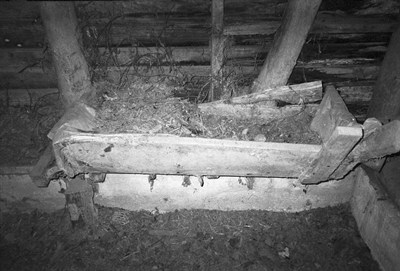
Since time is tight today, I'm going to relate a few final tales from Sean Joiner's "Haunted Augusta and Local Legends." I swear, if Mr. Joiner ever reads this website he's going to demand compensation. On the other hand, I'm certain the little book he wrote is out-of-print and impossible to find, despite being published in 2002. It's a shame not to get these tales out there, so, Sean, thanks for your understanding! And I do put my own spin on 'em, y'know, adding additional info when I can. This first story is the companion piece to The Belle, Her Soldier, and Their Ghosts, and also takes place on what is now the campus of Augusta State University (ASU). Remember that prior to the Civil War the Augusta Arsenal was moved from near the river to the Hill so that soldiers could escape the rampant malaria? Well, it's said that, very shortly after the Civil War, the commander at the Arsenal hired his nephew on for the princely sum of $2 a day. None of the other soldiers at the Arsenal were making that much money and they were not happy at such an open display of nepotism. As if that wasn't bad enough, one day the nephew left work to get a piece of APPLE PIE! This was too much for poor, malnourished soldiers to bear, and so, as the nephew came down the steps of the Benet Mansion (now the ASU admissions office), belly full of delicious apple pie, he was gunned down by a jealous fellow-soldier. The assassin, it seems, was never caught, probably protected by others that hated this pie-eating nephew. At night, employees and students working late have reported hearing noises coming from the kitchen of the Benet House as the commander's nephew rummages around, desperately looking for one last piece of pie. Below is a shot of a trough in a very dark barn, suitable for the ghosts of horses to visit for one last feed.
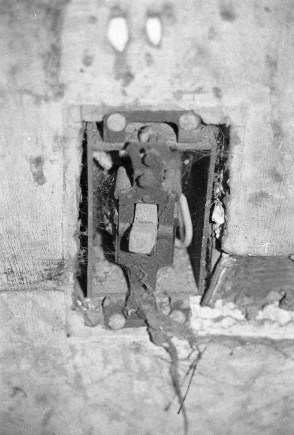 Augusta has long been known as one of the major center's of medical research and training in the country. The Medical Academy of Georgia (AKA Medical College of Georgia) was founded in 1829 by three doctors with the aim of training students in the medical arts. In 1852, the College bought a Gullah slave, Gradison Harris, and prompty taught him reading, writing, and basic anatomy. This was, of course, highly unusual. It should be borne in mind that it was ILLEGAL for slaves to know how to read and write, which is why the lines of poetry written on pottery made in nearby Edgefield, SC by Dave the Slave are so astonishing. Eventually Gradison Harris was told his responsibilities: Each day he would read the obituaries, then, at night, go to Cedar Grove Cemetery to dig up a fresh corpse for use by the medical students in their classes. Isn't it nice that they turned the lights off before vacating this shack?
 It's said that one evening some medical students saw Gradison Harris at work, then followed him to a local bar where the reluctant graverobber had stopped for a moment to imbibe some liquid fortification. Hey, wouldn't you need a drink? Anyway, Gradison carefully stashed the sack in which that evening's body had been placed before he grabbed a glass of courage. Seeing this, the students decided to play a joke on Gradison and removed the body. Then one of them climbed into the sack. When Harris returned from the bar, the student in the sack moaned that he, too, badly needed a drink. Gradison went running down the street in terror, apparently in no mood to deal with a thirsty corpse.
Gradison Harris left the Medical Institute of Georgia, as it was called by then, following abolition. However, he returned later to take a position as a porter. He died in 1911 at the age of 95 and is now buried in, fittingly enough, Cedar Grove Cemetery. During renovation of the College in 1989, the remains of 154 bodies, including vats filled with bones and jars of preserved body parts, were found under the old building. These remains were re-buried in Cedar Grove Cemetery on November 7, 1998. If, in City of Dust's absence over the next couple of weeks, you find yourself bored (as you no doubt will!) I recommend checking out PostSecret, where people send handmade postcards to an anonymous blog, each inscribed with a secret. Some of these secrets are funny, some heartbreaking, some just weird. Nothing like finding comfort in blatant voyeurism. Isn't that the new American way? Seriously, though, PostSecret is pretty amazing and lots of people write in to say they've received some real relief from getting their secrets published. If you don't like to read other people's secrets (what, do you have standards?), then have I mentioned City of Dust's extensive archives?! Yes, I have.
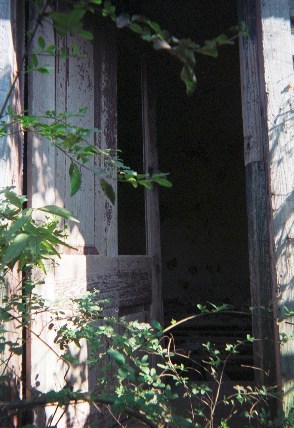 Speaking of secrets, how about one more tale, this from the Sibley Mill, the site of the Confederate Powderworks. On October 20, 1906, workers were just beginning their long day of weaving in the stifling mill. Maude Williams was feeling especially agitated that morning as she'd just broken off an affair she'd been having with a married man, Arthur Glover. Arthur had taken the news very badly and Maude was terribly worried indeed. However, at the Sibley Mill, adultery was no excuse for not reporting for work and so Maude tended carefully to her weaving. Suddenly a shot rang through the building and Maude Williams slumped over, killed by a single bullet. Soon after, Arthur Glover was hanged for murder. In subsequent years, workers reported seeing a woman weaving, intent on her work and oblivious to all around her. Early on, some of these people recognized the woman as Maude and fled in fear. Later, others tried to speak with this new employee but received no answer. Over time, however, sightings diminished, and it now appears that Maude Williams has moved on, her weaving done. See you in a couple weeks.
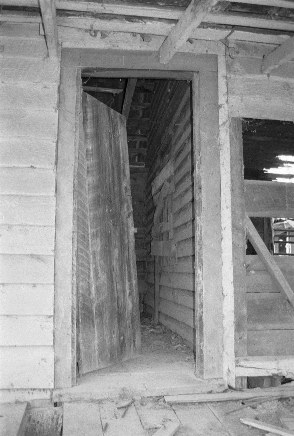 I'm very pleased to report that City of Dust has a feature in the May issue of Photoblogs Magazine, which was just released on-line yesterday. Right off, I'd like to thank Matt, the founder of Photoblogs Magazine, and Charles, the managing editor, for providing such a great forum and giving me the opportunity to take unsuspecting readers on a tour of the City of Dust. I'm really thrilled to be included. Also, I'd like to thank Jeff for doing a bang-up job on the layout and putting up with my nit-picky grammatical revisions. So, go check out the magazine, which you can access by the button on the right there, or just click here. And I'm not asking you to go just 'cause CoD is featured; you should check out the other stories and photos, which are really exceptional. I'm kind of a hack, so I can only hope that I've managed to hold my own to some small degree. Also, there's photo critiques, discussions, and all kinds of other interesting things going on at the magazine, so surf on over right now and come back and read the rest of this post later. You've probably seen the Phinizy Swamp before anyway, and I'll leave the front door open.
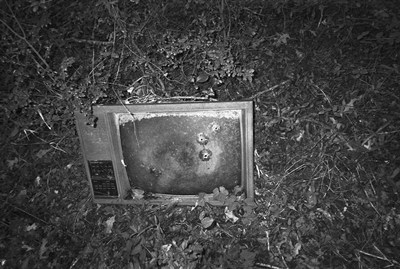
While I'm thinking about it, I'd also recommend checking out Photoblogs.org which, if I'm not mistaken, provided some of the initial inspiration for Photoblogs Magazine. It's sort of a photoblog clearinghouse, and every photoblog I've ever mentioned on this site can be found through Photoblogs.org, including the Snowsuit Effort, which I recently came across. Previously, I've talked about the difficulties of photographing not just run-down neighborhoods, but also the people that live in them. Taking pictures of homeless men and women is hard to do with sensitivity-minus-exploitation, but Ryan does an excellent job of documenting those who, for a variety of reasons, have found themselves living on the streets of Detroit. Sometimes I'd go into the Phinizy Swamp around midnight and wait for the devil to appear, hoping to make a deal with him. Okay, not really. I like my soul and, besides, despite Charlie Daniel's words to the contrary, it's well known that most of Satan's deal-making takes place on the backroads of Mississippi, not Georgia. Still, the shot below illustrates just how dark it can be in the swamp even at noon. Kill your television!
There's a lot of great swamps around Augusta in addition to the Phinizy. There's the Hell Hole Swamp in South Carolina, nestled in the Francis Marion National Forest, near Charleston. It's said that the swamp was named by British soldiers during the Revolutionary War who, after watching General Francis Marion ("The Swamp Fox") and his troops disappear into the darkness, were obliged to go in after him. At some point in the search one redcoat reportedly exclaimed, "That's a hell of a hole!" And Hell Hole it was. They never found Marion and his men. Later, the Hell Hole was the stomping ground of serious bootleggers, who riddled the swamp with stills and rough dirt roads. 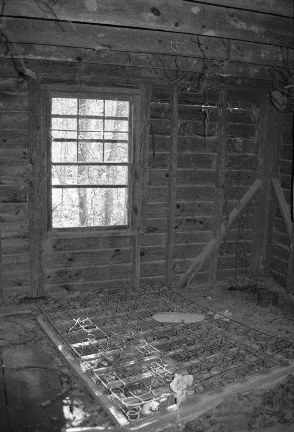 Such purveyors of "liquid corn" needed fast cars to make quick getaways, and would race each other to test their newest modifications. A few years later, they sanctioned this activity under the banner NASCAR. It's even rumored that Al Capone went to the Hell Hole Swamp to see how the southern wing of his bootleg empire was getting along. Rival bootleggers went after each other with firearms in the Hell Hole, and liquor from Cuba came up the Santee River for storage in the swamp until it could be moved out to Chicago. SC produce has a high iodine content (license plate mottos boldly read "Iodine" in 1930), and still operators jumped on the health bandwagon. "Not a Goiter in a Gallon" was the slogan of Hell Hole 'shine shipped out of the Iodine State (AKA the Swamp State). Recently, a new high school in the area was almost called Hell Hole High. I'm very disappointed it was not. There's a Hell Hole Swamp Festival each year, where you can enter a tobacco-spitting contest, and test your greased-pole climbing skills. That's in Jamestown, SC, May 7, so make your plans now. Photo caption brought to you by the LA-based rock band X: "We slept for a week, cinders on the sheets." Apparently cinders on the box spring, as well.
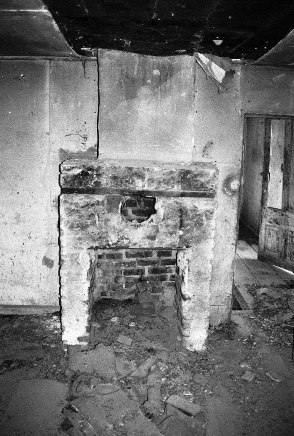 Of course, there's the Okefenokee Swamp, down in southern Georgia, on the Florida border. A 680-sq.-mi. national wildlife refuge, much of the "land" is actually floating peat mat. The Seminole Indians referred to this mat as "ecunnau finocau." That didn't make much sense to settlers in the area, who just called it "Okefenokee." Out of the swamp flows the St. Mary's River, considered to be one of the most crooked, meandering rivers in the world, winding its way east along the GA/FL border to the Atlantic Ocean. The distance as-the-crow-flies is 65 mi., but the river, being in no hurry, does it in a leisurely 175. Another river flows to the Gulf of Mexico from the swamp. You may have heard of it: "Way down upon the Suwanee River." Only, it was misspelled in the song and needs another "n". Anyway, the Okefenokee Swamp is pretty cool, with dark, black water that looks like tea (but doesn't taste like it), and more gators than you can shake a canoe paddle at. That's about 10,000 gators, and still many fewer than there were, say, 250 years ago. You'd think I'd have some photos but, of course, I don't. Instead, here's hearth and home, Phinizy Swamp style.
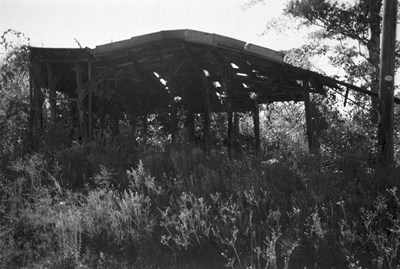
Near Harleyville, SC, between Columbia and Charleston, there's the Four Hole Swamp. I don't know much about Four Hole Swamp, but the ol' Swamp Fox, General Francis Marion, hid out there for awhile, using the position to make quick raids on British troops. He wasn't called The Swamp Fox for nuthin'. Four Hole is located within the Francis Biedler National Forest, and near the Congaree National Park, another great swamp. (It used to be Congaree Swamp National Monument, but only a crazy person would go to a swamp for vacation, so they changed the name and the tourists have come running.) The Congaree NP contains some of the largest trees on the east coast, including the SC record bald cypress. That's Taxodium distichum, the tree with the large buttress at the base. I spent a HUGE amount of time in the Congaree measuring trees and, as a reward one hot and miserable day, actually went looking for this record tree, which is in an area that's not easy to access. We eventually found the mammoth cypress, near some nearly-as-mammoth neighbors. Probably the better part of 1,000 years-old, they were really something to see. The biggest bald cypress in the Southeast, I believe, is a 1,400 year-old bruiser in North Carolina. I'd love to say I had a photo of these trees, but, again, no. I didn't bring a camera with me to the Congaree Swamp. I had enough to carry already and, besides, have you ever tried to photograph a 131' tall tree with a 26' circumference? So, you'll have to content yourself with another picture of this shack. Although this was a very inspirational shack. It was one of the first places I shot in Augusta because I REALLY wanted to get a record of its existence.
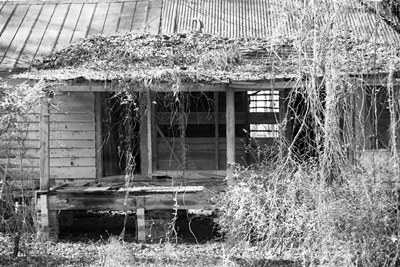
When they first started to cut down cypress trees, they quickly discovered that the trees sank, making them kinda tough to move through water. So, the trees had to be killed with a girdle, then left standing for at least 6 months so they'd dry out and float. By the early 1900's, most large cypress trees in the Southeast were gone. The Swamp Fox himself had said, "I look at the venerable trees around me and know that I must not dishonor them." But I think by "dishonor" he meant not shooting more redcoats. Of course, there are downsides to slogging through swamps. 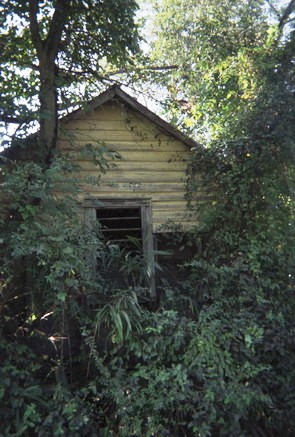 In the Congaree, particularly when walking through stands of cane, you're liable to get a bad case of chiggers. Having received a bad case of chiggers (60+ bites) from just such an activity, I can say it pretty much flat-out sucks. Unless you don't like being able to sleep. On the other hand, there is a certain sensation, which a field technician of mine called "exquisite," that occurs when you wait and wait and wait and then FINALLY give in to a vigorous itch. Or two. Or fifty. There's some cane grass growing in this photo, right under the window. Probably rife with chiggers, too. But, overall, I've spent a couple thousand hours of my life in swamps and am none the worse for it. At least, I don't think I am. If you don't know what a cypress tree looks like, there's a few here. About as far from state records as you can get. I'd also like to mention the Great Dismal Swamp in VA/NC because it has a lovely name, but the swamp itself is out of my jurisdiction. Thanks to Mike Sigalas for writing the South Carolina Moon Handbook and unwittingly helping me out today. Happy May Day! Oh, and did I mention you should check out Photoblogs Magazine?!
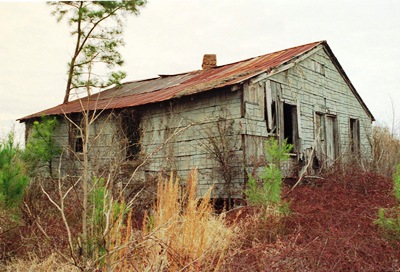
This post is dedicated to rockabilly pioneer Hasil Adkins, of Boone County, West Virginia. Hasil was found dead in his home today at the age of 67. A one-man band, Hasil played guitar, drums, and sang, all at once, 'cause that's the way he thought it was done when he first heard the music on the radio. A one-of-a-kind original, Hasil conjured the most primitive music imaginable, and I am happy to say I saw him perform once, in Athens, GA. He was supposed to go on around 11:30 PM, but took the stage sometime after 2:30 AM. Over the course of the next 45 minutes he screamed, groaned, moaned, and sang a little, too. At the end, he threw his guitar at a cymbal, kicked over his drums, and stomped off stage with a big grin on his face. So, for Hasil, we'll start this post with a tune. This ditty was sung by Charlie Patton, Leadbelly, and Blind Lemon Jefferson, among others. It's about the bug that tore the South apart.
Mississippi Boweavil Blues: "Sees a little boweavil keeps movin' in; You can plant your cotton and you won't get a half a bale; Boweavil, boweavil, where's your native home?; A-Louisiana raised in Texas, least is where I was bred and born; Well, I saw the boweavil, Lord, a-circle, Lord, in the air; The next time I seed him, Lord, he had his family there; Boweavil left Texas, Lord, he bid me: fare ye well; (spoken: Where you goin' now?); I'm goin' down the Mississippi, gonna give Louisiana hell; (spoken: How is that, boy?); Suck all the blossoms and he leave your hedges square; The next time I seed you, you know you had your family there; Boweavil meet his wife: We can sit down on the hill; Boweavil told his wife: Let's trade this forty (acres) in; Boweavil told his wife, says: I believe I may go North; (spoken: Hold on, I'm gonna tell all about that); Let's leave Louisiana, we can go to Arkansas; Well, I saw the boweavil, Lord a-circle, Lord, in the air; Next time I seed him, Lord, he had his family there; Boweavil told the farmer that: I 'tain't got ticket fare; Sucks all the blossom and leave your hedges square; Boweavil, boweavil, where your native home?; Most anywhere they raise cotton and corn; Boweavil, boweavil, outta treat me fair; The next time I did you had your family there."
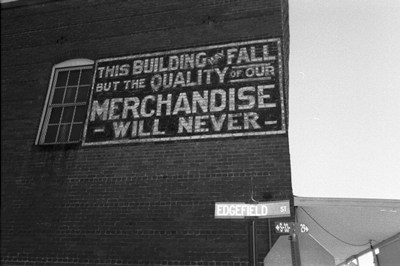
Historically, the South was dominated by agriculture in every way. Whether you were a plantation owner, independent farmer, storekeeper, or sharecropper, your life, and each day in it, revolved around crops. Tobacco was big, corn was not uncommon, but cotton was king. However, as with any king, the reign can't last forever. Before 1900, the boll weevil (Anthonomus grandis grandis) didn't exist in the U.S. Then, right round the turn of the century, an odd little insect with a snout half the length of its body appeared near the Mexican border. It so happened that this new arrival could only reproduce on king cotton, and it used its large snout, complete with vicious chewing apparatus, to drill holes in cotton plants for feeding and depositing eggs. The cotton plant had never had to deal with such a pest before, and so it didn't. Instead, large parts of the cotton plant died and dropped off after infestation by boll weevils. These parts of the plant had previously been highly useful: they produced cotton. As for the photos, we've been to Plum Branch before, haven't we?
Around 1914, the weevil arrived in Georgia. By 1921, the agricultural economy (i.e. MOST of the economy) of much of the South was in tatters. Check out the figures for Hancock County, Georgia, which includes Sparta, just west of Augusta and a bit south of I-20, considered to be one of the hardest hit regions in the entire South. In 1919, 19,789 bales of cotton were produced in Hancock County, at a market price of 40 cents per lb. In 1920, 11,685 bales were produced, but they sold for just 16 cents per lb. By 1921, only 1,509 bales were produced, fetching 17 cents per lb. The price went up in 1922 to 23 cents per lb., but only 710 bales were harvested that year. So, between 1919 and 1922, cotton production in Hancock County fell from 19,789 bales to 710 bales. And similar numbers were recorded all over the South. In 1921, the Sparta Ishmaelite reported that, across the South, 10,000 people were starving as a result of the failure of the cotton crop. Thus the boll weevil precipitated the Great Migration, during which everyone that could get out of the South did, and those that couldn't suffered badly.
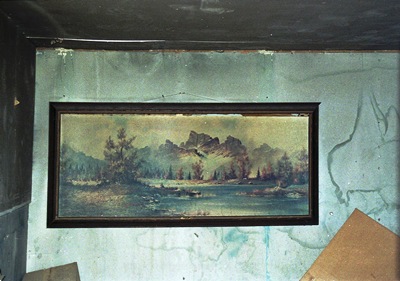
And there appeared to be no way to stop the weevil. In 1921, desperate farmers tried to kill the weevil by spraying their plants with a mixture of cane syrup, water, and calcium arsenate. The only creatures that really died were the farmer's mules, who liked to lick up the sugary mix. RANDOM ASIDE: In Australia, in 1935, an effort was made to control two types of cane beetle by importing 101 cane toads from Hawaii. What the introducers failed to recognize was that the beetles spent most of their time high up in the cane while the toad, at least under its own power, was rarely airborne. The cane toad is now a serious problem in Australia since it eats anything it can fit in its mouth and is poisonous to boot. Yet another example of our complete ineptitude when it comes to managing our own environment. But, uh, back to the story at hand... In some towns, schools and businesses closed one day a week so that people could go to the fields and kill the pests by hand. Along the coast, the sea cotton industry was wiped-out in one year, never to come back. Below is a photo of the painting I mentioned last time we were near Plum Branch. It's just inside the door of the house in the top shot of that post.
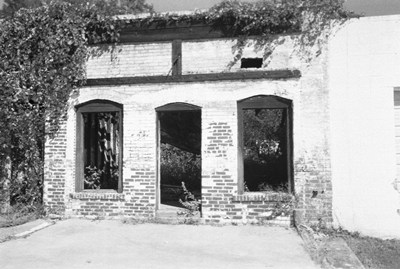
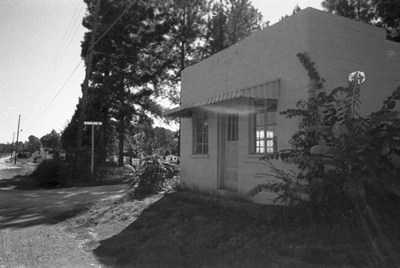
As is often the case in times of economic desperation, even when they result from a force of nature, folks start looking for scapegoats. So it was that in 1921 there were more lynchings in the South than there had been in any year since 1909. In fact, the number of lynchings during each year over the period of worst weevil infestation has been shown to correlate closely (and inversely) with the per acre value of cotton. Also, the Ku Klux Klan began to make large gains in popularity, whereas for the decade or two previous its influence had been much less obvious. Am I suggesting that the boll weevil is responsible for increased attendance at Klan rallies in Georgia? Why, yes, I think I am. There were also some very ugly race-based killings in the state during the weevil years. As literary critic Frederic Jameson has said, "History is what hurts..." The little empty building below is located on Wizard's Cove Dr. and, given the above, the street name might refer to either of two types of wizard. I'd like to think the name comes from the kind of wizard that Black Sabbath sang about, one of which can be seen hovering under the awning.
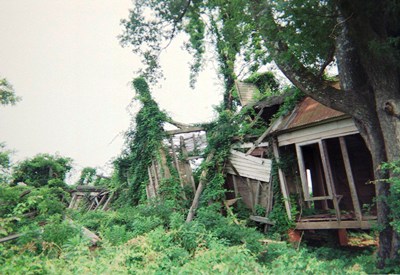
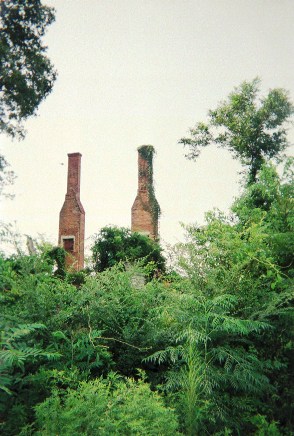
Toward the end of the 1920's, cotton (the plant) was recovering from the weevil a little bit. But cotton (the industry) was not, and never would. Many farmers had switched crops, and untold numbers of people had fled. Those who kept farming cotton often had to spray their crops up to 20 times a year to keep the weevil at bay, killing the beneficial insects that increased yield, as well. And, of course, the Great Depression was right around the corner. Hancock County, once Georgia's leading farm county, would, 50 years later, have a per capita income on par with the poorest parts of the nation. Below is one of the very first photos I ever took of the type you've seen on this site. It was at the end of a roll of shots I took to document my thesis research for school. I was using a Fuji disposable, just before a rain storm, so the color is a little weird. But I never got back to take any additional photos here, so I present this and the shot below it for the record.
 Difficulties with controlling the weevil continued through WWII. By the 1970's, DDT was being used extensively, but we all know how that turned out. Now, chemicals are still being used as insecticides, but genetic means have also been employed in the ongoing fight to bring the weevil to its knees. Yet, for the South, the point is largely moot. The major damage was done long ago. In the span of a couple years, cotton, the king of the South, was reduced to barely a shadow of its former self. A way of life largely vanished, as well. It was a tough, often unfair way of life, without a doubt, but it was all people had known. They then had to find something else; sometimes better, sometimes worse. And it was all because of a little bug with a big nose which, in 2003, for the first time since its arrival in the state, was not detected anywhere in Georgia. Information for this post came from Professor Barbara Foley (although she was discussing Jean Toomer's 1923 book, "Cane"), the University of Tennessee, and UGA. Next time, we'll take a final look at Phinizy Swamp.
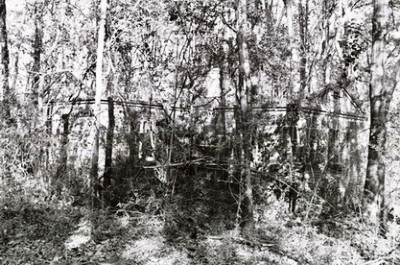
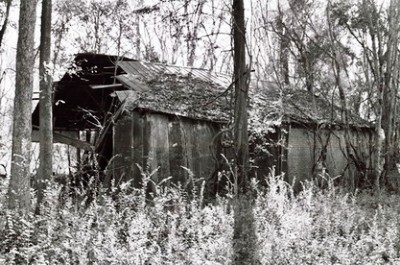
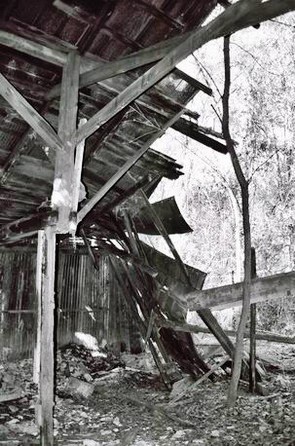
Alright, so maybe the brick factory was already dead, but now even its corpse is not long for the world. We've been to the brick factory before, and I've even said a little about the Hammond's Ferry development. But, as ground was officially broken in April for the first phase of the Hammond's Ferry riverfront project, which will render the entire area virtually unrecognizable in a couple of years, we'll take a final look. Houses, restaurants, shops, and offices--1,000 units-worth altogether--are on the way. These are all shots from my last trip back in December. I led off with this building last time, but this is the view from the back. It's in there somewhere.
Let's go WWAAAYY back. In 1540, Hernando DeSoto and his party had been lost for some time in the wilds of Georgia. Even their Indian guides didn't know where they were anymore. On April 21, they crossed the Savannah River near Augusta, probably a bit to the west of the Savannah River Site. The crossing was known as Point Comfort, which is ironic, as comfort was in short supply. Here, DeSoto met the friendly Cofachiqui Indians. Well, they were friendly as long as you weren't from a rival indian tribe. If you were, they'd sever the nerves in one of your feet so you couldn't run away, and hold you as a slave for life.
 But Hernando was really only interested in getting rich, and became upset once it was clear that the Cofachiqui didn't have any silver, nor knew where to get any. So, with nothing else to do, DeSoto and his men started digging up graves to get at the freshwater pearls that dead people were given. In one grave, amidst the dirt and stones, they found the belongings of DeSoto's brother, Ayllon. Ayllon, it turns out, had unsuccessfully tried to settle in the area a number of years previously, but had died of a nasty bout of plague of one sort or another. As a result, scores of indians had also died of the plague, and many villages had been abandoned. In any case, Hernando was saddened to find the personal effects of his dead brother. To console himself, he kidnapped the Cofachiqui's queen, Cacique, and made-off with 14 bushels of pearls. Many of DeSoto's party had been enjoying themselves and wanted to stay with the Cofachiqui, but Hernando got them moving through SC, and eventually into North Carolina and Tennessee.
 Long after DeSoto and the Spanish, in 1685, the first English colonists in the Augusta area founded Savanno/Savanna Town, which is the present-day location of Beech Island. Savanna Town soon became the major outpost of indian trade in South Carolina. In fact, the name of the town (and, later, the river) came from a Shawnee Indian tribe, known as the Savanna Indians. At that time, the Savannah River was called the Westobou. Savanna Town was a regional center for fur trading, in particular, and trails linked the town, through deep wilderness, to indian villages in Georgia, Alabama, Mississippi, and North Carolina. Furs were traded for European goods, and settlers then shipped the pelts and what-not to Charleston. In 1716, Fort Moore was built to guard against any threat to trade that might arise in the western part of SC. George Galphin built a trading post nearby in 1760, which became Fort Galphin during the Revolutionary War.
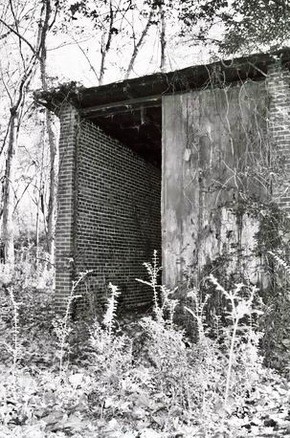
In 1770, Campbell Town, SC was founded, and its existence is directly relevant (finally!) to these photos. Enter John Hammond, the father of Campbell Town. Or was his name Leroy Hammond? No one really knows for sure, so we'll call him Mr. Hammond. (Update: It was John. Leroy was the name of his uncle...and a cousin.) Anyway, Campbell Town (why not Hammond Town?) was established near where the 13th St. bridge is today, and likely encompassed the land the brick factory sits on now. Mr. Hammond decided to get into shipping and storing stuff, mostly agricultural products. To this end, he built some warehouses in what is now Harrisburg, GA, and soon found himself in very stiff competition with Ezekiel Harris, who, through the tobacco market, was trying to establish his own town to rival Augusta. Hammond also started a ferry service that turned out to be quite successful. However, in 1799, Mr. Hammond was killed under very mysterious circumstances, and his death never fully explained. What is known is that Ezekiel Harris suddenly found himself with a bit more breathing room. In my original post, I mentioned that a woman, probably a prostitute, had been living (and possibly working) in this outbuilding.
Mr. Hammond's death meant doom for Campbell Town, as Augusta continued to upgrade its shipping and storage facilities and C-Town did not. The town languished until about 1811, but has since sunk without a trace beneath the rippling waves of history. While Campbell Town is long gone, Hammond has lived on for over 200 years through Hammond's Ferry, the bit of woods pictured here that bears his name. 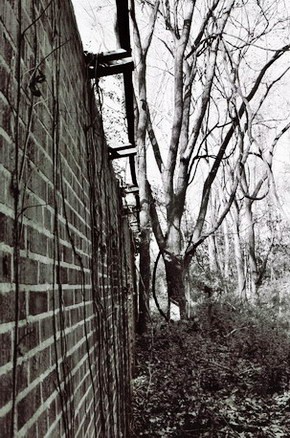 And though, like Campbell Town, these woods are now doomed, Mr. Hammond will gain an even more prestigious immortality via the Hammond's Ferry riverfront project. We should be all so lucky. In the meantime, there's been some difficulty in figuring out just how to get all the bricks out of Hammond's Ferry. There's an awful lot of them and, of course, they do have to go. The brick factory is dangerous and, as more people come into the area, the likelihood that someone will get hurt grows. There's lots of small brick tunnels that a kid could easily crawl into, which would be bad. I, of course, would've loved to get into them, but, upon trying, found that I was probably 3 feet too tall and much too wide. Thus, failure. It's probably just as well.
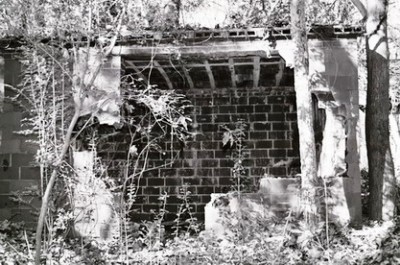
So, that's about it for the brick factory. You know, I don't make this stuff up, it just seems that at every turn I find some sordid little detail. I don't go out of my way to document death, disease, and insanity. Well, okay, maybe just a little. But it might just be the CSRA itself. And no-one is immune, really. For example, Cliff Roberts, who co-founded Augusta National Golf Course with golf legend Bobby Jones, Jr., one day walked out to the 3rd hole on the Par 3 Course and shot himself in the head. And he was from New York! As an aside, there's a funny golf story about Dwight Eisenhower and Vice-President Richard Nixon. Eisenhower, who apparently didn't think much of his VP, would never invite Nixon along when he went to play golf. But Nixon was always asking to play, and so on one occasion Ike agreed to let him shoot a round at Augusta National. However, Ike was livid when Tricky Dick missed the tee-time and was nowhere to be found for the duration of the game. At the end of the round, the entourage found Nixon at the clubhouse, wearing sunglasses and nursing a hangover. It was Nixon's first and last visit to Augusta National. More here.
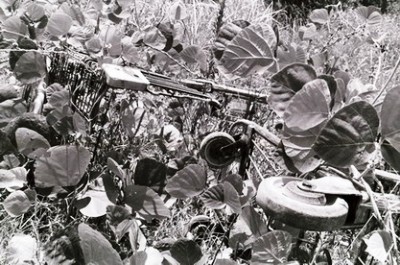
Okay, I'm off to see the Handsome Family. If you like country music (un-modern, downright gothic), fantastically morbid lyrics, and a wicked sense of humor, I highly recommend them. To wit: "Evel Knievel flew up from dead grass, I loved him better each time he crashed." If you can't get behind that, the King of Pop would like to speak with you about making a donation to his legal defense fund. Really, the Handsome Family would make a great soundtrack for City of Dust. They have songs about parking lots, bottomless holes, forgotten lakes, and haunted convenience stores. It was from just such a store that these shopping carts escaped and dragged themselves to the edge of the Augusta Canal. However, lacking the wherewithal to finally throw themselves in, they sorta collapsed in a heap on the bank. Good night.
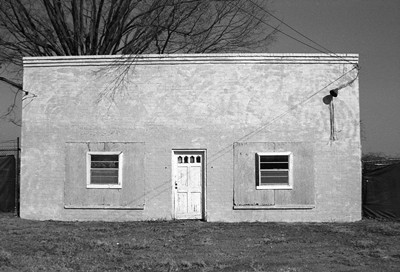
I think that not ending City of Dust with the last (soon-to-come) post from the CSRA is a good idea. However, it sort of wrecks my whole concept. See, after exhausting all my Augusta-area info, I had planned on just stopping, unannounced. No fanfare, no farewell, nothing. Then I was going to cast the site adrift to sail, unmanned and abandoned, through the far reaches of cyberspace for all eternity. I could even pay my server fees in perpetuity from an anonymous bank account or something. It just seemed so fitting. Now I find that abandonment isn't always so easily. Actually, I was going to make one change to the site before I let it go, and subtly change the name in the banner. What to? "The Flying Dustman," of course. Oh well, it was a nice concept. We're down on Sand Bar Ferry Rd. now, in what's known as The Bottoms. The front of this building is actually a facade; the building itself is a good bit smaller. Also, it's not abandoned.
The Metro Spirit, Augusta's weekly newspaper, had a cover story on The Bottoms a few weeks ago. Had I been smart, I would've copied the article and used some of the historical info here. The best parts were the quotes from long-time residents. But, alas, the Spirit only posts the current issue on their website, and so I'm on my own. Actually, there's not that much left to say. 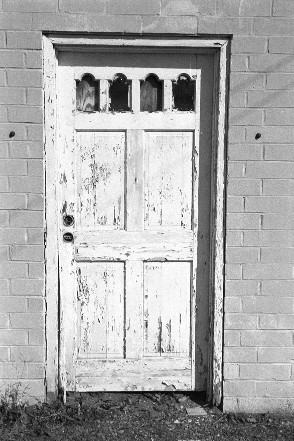 I've already mentioned that the original site of the Sand Bar Ferry, on the river, used to be a popular dueling ground. We know that Charles Tilly, the last person to be killed in a duel in Georgia, was shot there. In keeping with this history, The Bottoms have long been known as a dangerous place to live. The Spirit article mentioned the violence, and noted that at one time there was a running feud between rival housing complexes. Incidentally, "The Bottoms" is short for "River Bottoms," and, historically, this area was very prone to finding itself under a good deal of water. The levee that runs through Augusta was built in 1911, and is just feet away from these photos. Still, floods were a big problem here until the Thurmond Dam was built in 1954.
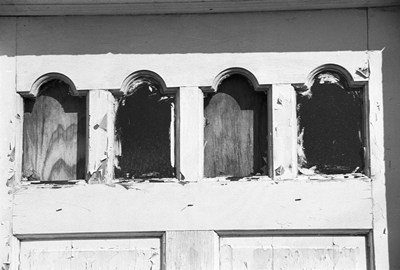
Much of Sand Bar Ferry Rd. is pretty industrial. There are welding shops and auto salvage yards. Also, the area is a haven for stray dogs. Dogs are always showing up dead on the side of the road, but then more arrive to quickly take the place of the deceased. Where are they coming from? I speculate that the dogs on Sand Bar Ferry migrate over from Laney-Walker, where things are even tougher. The dogs on Sand Bar Ferry Rd. may have matted fur and drag bits of rope behind them, but the dogs on Laney-Walker are missing legs and have hunks of chain swinging from their necks.
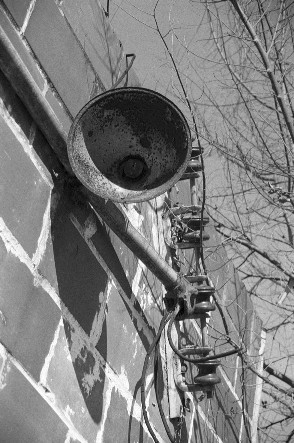 But the Metro Spirit article pointed out that things are improving. Residents were quick to mention this, as well. There are a few churches, a couple convenience stores, a record store (The Dirty Souff), and a beauty parlor, which keep things active. Also, folks from the welding and repair shops are usually outside, talking to customers and passersby, and this street life helps any neighborhood. Although there are a number of residential homes along the road, on the Saturday morning I took these photos there was not a soul around. It would sure be nice if they could find a tenant for the Goodale Inn, which is farther down. I've posted plenty of photos of the Goodale Inn before, and even put up a shot of the weird billboard/movie screen that's adjacent awhile back. This is a light fixture from the very-abandoned vet clinic, which is next door to a not-so-inhabited bar.
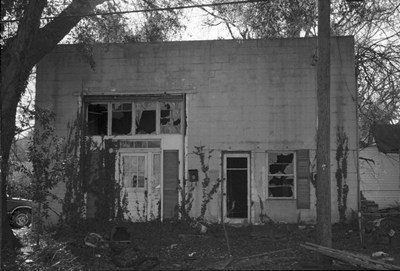
Everyday I used to get on the John C. Calhoun Expressway... Well, yes, the JCC expressway IS completely across town from The Bottoms and, so, YES, once again, these photos and what I'm about to tell you have absolutely no relation. But, I'll tell this anyway. See, in Minneapolis, I used to live very close to Lake Calhoun. Only recently did I find out that the expressway and the lake were named for the same guy, a South Carolina-born, Yale-educated, former-vice president. I never got into the little house on Reynolds St., shown above, due to the huge amount of broken glass on the floor and the spiky bits of metal and wood sticking out from every surface. See: garbage houses.
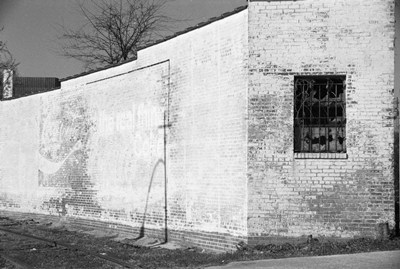
Right, so, John Caldwell Calhoun was born in 1782 in Mt. Carmel, SC, approximately 48.1 miles from Augusta. He served in the SC state legislature and did three terms in the US House of Representatives. As the war of 1812 loomed, John C. and Henry Clay, two "warhawks" who felt the US was wallowing in a "putrescent pool of ignominious peace," were instrumental in finally getting war declared on England. Remember, rumor had it that Henry C. hung out at Getzen's Pond. Anyway, Calhoun was Secretary of War under James Monroe from 1817-1825. Ah, yes, remember when they just came right out and called the guy the Secretary of War? I believe this Coca-Cola bottling plant on Reynold St. is still operational. Why couldn't I just find out for sure? I don't know.
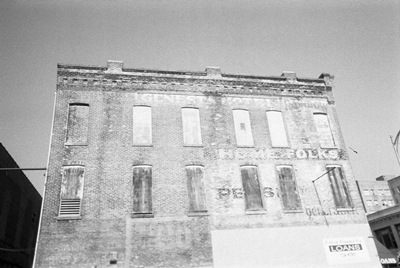
Calhoun ran for president in 1824, but eventually withdrew from the race. Instead, he ran unopposed for vice president. Ah, yes, remember when we voted for vp? Well, no, me either. Anyway, John Quincy Adams became president in 1824, and Calhoun was re-elected veep for Andrew Jackson's term in 1828. However, Jackson was in favor of the Tariff of 1928, which had been proposed by New Englanders who felt Britain was dumping cheap textiles onto the market. Calhoun saw the tariff as beneficial only to the industrial North, while hurting the South, which needed to sell cotton to English firms. So, Calhoun, now openly hostile to Jackson, became the only vice president in history to resign. He also wrote "The South Carolina Exposition and Protest," which essentially asserted that all federal laws should be nullified. His views earned him the nickname "Arch Nullifier." Ouch, that must've hurt. In 1832, the SC legislature agreed with Calhoun, and Jackson threatened to send in the army. Henry Clay stepped in to settle the dispute. A year later, Calhoun and Daniel Webster had a legendary debate in which Calhoun vehemently argued for states' rights and slavery. We took a quick turn off Reynolds and popped back down to Ellis St. AGAIN, this time on the east end of downtown.
Calhoun was appointed Secretary of State by President John Tyler in 1844. Bet you didn't even know a guy named John Tyler had been president, eh? Calhoun later went back to the Senate, where he was strongly in favor of annexing Texas and against the Wilmot Proviso, which stated that any territory obtained during the Mexican War should be free from slavery. Calhoun died in 1850 and was buried in Charleston. In 1957, despite his views (or because of them?), the US Senate honored Calhoun as one of the five greatest Senators of all time. Now, I suppose it's not so odd that Georgia named a rather short expressway after Calhoun. He was, after all, from nearby. But the real question is: Why would he be the namesake of one of the most popular lakes in Minneapolis, Minnesota? We've seen this bridge before. It leads over the Savannah River, into the ghost town of Hamburg, and on to the next post.