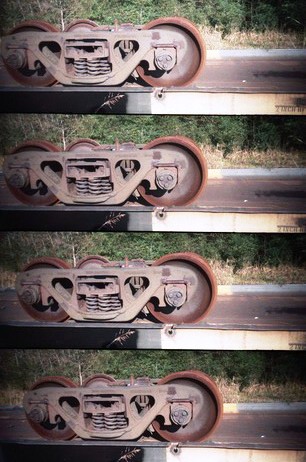
We interrupt this broadcast to bring you...LOMOGRAPHY! We left Cumberland Island, then drove down a residential block in St. Mary's to look at where the first pecan trees in Georgia were planted. The seeds were found floating in the Atlantic Ocean by Captain Samuel F. Flood, who brought them home. Flood's wife, Rebecca, and a neighbor planted the seeds around town in about 1840, setting the stage for the making of many tasty pies. After a quick peek from outside the gates of the Kings Bay Naval Submarine Base, where nuclear subs are made, it was back to the CSRA. We arrived to find that we saw the world much as a housefly might. Normally a cause for alarm, in this case it's just the result of cheap cameras and expired film. Here's some flat car wheels, the flat car itself soon to become a bridge in the
Hammond's Ferry subdivision, North Augusta, SC.
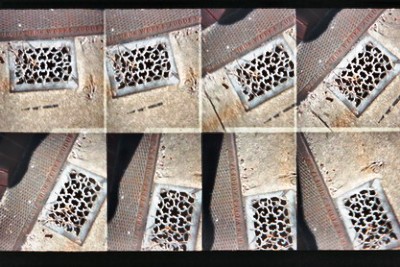
Lomography has its roots in St. Petersburg, Russia. In 1982, with the Cold War in full-swing, Michail Panfilowitsch Panfiloff was director of the LOMO Russian Arms and Optical factory. One day, General Igor Petrowitsch Kornitzky, assistant to the USSR Minister of Defense and Industry, walked into Pantiloff's office holding a small Japanese camera. He reportedly slammed the camera on the desk and demanded the Director take a close look at it. Pantiloff did so, and noted that the camera had a high-quality lens, good light sensitivity, and a sturdy case. The two Communists realized that, with some modifications, this could be a camera for the people! Thus, the LOMO Kompakt Automat (AKA LOMO LC-A) went into development, with the goal of providing a small, black, steel camera to every citizen of the USSR. Here is a shot of a sidewalk grate along
James Brown Blvd.
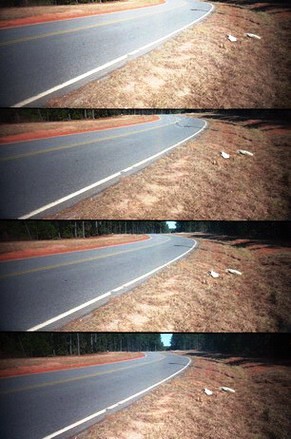 The LOMO LC-A was an immediate hit. Millions of the little inexpensive cameras were sold throughout the Soviet Union and other Communist countries, such as Viet Nam, East Germany, and even Cuba. And Communist photography flourished. But Communism hit some hard times in the late 1980's, and by 1991, with the Berlin Wall a memory, the LOMO LC-A was heading toward the dustbin of history. Then, the story goes, some Viennese students found a few cheap relics in a camera shop. They bought them and started taking pictures of everything they could find. Upon developing the film, they were fascinated with the strange colors, shading, and depth of focus (or lack thereof) that the cameras provided. Word spread, and, by the mid-1990's, LOMO's were being smuggled in from the former Eastern Bloc. In 1994, LOMO exhibits were held in Moscow and New York. A Lomographic Embassy was established in Berlin, with more soon springing up around the world. Waiting to see what's around the bend, Aiken, SC.
The LOMO LC-A was sure popular again, but the LOMO Arms and Optical Factory had ceased production years before. So, some LOMO emissaries went to St. Petersburg and, with the help of then-Mayor Vladimir Putin, convinced the factory to resume production. There was much rejoicing and launching of websites. In the late 1990's, a new LOMO camera was introduced, the Action Sampler, which takes 4 little photos via a series of lenses that open and close in sequence. The photos are all on one standard photo, looking just like what you see here: a chunk of the downtown Augusta skyline. Although this was taken with an eight-lens camera.

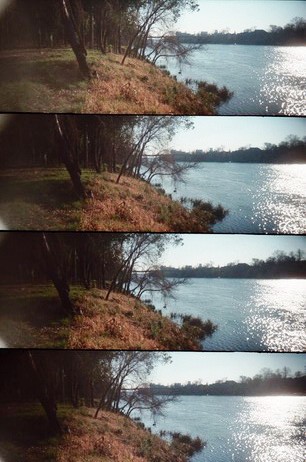 People really started to get obsessive about lomography. Contests were started, exhibits held, and, in 2000, the first LOMOLYMPICS. By now, the Lomographic Society International had been around for years, with the stated objective "to study and document the world's surface by taking millions of snapshots of it." New cameras were created, galleries opened, shops stocked equipment, and rules were drawn up. Yup, there's 10 Rules of Lomography. They include things like, "Take Your Camera Everywhere," "Don't Think," "Be Fast," and, of course, "Don't Worry About Any Rules." Kinda silly, maybe. But you can't deny the energy and passion these people bring to photography. If you don't believe me, go to the website of Lomographic Society International. I'll credit them for providing most of the information for this post right now. Here's the Savannah River, looking east toward Augusta from the South Carolina side.
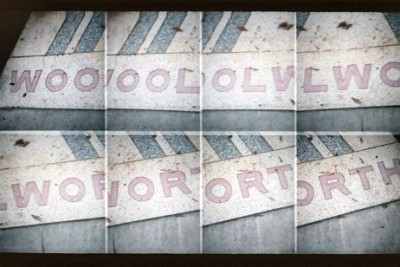
Some of the pictures here were taken with an eight-lens disposable loaded with expired film. They were sold by Fuji in lots of twelve or something for a couple bucks each. The four-frame shots were taken with the aforementioned Action Sampler. You'd think it would be easy to take interesting photos with these things, if for no other reason than the sheer novelty of the product. But, in fact, it turns out to be damn hard. Most of the photos I've taken with lomographic cameras have been pretty uninteresting. So, some respect is due to people that are good at it. The Action Sampler I used appears to bleed light on the sides--nothing some electrical tape can't fix. Also, it winds by pulling a little string, which sure felt unreliable, but seemed to do okay. Oh, and the Action Sampler has no view-finder beyond a weird rubber rectangle that corresponds only vaguely to the actual photo taken. That makes things challenging! This is a side entrance to the abandoned Woolworth's on 8th St.
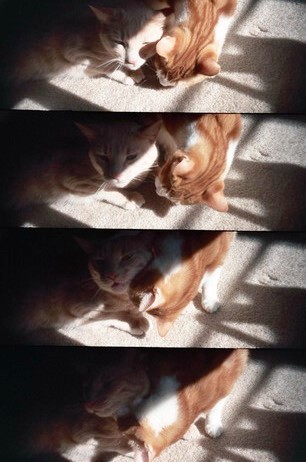 The shutters on the lenses open and close over a 2-second interval, allowing you to capture action (or make your own). In fact, lomographic cameras are frequently used to examine golf-swing technique. I soon found out that moving the camera was tricky; it was easy to move too fast and blur the image. Eventually, I stopped moving at all, or moved only slightly, as you can see from most of these shots. Here, the first instance of live creatures on this site, a South Carolina tabby attacks (unprovoked) his long-suffering housemate. And that's lomography. Again, I recommend going to the Lomographic Society International website to see a little more. Incidentally, lomographers also include the much-beloved Holga, an inexpensive medium-format camera developed in Hong Kong in the early 1980's, on their list of accepted equipment.
I'm gonna finish off this post with a little addendum to last week's bit on Light Horse Henry Lee. You see, there's a story about Lee's second wife, Ann Hill Carter, that is considered apocryphal in some quarters, but I think is interesting. Ann's health had never been robust, and she was afraid of becoming an invalid (which she did). There's also evidence that she suffered from narcolepsy. In 1804, Ann was struck with a severe fever and was in bed for months. At one point, she ceased responding to any external stimuli. Physicians said they could find no heartbeat, and Ann was pronounced dead and put in a coffin, which was placed in the family vault. A bit later, a church caretaker bringing flowers to the coffin heard a noise. Listening carefully, he thought someone was calling for help from inside the casket. The caretaker opened the coffin, and Ann Hill Carter sat bolt-upright. It took months for her to once again function properly, but she eventually did. And, just over a year later, she gave birth to Robert E. Lee. Some legends actually have Robert E. Lee being born MOMENTS after his mother's presumed death. Doubtful, right? However, there IS plenty of precedence for being buried alive. Below is Telfair St., Augusta.
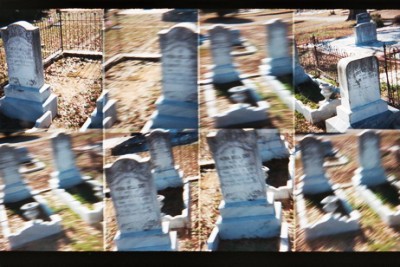
Centuries ago, in England, coffins were often dug up so that room could be made for new burials. Land was scarce and people were always dying. When removing the corpse, about 1 in 25 coffin lids had scratch marks on the inside, indicating that someone wanted to get out very badly. This was a worrisome situation, as it either meant England had a lot of zombies at the time, or people were being buried alive. Remember, medical science has come a long way over the last 150 years, and it wasn't always clear when someone was dead. The practice was started of tying a piece of string around the wrist of the "deceased," the other end of which was attached to a bell. Thus, if the "dead" person wasn't really dead, they'd wake up, panic, and the bell would ring. Then, they'd just have to be patient and not suffocate while the graveyard attendant (and hopefully assistants) dug them up and welcomed them back to the land to the living. Oh, yes, and there WAS an attendant. His job, watching and waiting for the tinkling (and hopefully not falling asleep), was known as the "graveyard shift." If you were one of these unfortunate undead people, and rang your bell, you were considered a "dead ringer." If you were actually exhumed and put back on your feet again, you were "saved by the bell." Right? No?! Okay, FINE, I admit it!! ALL that popular etymology is WRONG! But, man, it sounds so good! And, being buried alive WAS a big fear. Even George Washington said, "Have me decently buried, but do not let my body be put into a vault in less than two days after I am dead". And Chopin: "Swear to make them cut me open, so that I won't be buried alive." And, the safety coffin DID exist (and does--the new ones have oxygen tanks), but may never have been used due to, er, design problems. So, who knows, maybe Robert E. Lee's mother WAS once put into her coffin alive. Here's a graveyard, in motion. No bells. Info on Ann Hill Carter's "death " from Gail Jarvis.

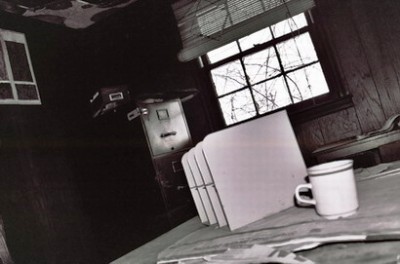
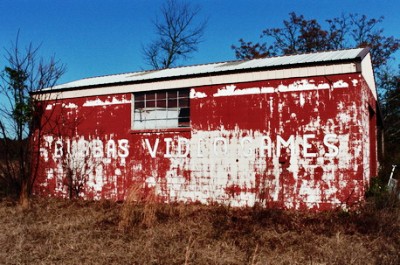
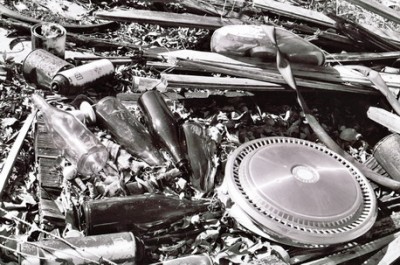
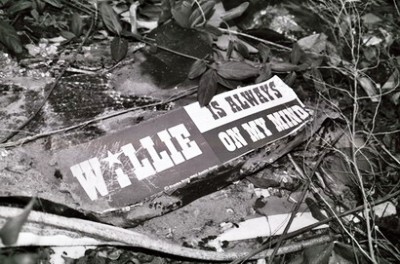
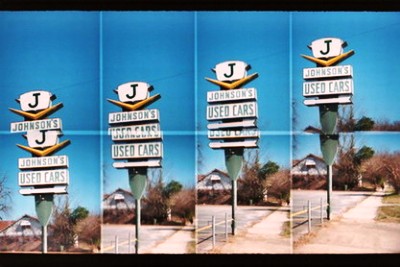
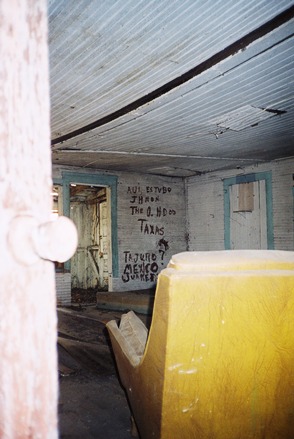
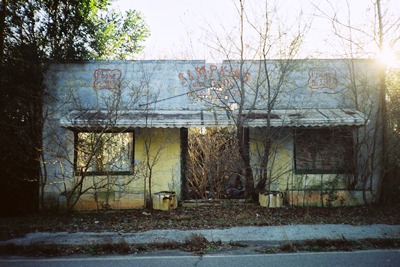
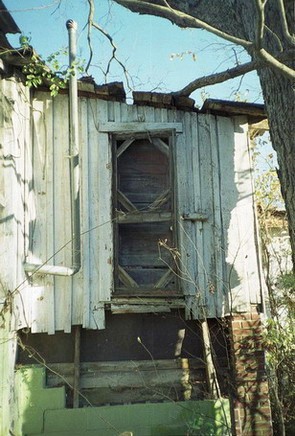
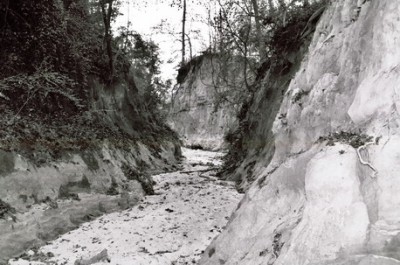
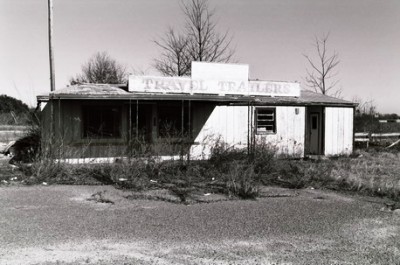
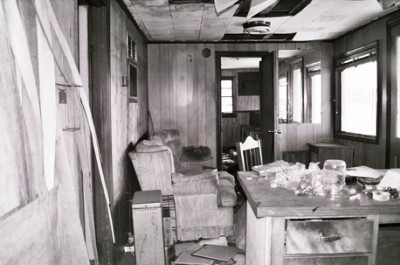
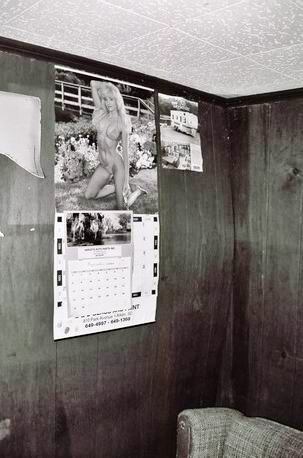
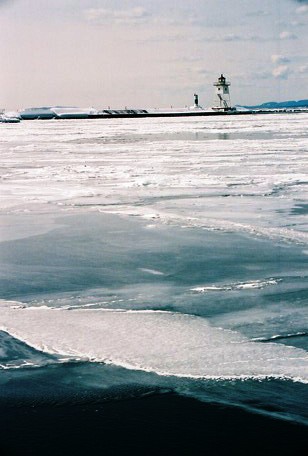 The person who correctly guesses the location of these shots will win their choice of an 8" x 12" enlargement of the 1st photo in Parade of Shacks II, the 5th photo in The Brick Factory, or the 7th photo in The Brick Factory. Prints are suitable for tacking to your refrigerator with a magnet. By location, I'm hoping for either the name of the town where the first two photos were shot, or the town near where the third picture was taken, a little to the south. However, I realize that I'm being slightly ridiculous, so whoever gets closest will win, even if they guess Mexican Hat, Utah. That's a hint: it's not Utah. In the event of a tie... Aw, who am I kidding?! If there are actually enough entries to create a tie, I'll figure something out. Enter your answer in the comments section, or send me an e-mail. I might not have internet access until I return, so don't expect a quick response. Good luck!


 Back when I was finishing up the four-post saga on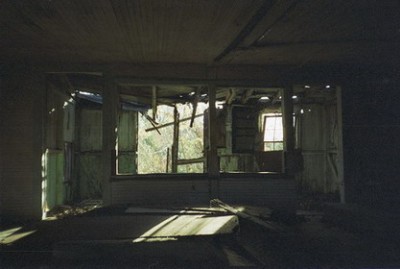
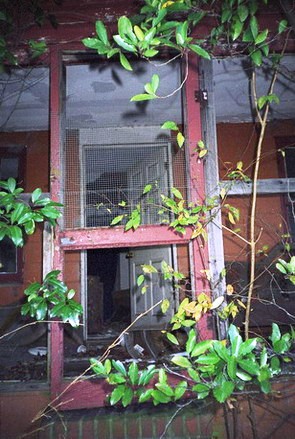 For seven or eight years. The resulting goo, filled with broken glass and oozing mildew, simply cannot be walked across in any sane way. There's not many buildings I won't go into, but garbage houses are definitely one. Most of the homes on this block were garbage houses, with nearly all the belongings left behind. That always creates an odd feeling. Where'd these folks go so fast? And why? Back in the original post, you can see the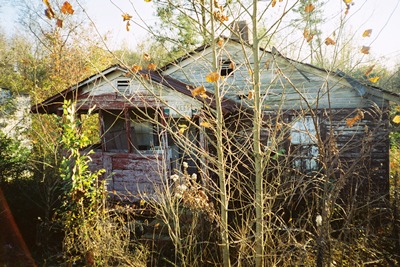
 You'd never know it from City of Dust, but I really love the desert. I've always wanted to live in the Southwest and, if I can find a reason (even a small one, like a job!), I might try to do so fairly soon. Desert Dream is doing nothing to change my mind, that's for sure. Beautiful photos of that big sky and rolling open landscape. Well worth taking a look at. You know, they say people that like the desert also like the sea. Hmm, I do like 'em both. Finally, many of the finest photos I've seen on the web have been on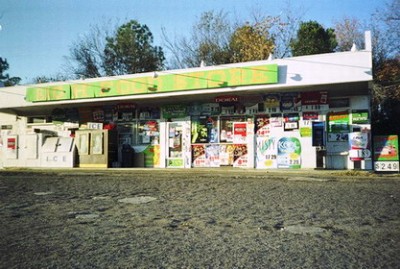
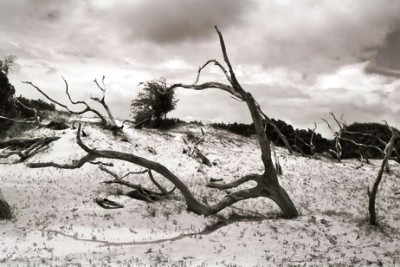
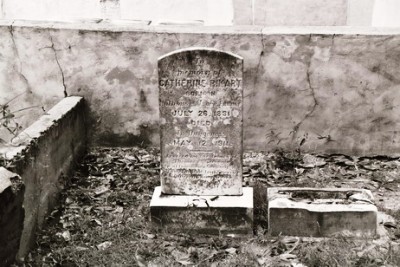
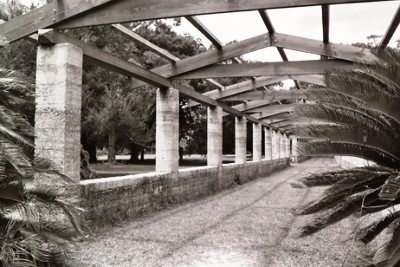
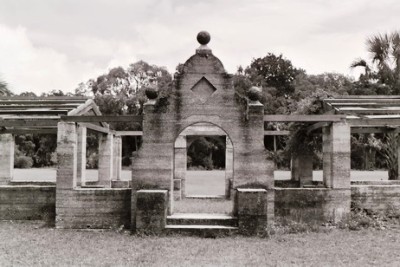
 In 1798, Lee was elected to Congress and, a year later, upon Washington's death, delivered his most famous words after being asked to compose a tribute: "First in war, first in peace, first in the hearts of his countrymen." But the next year Henry was out of the legislature with creditor's knocking. To escape, he tried to get a foreign appointment, but the new Jeffersonian government would have none of it. On January 19, 1807, Ann gave birth to the couple's fifth (and last to survive) child. She named him Robert Edward Lee, after two of her favorite brothers. Robert E. Lee. Robert was just a toddler when Light Horse went off to debtor's prison. Indeed, Robert would rarely see his father, and assumed control of the household at age 12. With nothing but time while living in a 12' x 15' foot cell, Henry wrote "Memoirs of the War in the Southern Department of the United States," a still-popular text on the Revolutionay War. In 1810, when Henry got out of prison, the Lee's scaled-down and moved to Alexandria, finally able to use some of Ann's inheritance. Henry left prison just as France and England were starting to mix it up. By 1811, support for declaring war on Great Britain was building, a move Lee was against, believing England's forces were superior.
 At first, Henry Lee tried to be a diplomat in Barbados and work for peace between England and America. But no one wanted to hear from him. So, he gave up. The Caribbean wasn't improving his condition, and he decided to come back to America to die. He made it all the way to Cumberland Island, where he sought refuge at Dungeness, dream home of Nathanael Greene, Lee's former commander and namesake of his deceased first-born. He died a few days later on March 25, 1818 and was buried nearby. Robert E. Lee visited his father's grave in 1862 and 1870, and the grave was moved to the Lee family crypt in Virginia on May 30, 1913. A broken failure at his death, considered
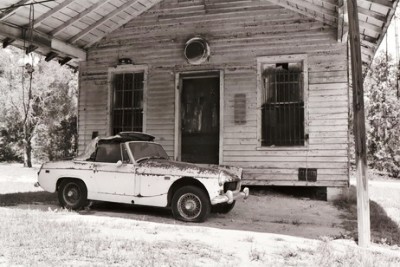
 From 1885 to WWII all these cats hung out together, but toward the end of the war the US government decided it didn't want so many captains of industry in one place at one time (bombing target!), so the party broke up and never really returned. Where were the Carnegie's in all this, you ask? Well, it was Thomas Carnegie, Andrew's brother, who bought up large bits of Cumberland Island in the 1880's. Just before I took this shot of a building at a deserted intersection I noticed a woman on a riding lawnmower heading toward me. She was wearing a motorcycle helmet, but I could tell from the speed of the mower that things were going to get interesting. I snapped this picture since, well, I was gonna get in trouble anyway. After a few minutes of tense "discussion," during which I refused to hand over my film (?!), we managed to get out of the situation. My friend Chris XT235 was once threatened with a shotgun for accidentally riding his bike into someone's backyard. Trust me, these folks aren't kidding. I'm not saying people shouldn't protect their property, but, geez, let's not lose our heads. I still wonder if she actually owned this place...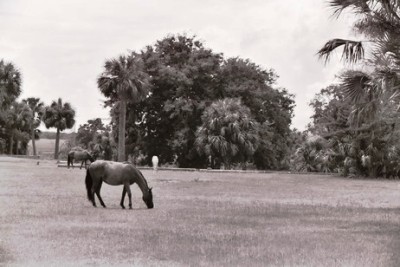
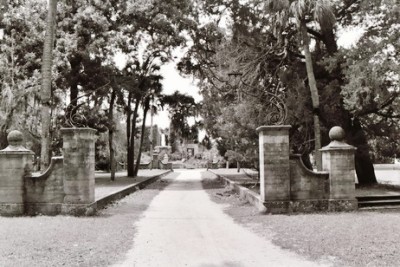
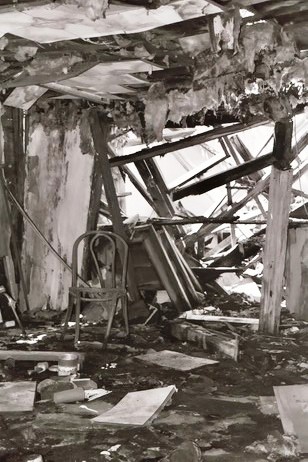
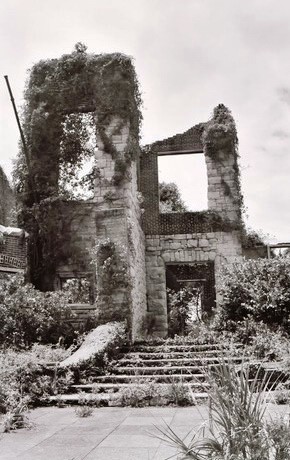 The Carnegie house was used for three generations of balls, banquets, and soirees, but by 1950 it had become impractical to live on an island, so Dungeness was literally abandoned. Nine years later, vandals snuck onto the island and into the deserted mansion. This picture shows the result. The fire was so bright it could be seen across the inlet in St. Mary's. But, the question remained, what to do with the island? Develop the hell out of it, like any reasonable person would do? Or something else? Surprisingly enough, the answer was "something else." At least it has been.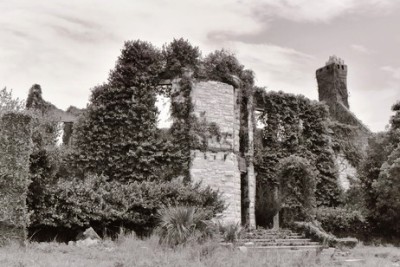
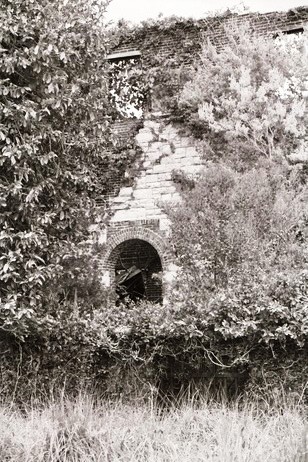 At the time the Carnegie's finally decided to sell all their holdings to the National Park Service in 1972, Fraser owned 3,000 acres. Seeing the writing on the tabby, Fraser finally decided to throw in his hand and sold to the Park Service. That made 36,415 acres, 16,850 of which are marsh, mud flats, and tidal creeks. Should I just steal from the
 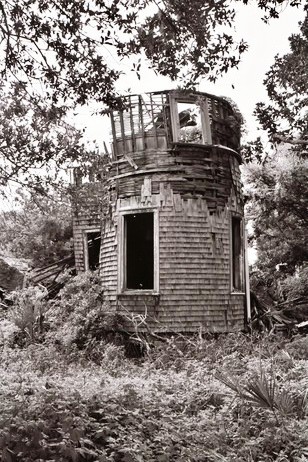 Just don't mistake the cisterns for garbage cans. That's really frowned upon. You can't actually go IN Dungeness, which accounts for all my exterior photos. This is a shot of the guest digs next to Dungeness. For the discerning associate of the Carnegie's, who needed a thatch tower all to themselves, this was the preferred option. Obviously, it met much the same fate as the mansion. Cumberland is so nice we're gonna stay for a bit. Oh, I got bits of info for this post from Kap Stann's Georgia Moon Travel Handbook and The New Georgia Guide, by a whole bunch of people. Both are good references. More next time.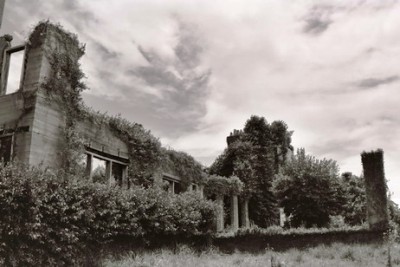
 And the Confederacy desperately wanted to protect the